Definition and Meaning of the Modelo de Interposición de Recurso de Reposición Contra
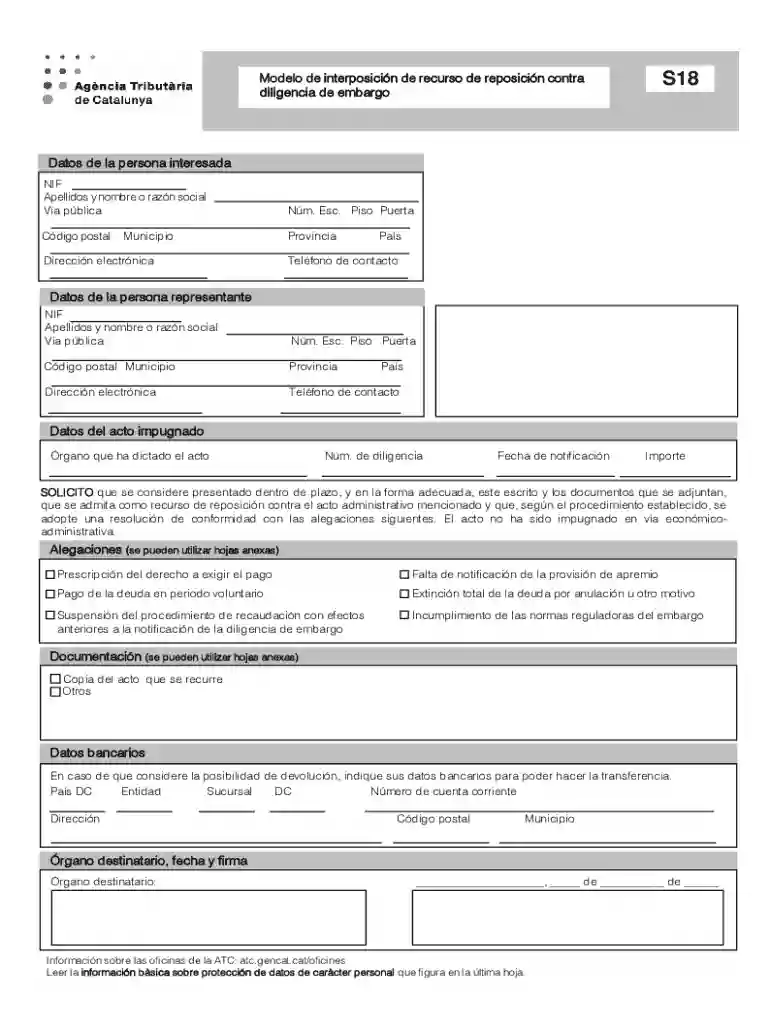
The "Modelo de Interposición de Recurso de Reposición Contra" is a formal template utilized in Spain for contesting actions, such as embargo proceedings, initiated by Catalonian authorities like the Tax Agency of Catalonia. This legal document provides individuals and entities the means to formally request a reconsideration of a governmental decision that impacts them adversely. Typically, the resource is used in administrative law contexts, where the initial decision is believed to be flawed or unjust, and the applicant seeks a review to either annul, modify, or set aside the adverse decision.
Key Components
- Applicant Information: Details about the person or entity filing the request, including name, address, and identification numbers.
- Representative Information: When applicable, it includes information about an authorized representative or legal counsel.
- Contested Action: Comprehensive details about the decision being challenged, including dates, reference numbers, and description of the action.
- Legal Provide: A section where the applicant outlines the grounds for the reconsideration request, citing legal or procedural errors in the initial decision.
- Supporting Documentation: Documentation that supports the claim, such as evidence of procedural irregularities, factual inaccuracies, or new information post-decision.
How to Use the Modelo de Interposición de Recurso de Reposición Contra
Using this form correctly is crucial to ensure that your challenge is heard and processed effectively.
Steps for Utilization
- Accurate Completion: All sections concerning personal, representative, and contest details must be fully and accurately completed.
- Legal Grounds: Clearly articulate the legal or factual basis for your challenge, supporting it with relevant statutes or documented evidence.
- Attachment of Documentation: Compile and attach any necessary documents that corroborate your position or that you wish to have considered.
- Filing: Submit the completed form to the appropriate tax or legal authority within the designated time frame following the contested decision.
Practical Considerations
- Ensure to keep copies of all submissions and documentation for your records.
- Consider consulting a legal professional if the grounds for your challenge are complex.
Steps to Complete the Modelo de Interposición de Recurso de Reposición Contra
Filing this form requires attention to detail and a clear understanding of each section.
Instructional Steps
- Obtain the Form: Secure the most recent version of the form from the Catalonian Tax Agency or their official website.
- Fill Out Personal and Representative Details: Enter the applicant’s full details, and representative information if applicable.
- Detail the Contested Decision: Describe the administrative act being contested, including relevant dates and any reference numbers.
- Outline Allegations: Clearly present the reasons for reconsideration, focusing on legal errors, factual misunderstandings, or new evidence.
- Annex Documentation: Include any additional documentation that supports your claim.
- Finalize and Sign: Review the form for completeness and accuracy, then sign as required.
- Submit: Deliver the form via the stipulated method, ensuring you adhere to any applicable deadlines.
Important Terms Related to the Modelo de Interposición de Recurso de Reposición Contra
Understanding the terminology involved in using this form enhances clarity.
- Recurso de Reposición: Refers to the legal remedy seeking the revision of an administrative act.
- Embargo Action: A government-imposed legal seizure of assets or property to satisfy unpaid obligations.
- Tax Agency of Catalonia: The regional authority responsible for tax administration within Catalonia.
Examples
- An individual facing a bank account embargo due to alleged tax liabilities may file this form to dispute the action, arguing procedural mistakes.
- Businesses may use this form to challenge penalties imposed by the tax agency based on incorrect fiscal calculations.
Key Elements of the Modelo de Interposición de Recurso de Reposición Contra
Familiarity with key elements of this legal framework ensures proper completion and filing.
Core Sections
- Identification and Contact Information: Essential for establishing the applicant’s identity and means of communication.
- Nature of the Dispute: Precise articulation of the administrative decision under dispute is vital.
- Supporting Rationale: This section demands a structured argument backed by legal references.
Legal Use of the Modelo de Interposición de Reposición Contra
The legal application of this form serves as an important mechanism in the checks and balances of administrative decisions.
Legal Framework
- Administrative Revisions: The form falls within procedural norms allowing the reevaluation of administrative decisions to rectify potential inefficiencies.
- Documentation Requirements: Adherence to legal standards by providing conclusive evidence is paramount to a successful appeal.
Filing Deadlines and Important Dates
Timing is crucial when filing the "Modelo de Interposición de Reposición Contra" to ensure the appeal is considered.
Timeline
- Standard Deadline: Typically, there is a 30-day window following the notification of the decision to file this form.
- Extensions: Extensions are rare and require proof of extenuating circumstances.
Managing Deadlines
- Track all relevant dates when handling documents to remain within prescribed timelines.
- Missed deadlines can result in forfeiture of the right to appeal.
Typical Users
- Individuals: Those directly affected by administrative decisions, such as asset seizures.
- Businesses: Corporations and small businesses contesting tax decisions or penalties.
Scenario Examples
- Tax Disputes: Individuals disputing unpaid tax claims leading to property seizures.
- Administrative Errors: Businesses addressing inaccuracies in administrative penalties or restrictions enforced by the Tax Agency.