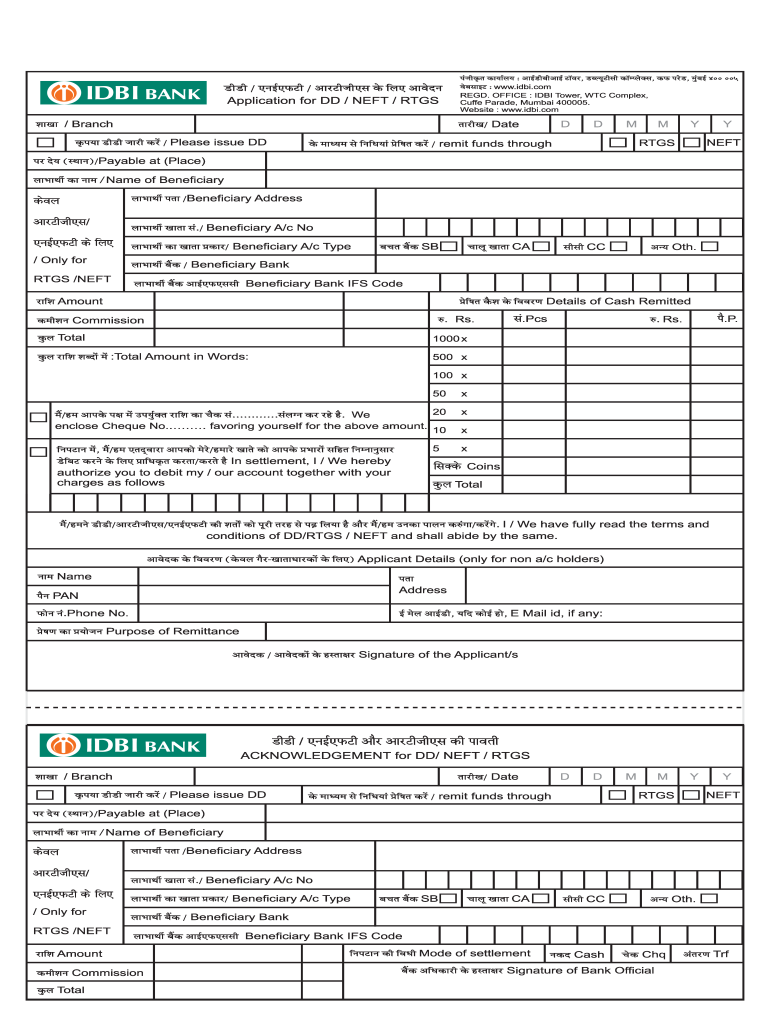







Definition & Meaning of IDBI RTGS Form
The IDBI RTGS form is a specialized document utilized for the Real-Time Gross Settlement (RTGS) system, facilitating high-value interbank payments in India. This payment method is often employed for transactions exceeding a specific threshold, making it ideal for corporate payments, large remittances, and other financial transfers requiring immediate clearing. The form is crucial for ensuring the efficient transfer of funds while maintaining security and compliance with banking regulations.
RTGS transactions are processed continuously throughout the banking day, allowing for instant settlement. This form is specifically designed to capture essential information about both sender and recipient, as well as payment details, ensuring accurate processing. Understanding the specifics of the IDBI RTGS form is vital for individuals and businesses looking to make significant transfers efficiently.
How to Obtain the IDBI RTGS Form
Obtaining the IDBI RTGS form can be done through various methods to suit individual preferences.
-
Bank Branch: Customers can directly visit their nearest IDBI Bank branch and request a physical copy of the RTGS form. Bank representatives are available to assist customers in filling out the form correctly.
-
Online Access: The form is available for download in PDF format on the IDBI Bank website. After downloading, users can print it for completion.
-
Mobile Banking Applications: If you are a customer of IDBI Bank, you can access the form through the bank’s mobile banking app. This feature facilitates easy access and is often accompanied by instructions on filling it out correctly.
-
Third-party Websites: Some educational or financial websites provide the IDBI RTGS form for download. However, it’s essential to ensure that these forms are the latest version and comply with IDBI Bank’s requirements.
Steps to Complete the IDBI RTGS Form
Filling out the IDBI RTGS form requires careful attention to detail to ensure accurate processing. Here’s a step-by-step guide to completing the form:
-
Provide Sender Details: Enter the sender's name, address, and IDBI Bank account number. Ensure that the information matches the records held by the bank to avoid rejection.
-
Recipient Information: Fill in the beneficiary's name, address, and account details, including the IFSC code of the recipient's bank. Accuracy is crucial, as errors here can lead to delays or misdirected funds.
-
Amount and Purpose of Transfer: Clearly state the amount to be transferred. Some users may need to indicate the purpose of the payment, which can be important for compliance with banking regulations.
-
Signature: The form must be signed by the sender to authorize the transaction. Ensure that the signature matches the one on file with the bank.
-
Submission Method: Decide how you will submit the form—whether in person at the branch, via email, or through the bank's mobile application.
-
Bank Charges: Be aware that transactions made through RTGS may incur charges. Familiarize yourself with the fee structure, which is typically mentioned on the bank’s website or pamphlets available at branches.
Key Elements of the IDBI RTGS Form
Understanding the key elements of the IDBI RTGS form can enhance your proficiency in using it effectively:
-
Sender and Beneficiary Information: Comprehensive details of both parties ensure the smooth execution of payment.
-
Payment Amount: Clearly stating the total amount helps in accurate fund transfer, avoiding discrepancies.
-
Transaction Reference Number: This unique identifier links the transaction to the relevant account activity, providing transparency and traceability.
-
IFSC Code: The Indian Financial System Code is necessary to specify the beneficiary bank, ensuring the transfer reaches the correct institution.
-
Signature: The sender's signature serves as an authorization of the transaction, crucial for the processing of the RTGS transfer.
These components work collectively to assure that the transaction conforms to regulatory standards while facilitating a smooth financial exchange.
Legal Use of the IDBI RTGS Form
The IDBI RTGS form is legally recognized for conducting interbank fund transfers under the guidelines established by the Reserve Bank of India (RBI).
-
Compliance with Regulations: When completing the form, adherences to anti-money laundering laws are critical. The purpose of the payment may be scrutinized, making the accuracy of the form paramount.
-
Legally Binding Agreement: By signing the form, the sender acknowledges that the information provided is correct, thereby establishing a legal obligation for both the sender and the bank.
-
Record Keeping: IDBI Bank maintains records of RTGS transactions, creating an audit trail that ensures both sender and recipient can verify completed payments, enhancing legal protection if disputes arise.
It's essential for users to understand the legal implications of utilizing the RTGS form, ensuring they are equipped for responsible banking practices.
Examples of Using the IDBI RTGS Form
The IDBI RTGS form can be utilized in various practical scenarios, enhancing its relevance across different sectors:
-
Business Transactions: A corporation may need to pay suppliers or contractors in real-time for goods and services, utilizing the RTGS form to make substantial payments efficiently.
-
Personal Remittances: Individuals sending substantial funds to family members or friends can use the RTGS form, ensuring that payments are processed immediately.
-
Real Estate Transactions: When purchasing property, buyers often need to transfer large sums directly to the seller's bank, making the RTGS form a preferred method for quick settlement.
In each case, the IDBI RTGS form provides a reliable and efficient means for handling significant financial exchanges, crucial for both personal and professional transactions.
Who Typically Uses the IDBI RTGS Form
The IDBI RTGS form is typically utilized by a diverse range of individuals and entities:
-
Corporate Clients: Businesses requiring immediate payment settlements for goods or services commonly use the RTGS system, given its high transaction limits and speed.
-
Individuals: High-net-worth individuals or those making significant personal transactions, such as purchasing a car or property, benefit from using the form for its speed and security.
-
Financial Institutions: Banks and other financial entities regularly use the RTGS system for interbank transactions, making the form essential in their operations.
Understanding the user demographics helps streamline the process and tailor the service to meet specific user requirements.