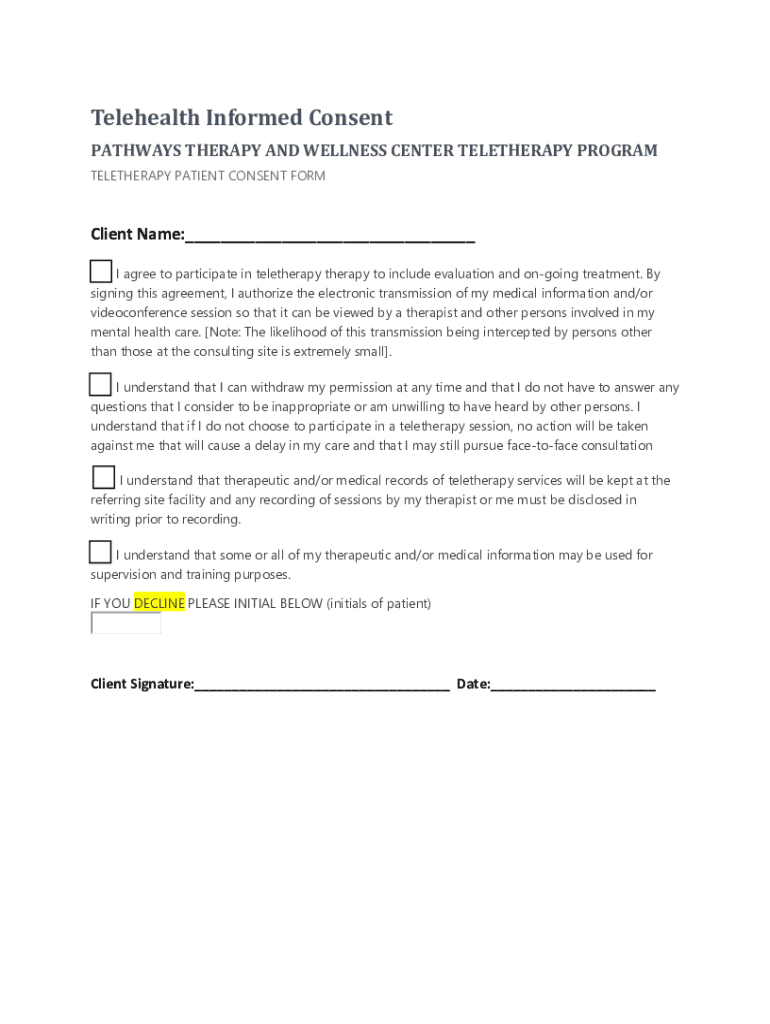







Definition and Meaning
A Teletherapy Patient Consent Form is a legal document used in the healthcare sector, allowing patients to consent to receive therapy through telecommunication technologies. This form ensures that clients are informed about the nature of teletherapy, how medical information will be electronically transmitted, and their rights regarding privacy and consent withdrawal. The form serves as an important legal protection for both the patient and the healthcare provider, outlining agreed terms for participating in remote therapy sessions. This consent is essential for maintaining compliance with legal and ethical standards in telehealth practice.
How to Use the Teletherapy Patient Consent Form
To effectively use a Teletherapy Patient Consent Form, practitioners should first provide comprehensive information to the patient about teletherapy practices, including technology requirements and confidentiality measures. Once details are clearly communicated, practitioners should guide patients through the form, assisting them in understanding each section. Patients should carefully review and fill out all fields, such as personal information and specifics about consent, checking any boxes or fields that apply. Both patients and providers must sign the document, confirming mutual agreement. Secure electronic or paper recordkeeping is necessary for maintaining the form's validity.
Steps to Complete the Teletherapy Patient Consent Form
-
Personal Information: Start by filling in personal details, including name, date of birth, and contact information.
-
Understanding Teletherapy: Acknowledge the description provided about teletherapy, including benefits and limitations.
-
Confidentiality Agreement: Review clauses detailing how data is protected and any exceptions to confidentiality.
-
Consent for Electronic Communications: Agree to the use of electronic communication means for therapy sessions, understanding the associated risks.
-
Right to Withdraw: Recognize the right to withdraw consent at any time and the processes involved.
-
Signatures: Provide a dated signature, and ensure the healthcare provider countersigns or acknowledges remotely.
-
Retention: Retain a copy for personal records, ensuring all information is up-to-date.
Key Elements of the Teletherapy Patient Consent Form
- Patient's Details: Collects essential contact and identification information.
- Teletherapy Description: Offers a concise explanation of how remote therapy will function.
- Data Protection: Outlines measures in place to protect sensitive information.
- Consent Provisions: Details how consent can be given and withdrawn.
- Legal Disclaimers: Alerts to the legal implications and limitations of teletherapy.
- Signatures: Spaces for patient and provider signatures to validate the form.
These elements ensure both parties are aligned in their understanding and expectations concerning teletherapy.
Legal Use of the Teletherapy Patient Consent Form
Teletherapy Patient Consent Forms must comply with U.S. legal standards, including HIPAA regulations regarding patient privacy and data security. This compliance guarantees that all teletherapy sessions respect confidentiality laws and maintain the ethical standards expected in the healthcare industry. By signing the form, both parties agree to adhere to these regulations. This document also facilitates legal accountability and can serve as a reference in any dispute resolution regarding teletherapy practices.
Who Typically Uses the Teletherapy Patient Consent Form
Generally, the primary users of a Teletherapy Patient Consent Form include mental health professionals, such as psychologists and therapists, who offer remote consultations. Other practitioners, including psychiatrists and general practitioners providing telemedicine services, also utilize this form. Patients seeking therapy but unable to attend in-person sessions, due to geographical constraints or preference for remote communication, will fill out this consent form. Furthermore, healthcare organizations that incorporate teletherapy as part of their offerings will regularly use such documents.


State-by-State Differences
While teletherapy is broadly regulated at the federal level in the United States, individual states may have additional rules or guidelines that differ. These differences might involve specific consent form requirements, therapist licensing regulations for inter-state practice, or particular telehealth platforms approved for use. Practitioners should always check state laws where they and their patients are located to ensure compliance with localized regulations, which might affect the method and content of consent documentation.
Examples of Using the Teletherapy Patient Consent Form
In practice, a Teletherapy Patient Consent Form might be used by Pathways Therapy and Wellness Center to ensure that clients are fully aware of and agree to the terms of engaging in therapy sessions via video call. For instance, before initiating a digital therapy session with a new patient who is participating from a different geographic area, the therapist would distribute and explain the contents of the form. Real-world scenarios further include patients expressing their understanding that while teletherapy is convenient, it may not fully replace face-to-face interactions and agreeing to uphold the confidentiality requirements outlined in the document.
Eligibility Criteria
Eligibility to use the Teletherapy Patient Consent Form generally includes any individual seeking teletherapy services from a licensed practitioner. Patients must be of legal age or, in the case of minors, have consent provided by a parent or guardian. Additionally, both patients and practitioners must have access to the requisite technology to conduct sessions, such as a stable internet connection and secure communication tools. Eligibility might also be determined by the specific regulations of the state in which the patient resides, ensuring all parties meet those local requirements.