
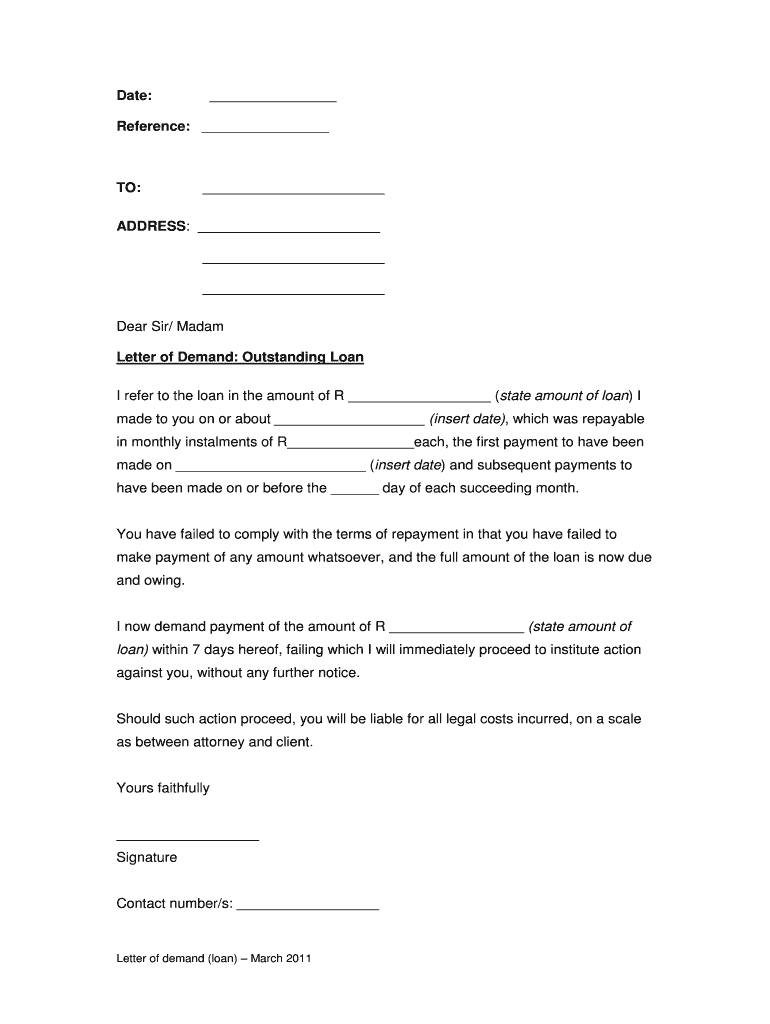







Definition and Meaning of a Letter of Demand in Singapore
A letter of demand is a formal document used to request payment of an outstanding debt. In the context of Singapore, this legal instrument serves to notify the debtor of the amount due and specifies a timeframe, typically seven days, within which the debtor must settle the debt. Failure to comply may lead to legal proceedings, and the debtor might be liable for any additional legal costs incurred. The letter of demand acts as evidence of the creditor's effort to resolve the matter amicably before escalating it to the courts, making it a vital tool in debt recovery.
How to Use a Letter of Demand in Singapore
The process of utilizing a letter of demand in Singapore requires careful consideration and adherence to legal and procedural standards. The creditor should ensure that the letter is clear and concise, outlining the debt's specifics, including the original loan agreement, amount borrowed, and any missed payments. It should also specify the deadline by which the debtor is expected to respond or pay the due amount. Supporting documents such as the original loan agreement can be attached to reinforce the claim. It’s important to communicate that legal action will follow if the debt is not repaid within the stipulated period.
Steps to Complete the Letter of Demand in Singapore
-
Identify Essential Information:
- Include the names and addresses of both the debtor and creditor.
- State the total amount due and the original loan details.
-
Outline Repayment Terms:
- Clearly specify the repayment terms agreed upon initially and highlight any deviations.
-
Settle Outstanding Amount:
- Detail the missed payments and the total debt outstanding.
-
Specify Legal Consequences:
- Describe the potential legal actions, including liability for costs, if the matter proceeds to court.
-
Ensure Formal and Clear Language:
- Use professional and unambiguous language throughout.
-
Review and Send:
- Reassess for accuracy before sending via registered mail for delivery confirmation.
Key Elements of a Letter of Demand in Singapore
- Debtor and Creditor Information: Complete details to establish parties involved.
- Loan Amount and Terms: Specifics regarding the principal, interest, and repayment schedule.
- Debt Amount Outstanding: Precise calculation of the outstanding debt.
- Payment Deadline: Clear date by which payment must be made.
- Consequences of Non-Payment: Legal ramifications for non-compliance.
- Contact Information: Details for further clarification or dispute resolution.
Legal Use of the Letter of Demand in Singapore
In Singapore, a letter of demand is a preliminary step before initiating legal proceedings. This document is recognized in court as a formal effort to recover a debt and reflects the creditor's intent to resolve the issue without judicial intervention. It is crucial to ensure the letter’s content complies with Singapore's legal standards to prevent any challenges to its validity if the case progresses to litigation. Legal advice may be advisable to tailor the letter appropriately to meet the unique circumstances of the debt.
Who Typically Uses a Letter of Demand in Singapore
The letter of demand is typically used by creditors, financial institutions, or law firms representing clients in recovering outstanding debts. Business owners and individuals who have extended loans and are facing difficulty in collection also commonly utilize this document. In addition, legal advisors often draft these letters on behalf of businesses dealing with delinquent payments to formalize the recovery process and establish a strong basis for future legal action if necessary.
Examples of Using a Letter of Demand in Singapore
Scenario 1: Business Transactions
A company may issue a letter of demand to a client who has failed to pay for goods supplied under contractual terms. The letter will outline the transaction specifics, the amount due, and the deadline for payment to prevent legal action.
Scenario 2: Personal Loans
An individual lending a substantial sum to a friend or family member, who then defaults, might resort to a letter of demand. The letter serves to formally request repayment and outline consequences of continued default.
Scenario 3: Landlord-Tenant Disputes
A landlord may use a letter of demand to address unpaid rent, specifying overdue amounts and possible eviction if payment is not made by the stated deadline.
Important Terms Related to a Letter of Demand in Singapore
- Creditor: The entity or individual to whom the debt is owed.
- Debtor: The entity or individual who owes the debt.
- Principal Amount: The original sum borrowed or loaned.
- Default: Failure to meet the debt repayment schedule.
- Legal Costs: Expenses that may be incurred in pursuit of legal recovery of the debt.
- Registered Mail: A method of sending mail for which proof of delivery is available.
State-Specific Rules for a Letter of Demand in Singapore
While Singapore maintains a unified legal framework, requirements can vary slightly based on case circumstances or sectors involved. However, a letter of demand typically must comply with general legal principles and best practices recognized at the national level. Consulting with a local lawyer may provide expertise in tailoring letters to specific instances, such as insolvency issues or cross-border debts that may involve additional regulations.




