01. Edit your form online
Type text, add images, blackout confidential details, add comments, highlights and more.

Type text, add images, blackout confidential details, add comments, highlights and more.

Draw your signature, type it, upload its image, or use your mobile device as a signature pad.

Send it via email, link, or fax. You can also download it, export it or print it out.
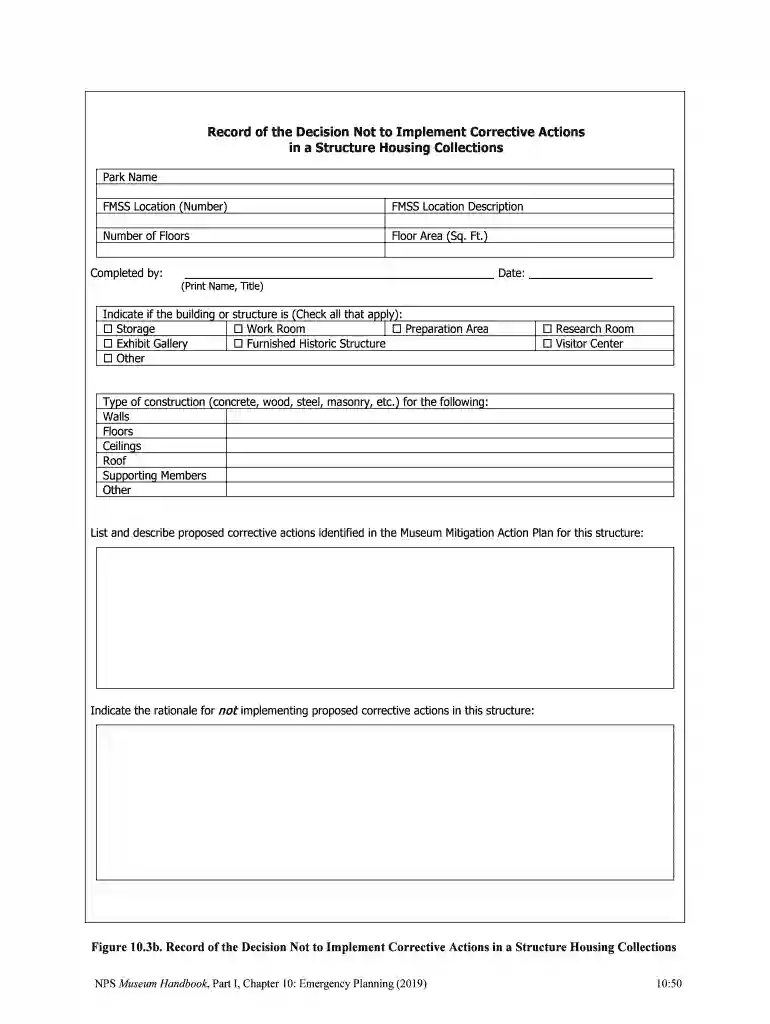
The "Museum Handbook, Part I, Chapter 10: Emergency Planning" serves as a crucial guide for museums, outlining comprehensive standards, policies, and procedures designed to safeguard museum collections and ensure life safety during emergencies. This chapter provides a detailed framework for emergency preparedness, emphasizing the importance of effective risk management strategies. It includes guidelines for developing a Museum Collections Emergency Operations Plan (MCEOP) and underscores the necessity for systematic risk assessments and mitigation action plans.
Using the handbook effectively involves understanding its structured approach to emergency planning. Museum personnel, from curators to facility managers, can refer to the handbook to align their own emergency procedures with recommended practices. The document serves as a blueprint, aiding in the construction of custom emergency plans that are tailored to the specific risks and requirements of individual institutions.
To fully implement the practices within Chapter 10, follow these steps:
Several key components are integral to understanding Chapter 10:
Understanding the terminology within the handbook is essential:
Real-world examples provide insight into effective usage of Chapter 10:
Various roles within a museum benefit from the handbook:


Using the handbook aligns with federal and state regulations regarding health and safety in museums across the U.S. Compliance with its guidelines helps to avoid legal liabilities and ensure that museums meet necessary safety standards. It also assists in ensuring legal mandates concerning public and employee safety are met effectively.
While the handbook provides national guidelines, specific state requirements may vary:
State-specific adaptations ensure that museums are prepared for local risks while maintaining compliance with broader museum safety standards.
We've got more versions of the Museum Handbook, Part I, Chapter 10: Emergency Planning form. Select the right Museum Handbook, Part I, Chapter 10: Emergency Planning version from the list and start editing it straight away!
| Versions | Form popularity | Fillable & printable |
|---|---|---|
| 2019 | 4.8 Satisfied (71 Votes) |
At DocHub, your data security is our priority. We follow HIPAA, SOC2, GDPR, and other standards, so you can work on your documents with confidence.