






Definition and Purpose of a Co-Teaching Lesson Plan Template
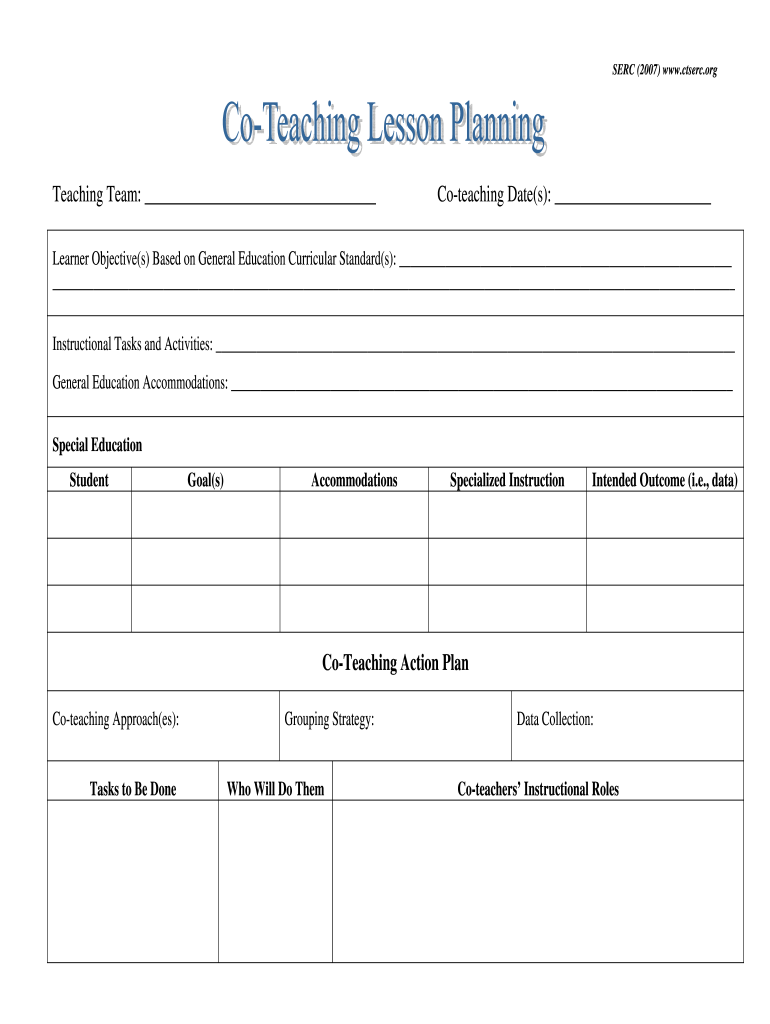
A co-teaching lesson plan template serves as a structured outline for educators collaborating in a dual-teacher classroom setting. This template helps facilitate effective planning and teaching strategies that are inclusive and considerate of different student needs. The purpose of these plans is to ensure both general and special education teachers can work efficiently together to enhance instructional delivery, create accommodations, and improve student learning outcomes.
Key Features of a Co-Teaching Lesson Plan Template
- Aligned Objectives: Each plan should include clearly defined learning goals that align with the curriculum and students’ educational standards. Jointly setting these goals fosters collaboration and keeps both educators accountable.
- Description of Roles: The template should specify which co-teacher is responsible for various components of the lesson, such as instruction, assessment, and classroom management. This clarity helps prevent overlap and confusion during lesson execution.
- Instructional Activities: Detailed sections should outline the planned activities that engage students in learning. Using diverse instructional strategies—like group work, paired learning, and individualized instruction—supports differentiated learning paths.
- Assessment Methodology: Effective co-teaching lesson plans include methods for evaluating student progress. This can incorporate formative assessment strategies, such as quizzes or observation checklists, to measure understanding continually.
How to Effectively Use a Co-Teaching Lesson Plan Template
Utilizing a co-teaching lesson plan template requires thoughtful collaboration between educators. Following a systematic approach ensures all aspects of the lesson are addressed.
- Set Collaborative Goals: Begin by discussing and agreeing on the learning objectives. Consider common core standards and the diverse needs of all students in the class.
- Divide Responsibilities: Clearly assign roles based on strengths and areas of expertise. For instance, one teacher might lead the introduction while the other facilitates small group discussions.
- Plan Instructional Strategies: Choose instructional methods that best suit the lesson goals and student needs. Incorporate a mix of direct instruction, hands-on activities, and technology.
- Develop Assessment Tools: Outline how assessments will take place. Consider both individual and group assessments to measure student achievements comprehensively.
- Reflect and Adjust: After co-teaching, both educators should reflect upon the lesson's successes and challenges. Use this feedback to improve future lesson planning.
Examples of Co-Teaching Strategies within the Template
Incorporating various co-teaching strategies enhances the effectiveness of the lesson plan template. Some practical strategies include:
- Station Teaching: Divide the classroom into different stations, each led by one of the teachers. Each station can focus on a unique aspect of the lesson, allowing students to rotate and experience varied teaching styles.
- Parallel Teaching: Both teachers instruct different groups of students simultaneously on the same content. This model provides opportunities for more personalized attention and pacing adjustments.
- Alternative Teaching: One teacher manages the larger group while the other provides targeted instruction to a smaller group. This method is especially effective for remediation or enrichment based on student needs.
Components of a Co-Teaching Planning Template
A comprehensive co-teaching planning template should incorporate several essential components that guide the lesson planning process. Key elements include:
- Lesson Title and Topic: Clearly define the subject matter.
- Grade Level and Duration: Indicate the target grade level and estimated time for the lesson.
- Materials Needed: List all resources and materials required for the lesson, enabling both teachers to prepare adequately.
- Accommodations and Modifications: Outline specific strategies or tools necessary to support diverse learners, ensuring inclusivity in the classroom. This may include assistive technology or adapted materials.
- Reflection Section: Reserve a section for post-lesson reflection where educators can record insights about what worked well and what needs improvement.
The Importance of Collaboration in Co-Teaching
Effective co-teaching relies heavily on collaboration. Both educators must engage in ongoing communication and professional development to enhance their partnership.
- Regular Meetings: Schedule consistent planning meetings to discuss lessons, share insights, and make necessary adjustments.
- Shared Professional Development: Attend workshops or training sessions together to learn new strategies and techniques relevant to co-teaching.
- Feedback Mechanisms: Establish a system for providing constructive feedback on each other's teaching methods and student engagement during lessons.
Integrating these elements into a co-teaching lesson plan template enhances the likelihood of a successful cooperative teaching dynamic, fostering an enriched learning environment for all students.