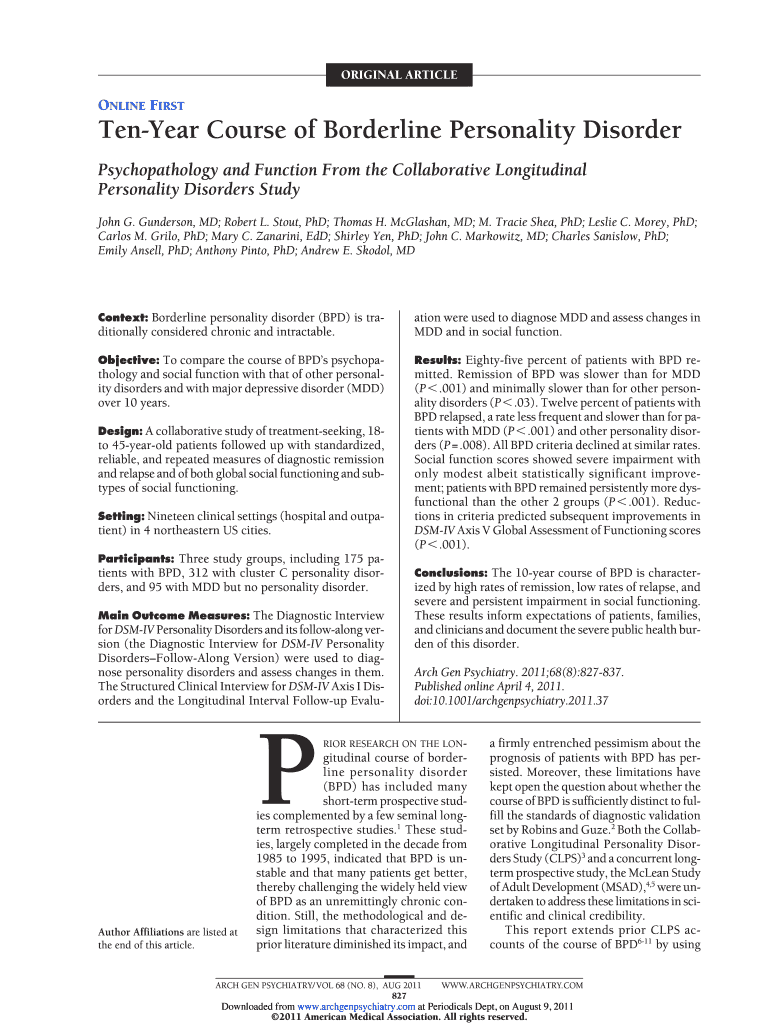







Definition and Meaning of the Ten-Year Course of Borderline Personality Disorder
The ten-year course of Borderline Personality Disorder (BPD) is a longitudinal analysis detailing the progression and potential remission of this mental health condition over a decade. This exploration is critical in understanding BPD's behavior over time and its distinction from other psychiatric disorders like Major Depressive Disorder (MDD). The findings highlight remission rates, the pace of improvement, and persistent social dysfunctions, challenging the historical view of BPD as an unyieldingly chronic condition.
How to Utilize the Study Findings
Employing the insights from the ten-year BPD study can be transformative in clinical settings. Mental health professionals can use these outcomes to inform treatment strategies and therapeutic interventions. The study provides evidence that can drive personalized care plans, improve prognosis conversations with patients, and aid in developing new approaches to manage the socio-functional impairments commonly associated with BPD. Additionally, this research can be a valuable tool for educators in psychiatric training programs.
Steps to Complete a Ten-Year Longitudinal Study
Conducting a ten-year longitudinal study, such as this on BPD, involves several intricate steps:
- Formulating the Research Question: Define the objective of the study, focusing on long-term outcomes in BPD.
- Collecting Baseline Data: Gather comprehensive initial data from participants, including diagnostic criteria and psychosocial profiles.
- Establishing Study Parameters: Determine the methods for data collection, intervals for follow-up, and outcome measures.
- Recruiting Participants: Secure a diverse participant pool representative of the BPD population.
- Implementing Follow-Ups: Regularly assess participants over the study period to gather ongoing data.
- Analyzing Data: After the decade, analyze the collected data for trends in remission, relapse, and functional outcomes.
- Publishing Results: Prepare and disseminate findings to contribute to the academic and clinical understanding of BPD.
Key Elements of the Ten-Year BPD Study
Several core elements make the BPD study significant:
- Remission Rates: The study reveals that 85% of participants achieved remission, highlighting a positive outlook for many diagnosed with BPD.
- Comparison with Other Disorders: BPD shows a slower remission compared to MDD, underscoring the uniqueness of its treatment path.
- Social Dysfunction: Despite improvements in psychopathology, many individuals continue to face severe social challenges.
Who Typically Engages with This BPD Study Information
This study is invaluable for a range of professionals, including:
- Psychiatrists and Psychologists: To understand long-term trends and tailor treatment strategies.
- Researchers: To design further studies or clinical trials focusing on BPD.
- Social Workers: To provide informed support, considering the socio-functional impacts shown in the study.
- Policy Makers: To shape mental health policies that address the chronic aspects of BPD.
Important Terms Related to BPD
Understanding BPD within this study context requires familiarity with several terms:
- Remission: A period during which symptoms are minimal or absent.
- Relapse: The return of symptoms after an improvement period.
- Psychopathology: The study of psychological disorders and their symptoms.
- Longitudinal Study: Research conducted over an extended time to observe long-term effects and trends.
Real-World Examples from the BPD Study
The study includes practical examples of patient cases that highlight variations in the BPD progression:
- Case Study A: A participant with early-life trauma achieved remission over seven years but continues to experience interpersonal issues.
- Case Study B: Another participant improved symptomatically within three years but faced obstacles due to stigmatization in work environments.
Legal Considerations in Publishing Findings
Publishing a study of this nature involves several legal considerations to ensure ethical compliance:
- Informed Consent: Participants must be fully aware of the study's nature and have agreed to partake.
- Confidentiality: Protecting participant identities and sensitive data is paramount.
- Regulatory Approval: Securing permission from relevant ethical boards and complying with national research regulations.
Implications for Treatment Approaches
The study suggests several treatment implications:
- Therapeutic Interventions: Focus on strategies that integrate both psychosocial and medical treatments.
- Interdisciplinary Care: Collaboration between healthcare providers to address both symptom relief and social functioning.
- Patient Education: Emphasizing self-awareness and coping strategies in patient care regimes.
By thoroughly understanding the ten-year course of BPD and the associated study findings, stakeholders can foster environments conducive to sustained patient improvement and holistic well-being.