






Definition & Meaning
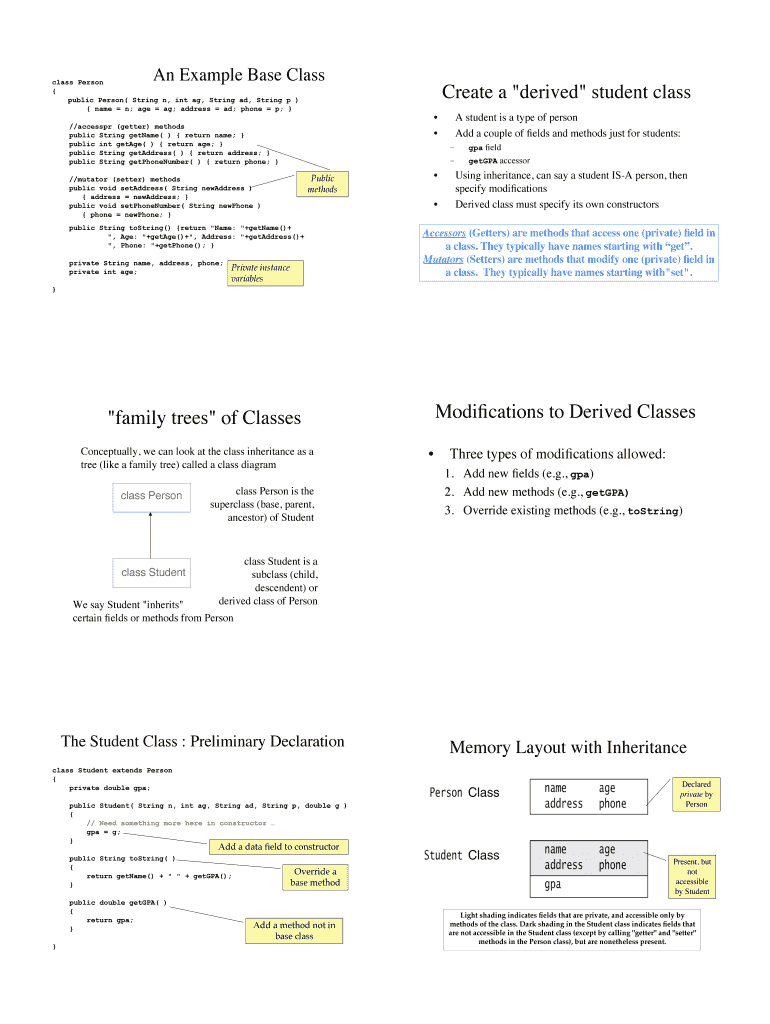
An example base class in object-oriented programming serves as a blueprint from which other classes, known as derived classes, can be created. This base class defines common attributes and methods that the derived classes can use or override. It facilitates code reusability and organization, allowing developers to implement a hierarchical class structure. By defining shared variables and methods, the base class ensures consistency across various implementations while allowing specialized behavior through polymorphism and inheritance. This practice is widespread in programming languages like Java, where the base class might contain fundamental methods for data management, enabling derived classes to expand on these with additional features.
How to Use the An Example Base Class
To effectively utilize an example base class, developers must first understand the class's structure and purpose. Begin by reviewing the base class's code to identify its methods and properties. These components form the foundation upon which additional functionality is built.
-
Create a Derived Class: Inherit from the base class using the appropriate syntax for your programming language. This means establishing the derived class as a subclass, thus gaining access to the base class's methods and attributes.
-
Override Methods: To customize behavior, override any methods in the base class that require specific implementations in the derived class. This is done by redefining the method in the derived class and providing the new logic.
-
Add New Features: Implement additional methods or properties specific to the derived class to enhance its functionality beyond the base class. This flexibility allows for diverse applications while maintaining a core set of capabilities from the base class.
-
Polymorphic Usage: Take advantage of polymorphism by treating objects of the derived class as instances of the base class. This is helpful in methods or functions that accept base class references, enabling the use of derived objects interchangeably within a defined interface.
Steps to Complete the An Example Base Class
Completing an example base class involves defining all necessary components to ensure derived classes can operate correctly.
-
Define Attributes: Identify shared properties relevant to all derived classes. These are typically broad characteristics applicable to multiple instances and are declared in the base class.
-
Implement Core Methods: Develop basic methods that provide essential functionality and can be used by any derived class. These methods should be generic enough to suit various implementations but adaptable through overriding.
-
Incorporate Accessors and Mutators: Implement getter and setter methods to allow controlled access to private attributes. This ensures encapsulation, a fundamental principle of object-oriented programming.
-
Include Abstract Methods (If Necessary): If certain methods must be implemented by all derived classes but should not have a base class implementation, define them as abstract. This forces subclasses to provide specific implementations, maintaining consistency and reducing code redundancy.
Important Terms Related to An Example Base Class
Understanding the terminology related to base classes is crucial for employing them effectively.
- Inheritance: The mechanism by which a derived class inherits attributes and methods from a base class.
- Polymorphism: The ability of different classes to be treated as instances of the same class through a unified interface.
- Encapsulation: The practice of restricting access to certain components of an object, typically through private variables and public accessors/mutators.
- Overriding: Re-implementing a method from a base class in the derived class to provide specific functionality.
- Abstract Class: A class that cannot be instantiated on its own and is designed to be subclassed. It may contain abstract methods.
- Interface: A construct defining a contract of methods without implementations, which classes can implement alongside inheritance.
Examples of Using the An Example Base Class
Providing practical examples of using an example base class helps solidify theoretical understanding. Consider a 'Vehicle' base class in a transport system:
-
Base Class - Vehicle: Contains common attributes such as
make,model, and methods likestart()andstop(). -
Derived Class - Car: Inherits from Vehicle and adds specific attributes unique to cars, such as
trunkCapacity. It might also override thestart()method to include seatbelt checks. -
Derived Class - Motorcycle: Inherits from Vehicle but includes attributes like
helmetCompartment. Thestart()method could be overridden to check for clutch engagement.
These examples demonstrate how base classes allow different objects with unique needs to share common behaviors while customizing specifics.
Legal Use of the An Example Base Class
In software development, understanding the legal aspects of using and modifying an example base class is essential, especially if the class is part of a third-party library or framework. Developers must comply with licensing agreements associated with the original class. Common software licenses like MIT, Apache, or GPL outline what modifications can be made and how resulting software can be distributed. It is crucial to read and understand these licenses, especially when incorporating the base class into commercial applications. Ensuring conformity with these legal requirements protects developers and organizations from potential intellectual property disputes.
Software Compatibility
When working with example base classes, it is important to ensure compatibility with different software environments and development tools:
-
Programming Language Compatibility: Verify that the base class is written in a language that integrates well with your project's existing codebase.
-
Development Environment: Ensure the base class can be compiled or executed within your current IDE or software stack.
-
Third-party Libraries: Confirm that any dependencies or external libraries required by the base class do not conflict with other components of your project.
-
Continuous Integration Systems: If applicable, ensure the base class works seamlessly within automated build and testing systems to maintain efficiency and consistency in software delivery.
By addressing software compatibility, developers can prevent integration issues and promote smoother development processes.
State-Specific Rules for the An Example Base Class
In cases where base classes are part of regulatory-compliant systems, such as financial software, state-specific rules may influence how base classes are structured and used. An example might include modifications to a base class for handling state-specific tax calculations. In such scenarios, developers must:
-
Identify State Regulations: Understand the specific rules or tax codes that apply in the targeted regions.
-
Implement Conditional Logic: Use conditional statements or configuration files within the base class to handle different states' requirements.
-
Regular Updates: Document and apply updates to maintain compliance as state laws change over time.
Understanding and applying state-specific rules ensure that applications using the base class remain compliant and effective in all applicable jurisdictions.