01. Edit your form online
Type text, add images, blackout confidential details, add comments, highlights and more.

Type text, add images, blackout confidential details, add comments, highlights and more.

Draw your signature, type it, upload its image, or use your mobile device as a signature pad.

Send it via email, link, or fax. You can also download it, export it or print it out.
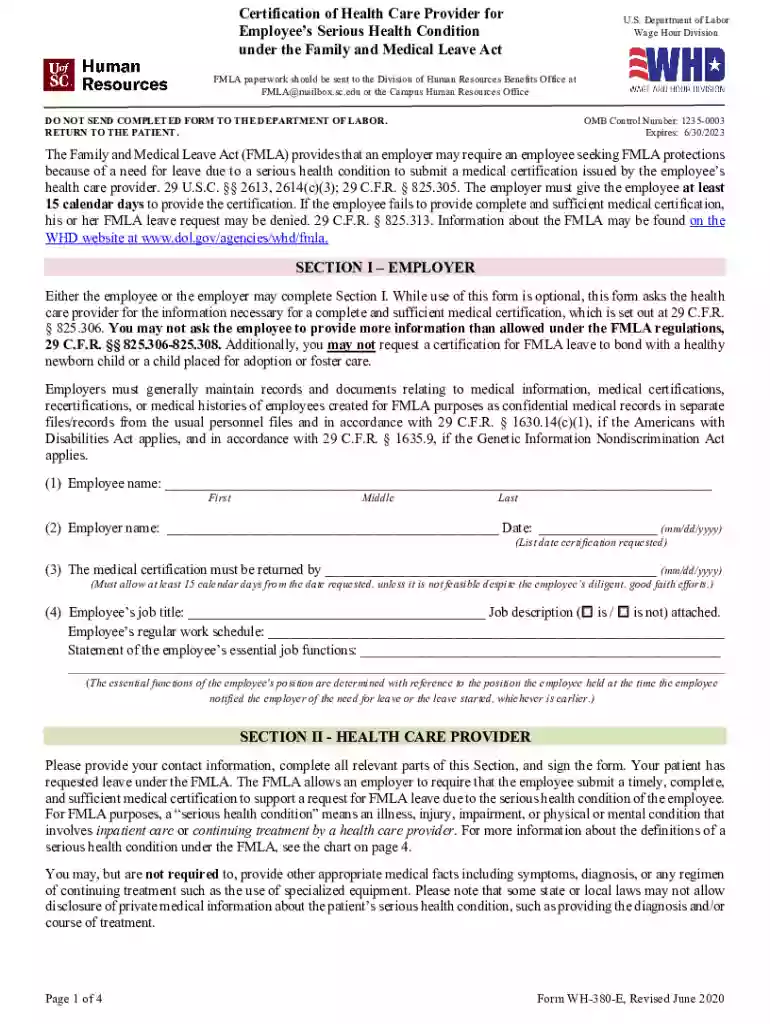
The WH-380E is a specific form used under the Family and Medical Leave Act (FMLA) to provide documentation about an employee's serious health condition that warrants the need for leave. This form is crucial for ensuring that employees can document their condition accurately, allowing employers to make informed decisions about granting FMLA leave. The WH-380E must include comprehensive details about the medical condition, duration of the needed leave, and the medical necessity behind the leave request.
Completing the WH-380E involves several steps to ensure that all necessary information is accurately recorded.
The WH-380E form is legally binding under the FMLA regulations. Employers must process the form in accordance with FMLA standards, which include maintaining confidentiality of medical information and ensuring the form is used solely for verifying eligibility for leave. Misuse of the form or breach of confidentiality can result in legal action against the employer.
Understanding the terminology associated with the WH-380E is essential for both employers and employees.
The WH-380E is predominantly used by employees who seek to take time off under the FMLA for their own serious health conditions. Employers and human resource professionals also rely on this form to validate the medical necessity of such leave requests. Healthcare providers play a crucial role by furnishing the required medical information on the form to verify an employee’s need for FMLA leave.


Key elements of this form include detailed sections for personal information, medical facts, and the estimated duration of leave. It is critical that the healthcare provider offers a thorough assessment to substantiate the employee’s health condition, ensuring all fields are completed to avoid processing delays or denial of leave.
The WH-380E can be submitted by various methods depending on the employer's preference. Typically, it may be submitted through mail or delivered in person to the human resources department. Some employers may allow electronic submissions through secure online portals, especially if they have implemented digital HR systems. It is essential for the employee to confirm the preferred submission method with their employer to ensure timely processing.
Although the FMLA is a federal law, states may have additional regulations affecting the use of the WH-380E form. For instance, some states might offer more generous leave benefits than the FMLA or have specific rules governing the confidentiality and retention of medical forms. Employees and employers must be aware of and comply with both federal and state regulations to ensure proper handling of the WH-380E.
Failing to comply with the legal requirements of the WH-380E can result in significant penalties for employers. Non-compliance may include failing to grant eligible leave, mishandling confidential medical information, or retaliating against an employee who has requested FMLA leave. Penalties can involve fines, legal action, and the requirement to compensate the affected employee for any damages incurred due to improper handling of the FMLA leave request.
At DocHub, your data security is our priority. We follow HIPAA, SOC2, GDPR, and other standards, so you can work on your documents with confidence.