Definition & Meaning
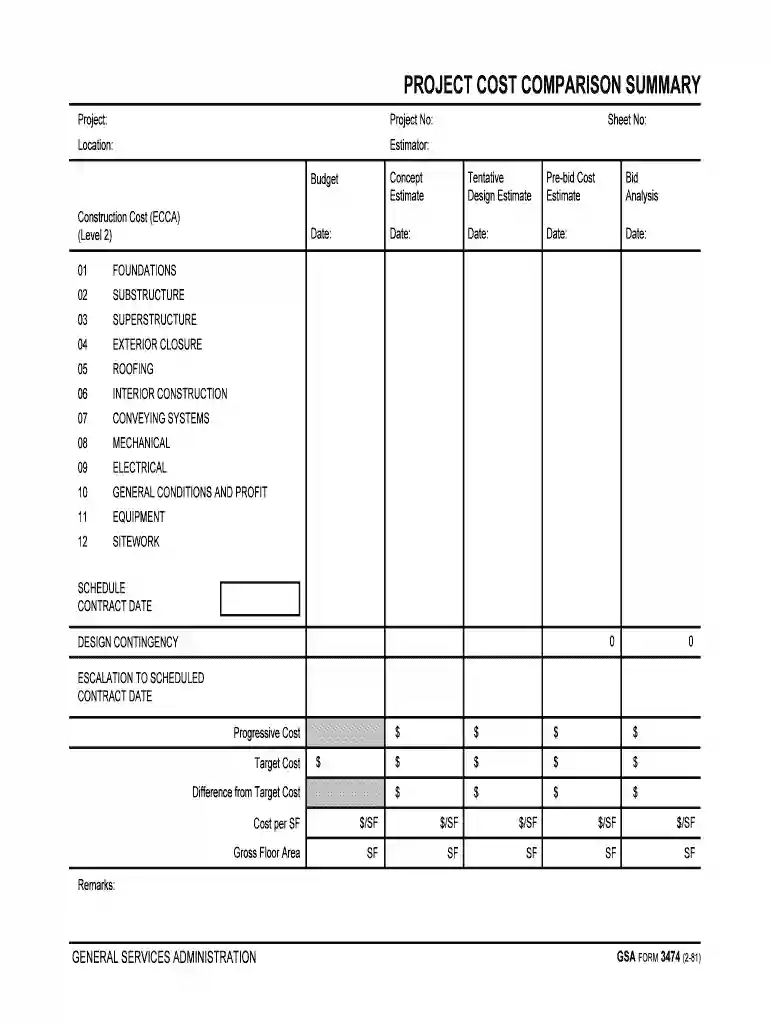
The "Construction Cost (ECCA)" refers to a comprehensive summary document that provides detailed cost estimates for various components of a construction project. This form includes categories like foundations, substructure, superstructure, and more, giving a clear financial overview needed for project planning and execution. It is integral for understanding the financial requirements and budget planning, facilitating comparisons among different project phases, and ensuring that all aspects of the construction are accounted for financially.
Core Components of Construction Cost (ECCA)
- Foundations: Outlines the budget for initial groundwork, crucial for project stability.
- Substructure: Covers costs associated with foundational elements below ground level.
- Superstructure: Encompasses estimates for above-ground construction work.
- Additional Categories: Might include electrical, plumbing, and finishing work, each with its specific cost estimates.
Key Elements of the Construction Cost (ECCA)
The Construction Cost (ECCA) form is built around several key components that give a full overview of project expenses. These elements help stakeholders understand financial expectations and prepare accordingly.
- Budget Estimates: Forecast costs for each project phase, providing a preliminary financial overview.
- Tentative Design Costs: Approximate costs for design services, ensuring the project's visual and functional aspects are financially planned.
- Pre-Bid Costs: Estimated costs calculated before the bidding process, helping clients understand potential financial commitments.
- Bid Analysis: A detailed examination of bids submitted by contractors, allowing for informed decision-making based on financial feasibility.
Steps to Complete the Construction Cost (ECCA)
- Gather Initial Data: Collect relevant project details, including scope, requirements, and existing designs.
- Estimate Initial Costs: Calculate preliminary costs using historical data and expert insights.
- Input Specific Details: Add detailed line items for each category, ensuring comprehensive coverage.
- Review and Adjust: Examine initial estimates, adjust for contingencies and potential changes.
- Finalize the Document: Prepare a complete version for stakeholder review and approval.
Practical Completion Tips
- Collaborate with Experts: Work with financial analysts and construction experts to ensure accurate estimates.
- Use Historical Data: Reference past projects to inform more precise cost predictions.
- Review Regularly: Continually update and adjust estimates as the project evolves.
Who Typically Uses the Construction Cost (ECCA)
The Construction Cost (ECCA) is specifically designed for use by various stakeholders in the construction and real estate industries. Understanding who typically uses it can help tailor its content and presentation for maximum utility.

- Project Managers: Use the ECCA to maintain financial control and ensure the project stays on budget.
- Contractors: Reference the document to align their bids and services with client financial expectations.
- Investors: Review estimates to assess the financial viability of projects before committing funds.
Usage Scenarios
- Large-Scale Projects: Essential for managing complex commercial or public construction projects.
- Small Businesses and Developers: Guides budgeting and ensures project financial health.
- Government Entities: Utilized to substantiate public project budgets and funding requests.
State-Specific Rules for the Construction Cost (ECCA)
Understanding state-specific regulations is crucial for accurate use of the Construction Cost (ECCA). Different regions might have unique requirements that influence project costs and planning processes.
Potential Variations
- Permit Costs: Vary significantly by state and influence the overall budget.
- Labor Costs: Regional labor market conditions impact the cost calculations.
- Materials Sourcing: Location-relative accessibility affects pricing and availability.
Adaptation Strategies
- State-Specific Consultants: Partner with local experts who understand regional variations.
- Flexible Budgeting: Include contingencies to account for state-specific financial shifts.
Examples of Using the Construction Cost (ECCA)
Understanding how the Construction Cost (ECCA) can be practically applied in real-world scenarios is vital for maximizing its utility. Examples provide insight into its versatility across various project types.
- Commercial Construction: Use in office building projects to track and compare shell construction costs.
- Residential Developments: Apply it for budgeting in multi-unit housing projects, covering substructure to finishing costs.
- Infrastructure Projects: Utilize in public works projects to ensure that large-scale construction costs are comprehensively documented and managed.
Digital vs. Paper Version
Deciding between digital and paper versions of the Construction Cost (ECCA) involves evaluating the benefits and limitations of each format.
Digital Version Advantages
- Ease of Access: Allows multiple users to access and edit in real-time from anywhere.
- Update Efficiency: Streamlined updates and changes, reducing error risks.
- Integration Potential: Connects seamlessly with project management software for enhanced tracking.
Paper Version Considerations
- Tangible Records: Useful for official records requiring physical documentation.
- Perceived Security: Some stakeholders may prefer hard copies for security reasons.
Who Issues the Form
In the construction process, various entities may issue the Construction Cost (ECCA) to streamline project management and financial tracking. Knowing the issuing parties is crucial for ensuring appropriate distribution and use.
- Project Developers: Typically create and maintain this document for internal and stakeholder use.
- Construction Firms: Use it as part of their bid documentation to reflect anticipated project costs.
- Financial Analysts: Might issue detailed cost reports to verify financial health and feasibility.
These sections provide a comprehensive and structured overview of the Construction Cost (ECCA), ensuring that potential users understand its components, usage scenarios, and practical applications. The detailed breakdowns and examples aim to offer clarity and depth for diverse users involved in construction financing and management.