







Definition and Meaning of "1 Other Support Information"
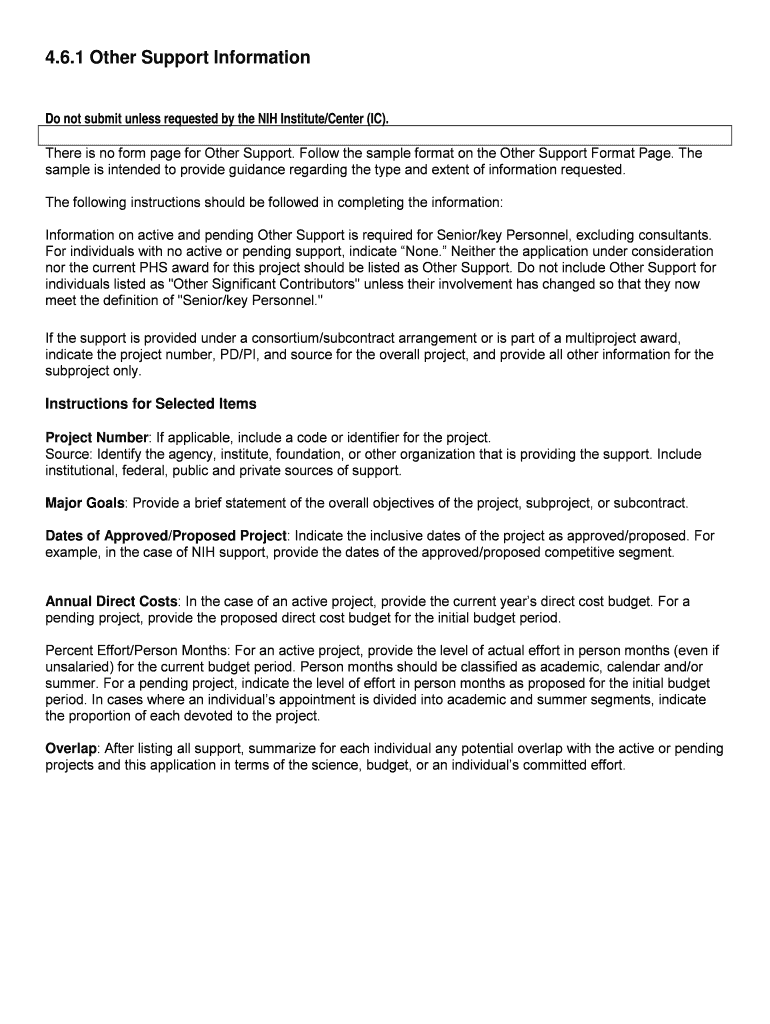
"1 Other Support Information" forms a crucial component in the submission of grant applications, especially within the framework of the National Institutes of Health (NIH). This form is central to ensuring transparency about the financial resources available to researchers. It encapsulates all support details for personnel involved in the grant, such as current and pending resources, which directly contribute to overall objectives. This includes both financial and non-financial support that personnel may receive in the course of their research. The purpose is to provide a comprehensive overview of potential overlaps or duplications in funding for individuals receiving NIH grants.
Usage of "1 Other Support Information"
Utilizing the "1 Other Support Information" involves meticulously documenting support details for key personnel. This documentation is required when applying for or managing NIH grants. The form details financial backing and non-financial contributions, including supplies, equipment, or access to specialized data. This information not only ensures compliance with NIH regulations but also facilitates a clearer understanding of how resources are allocated across research projects. Additionally, precise usage of this form helps in identifying potential overlaps, ensuring that resources are optimally utilized.
Steps to Complete the "1 Other Support Information"
-
Gather Required Information: Begin by collecting all necessary financial and non-financial support details for senior or key personnel. This may include grants, contracts, cooperative agreements, and any other sources of income or support.
-
Detail Each Support: Include specific information such as the project number, source of support, major goals, project dates, and the annual direct costs.
-
Effort Reporting: Clearly state the percentage of effort allocated to each support. This requires an accurate accounting of time commitments to ensure no overlap occurs.
-
Identify Overlaps: Review all documentation to identify potential overlaps with current applications or existing support and detail these in specific sections.
-
Finalize and Submit: After ensuring all information is accurate and complete, prepare the final document for submission to the relevant grant authority, ensuring adherence to any specified format requirements.
Key Elements of "1 Other Support Information"
-
Financial Support: Includes federal and non-federal sponsored projects, as well as any financial benefits received by personnel.
-
In-kind Contributions: Non-monetary support such as equipment, facilities, or additional resources that contribute to the project.
-
Effort Allocation: Clearly outlines the time commitment and percentage of effort for each personnel across all projects.
-
Potential Conflicts: Identifies and addresses any circumstances where financial interests may conflict with the NIH's terms of service.
Who Typically Uses "1 Other Support Information"
"1 Other Support Information" is primarily used by researchers and administrative staff involved in applying for or managing research grants funded by the NIH. This includes principal investigators, co-investigators, and any senior/key personnel on the grant. Grant administrators also play a crucial role in assembling and validating this information to ensure accuracy and compliance with NIH policies. The form helps organizations maintain a transparent overview of available resources, which is vital for planning and executing research projects successfully.
Legal Use of "1 Other Support Information"
The legal requirements surrounding "1 Other Support Information" stem from NIH's commitment to transparency and accountability in funding scientific research. The accurate disclosure of all resources helps to prevent conflicts of interest and ensures fair distribution of public funds. Non-compliance with these requirements can result in audits, financial penalties, or the reassessment of awarded grants. Consequently, institutions must be diligent in reporting and complying with these guidelines to avoid legal repercussions and maintain the integrity of the research enterprise.
Important Terms Related to "1 Other Support Information"
-
Pending Support: Refers to funding that has been submitted for but not yet awarded, including applications awaiting review.
-
In-kind Contribution: Non-cash assistance received, such as equipment or data, that is essential to the project.
-
Overlap: Occurs when there is a duplication of effort or funding across different projects, which can lead to conflicts.
-
Effort Commitment: The percentage of time a researcher dedicates to various projects, ensuring appropriate allocation.
Compliance and Non-Compliance Penalties
Compliance with "1 Other Support Information" is mandatory under NIH guidelines. Non-compliance may result in severe penalties, including the suspension of funding, requirement for repayment of funds, or future application restrictions. These measures underscore the importance of maintaining transparent and honest reporting practices in all documentation submitted. It is essential for researchers and institutions to be aware of these requirements and procedures to ensure compliance and uphold the ethical standards expected by funding agencies.




