






Definition & Meaning
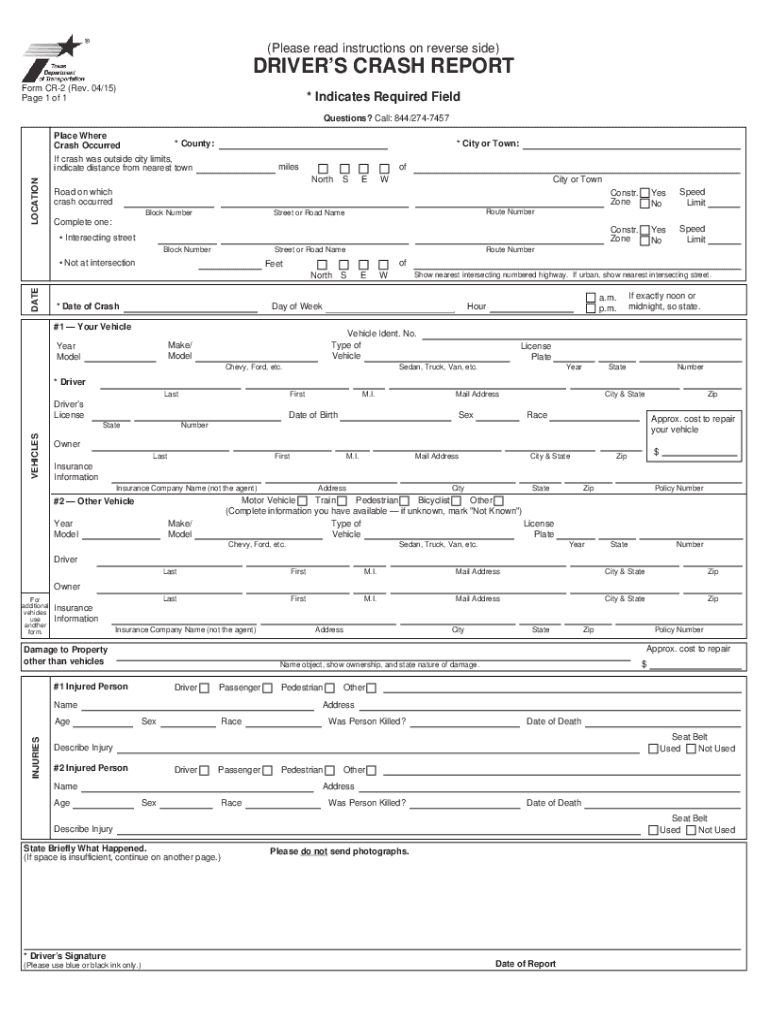
The "Texas Blue Form," officially known as the Driver's Crash Report (Form CR-2), is a document required by the Texas Department of Transportation for reporting certain types of vehicle crashes. This form is designed to capture crucial details about the incident, helping authorities understand the circumstances surrounding it. Drivers involved in the crash can use this form when the law enforcement officer did not file a report and the crash resulted in injury, death, or property damage exceeding $1,000.
Purpose of the Texas Blue Form
- Documentation: To officially record incidents for insurance and legal purposes.
- Assessment: Helps traffic authorities analyze accident trends and improve road safety measures.
- Accountability: Ensures drivers are held responsible for their roles in crashes.
How to Use the Texas Blue Form
Filling out the Texas Blue Form involves several steps to ensure all relevant information is accurately captured. This includes personal, vehicular, and crash-related details.
Step-by-Step Guide
- Personal Information: Enter your name, address, and contact details.
- Vehicle Information: Provide details of the vehicle involved, including make, model, and license plate number.
- Detailed Incident Description: Describe the circumstances of the crash, including location, time, and weather conditions.
- Injury and Damage Report: Note any injuries sustained and estimate the extent of property damage.
- Driver’s Statement: Provide a narrative account of what happened before, during, and after the crash.
How to Obtain the Texas Blue Form
There are several ways to access the Texas Blue Form, ensuring you can start the process promptly after an accident.
Acquisition Methods
- Online Download: Available on the Texas Department of Transportation's website for easy access and download.
- Local DMV Offices: Hard copies can be picked up at your local Department of Motor Vehicles.
- Insurance Providers: Many insurers provide this form when filing a claim related to a car accident.
Steps to Complete the Texas Blue Form
Successfully filling out the Texas Blue Form demands attention to detail and accuracy to mitigate any processing delays.
Detailed Completion Instructions
- Preparation: Gather all necessary documents, such as driver’s license, vehicle registration, and insurance information.
- Filling Out the Form: Use blue or black ink to ensure clarity. Avoid erasures or whiteout to maintain the form's integrity.
- Review: Double-check all entered information for accuracy before submission.
- Submission: Follow the specified method for submission, whether mailing or handing it in person to the relevant office.
Who Typically Uses the Texas Blue Form
Understanding who uses the Texas Blue Form can help determine when to use this document.


Primary Users
- Drivers Involved in Non-Police Reported Crashes: Especially where injury or significant damage has occurred.
- Insurance Adjusters: Utilize the form for claim processing and assessment.
- Legal Entities: Lawyers may require the form for litigation purposes involving traffic incidents.
Key Elements of the Texas Blue Form
Several components must be filled accurately to ensure the form is complete and valid.
Essential Components
- Incident Details: Time, date, and precise location of the crash.
- Vehicle and Driver Info: Identification of all involved parties and vehicles.
- Damage and Injury Assessment: A summary of property damage and injuries sustained.
- Chemical Test Results: If tests were conducted, this information must be included.
State-Specific Rules for the Texas Blue Form
The completion and submission of the Texas Blue Form adhere to specific regulations and guidelines.
Compliance Guidelines
- Submission Timeline: Must be submitted within 10 business days post-accident.
- Mandatory Requirements: Required when property damage exceeds $1,000 or if injuries are involved.
- Filing: Only applicable when no law enforcement report was filed at the scene.
Examples of Using the Texas Blue Form
Real-world scenarios illustrate the form's utility and application in various crashing events.
Practical Applications
- Minor Accidents: A fender bender where police did not file an official report.
- Private Property Incidents: Where two drivers collide in a private parking lot, requiring documentation for insurance claims.
- Injury Reports: Documenting minor injuries when both parties agree not to involve police.
By following these structured guidelines and comprehensive explanations, users can effectively handle the Texas Blue Form, ensuring all necessary details are adequately addressed for timely processing.