






Definition & Meaning
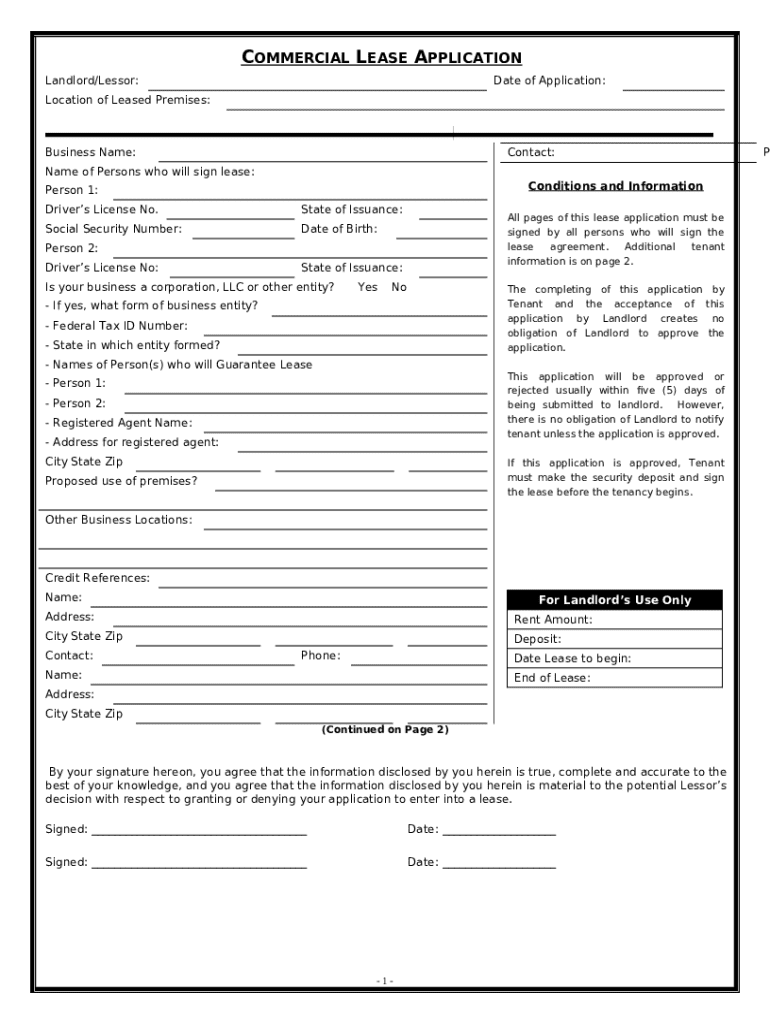
A Commercial Lease Application is a formal document utilized by landlords and property managers to evaluate potential tenants for commercial real estate properties. This application gathers essential information about the interested parties, encompassing personal details, business structure, and financial background. It also typically includes provisions for acquiring credit references and consent for conducting credit checks. The information collected allows the landlord to assess the tenant's reliability and ability to meet lease obligations. This form is crucial in the initial stages of securing a commercial lease, serving both as a verification tool and a blueprint for negotiating lease terms.
Elements of the Form
Key components of the Commercial Lease Application include:
- Personal Information: Names, addresses, and contact details of applicants.
- Business Details: Business name, type (e.g., LLC, Corporation), and operating history.
- Financial Information: Bank account details, previous rental experiences, and income statements.
- Credit References: Contact information for credit references that can vouch for the applicant's financial reliability.
- Consent for Credit Checks: Authorization for landlords to conduct credit assessments for risk evaluation.
These components collectively ensure a comprehensive understanding of the tenant's profile, assisting property owners in making informed decisions.
Steps to Complete the Commercial Lease Application
Completing a Commercial Lease Application involves several sequential steps, each necessitating attention to detail and accuracy. Missteps or omissions can delay the approval process or result in a rejected application.
- Gather Necessary Information: Collect all required personal and business documents, including identification, financial statements, and references.
- Fill Out Personal and Business Details: Provide complete and accurate information as requested, ensuring all fields are thoroughly addressed.
- Attach Supporting Documentation: Include documents such as financial records, tax returns, and business licenses to substantiate the application.
- Obtain Credit References: Secure credit references and ensure their consent to be contacted.
- Provide Authorization for Credit Check: Clearly sign and date the credit check consent section to facilitate the landlord's evaluation process.
- Review Application for Completeness: Double-check all entered data for accuracy and ensure no section is left incomplete.
- Submission: Submit the completed application via the preferred method specified by the landlord, whether electronically, by mail, or in person.
These steps ensure that the application process proceeds smoothly and efficiently, minimizing the time needed for processing and approval.
Important Terms Related to Commercial Lease Application
Understanding commonly used terms within a Commercial Lease Application helps demystify the process and aids applicants in navigating the complexities involved:
- Tenant: The individual or business entity applying to lease the commercial space.
- Landlord: The property owner or manager responsible for leasing the space.
- Credit References: Contacts who can verify the applicant's financial history and reliability.
- Financial Statement: A summary of the applicant’s financial status, including assets, liabilities, income, and expenses.
- Security Deposit: A deposit paid to secure the lease and cover potential damages or defaults.
These terms form the foundation of lease applications, clarifying obligations and expectations for both parties involved.
Legal Use of the Commercial Lease Application
The legal usage of a Commercial Lease Application is underscored by its role in protecting the interests of both landlords and tenants. It outlines the terms for evaluating potential tenants, ensuring all data collected is used solely for lease decision-making purposes. The authorization to conduct credit checks and request financial details is grounded in legal requirements, necessitating consent from applicants. Landlords must adhere to privacy regulations, safeguarding applicant information against misuse or unauthorized disclosure. By upholding these legal standards, the application process maintains integrity and fosters trust between all involved parties.
Key Elements of the Commercial Lease Application
Primary elements integral to a Commercial Lease Application center around gathering comprehensive tenant information for thorough assessment:
- Personal and Contact Information: Ensures accurate identification of potential tenants.
- Business Structure and Operational History: Offers insights into the business’s stability and longevity.
- Credit and Financial Checks: Evaluates the financial credibility of the applicant.
- Signature and Consent: Legalizes the tenant’s agreement to undergo checks and verify the provided details.
These components work collaboratively to form a robust framework that allows property owners to vet potential tenants systematically.
State-Specific Rules for the Commercial Lease Application
State-specific regulations can significantly impact the requirements and legalities of Commercial Lease Applications. For example, certain states mandate explicit consent language for credit checks, while others may have additional disclosure requirements pertaining to rental history and tenant rights. Understanding these laws ensures compliance with state regulations and minimizes potential legal disputes. Tenants and landlords are advised to consult state guidelines or legal counsel to ensure all aspects of the lease application and subsequent lease agreement adhere to local laws.
Who Typically Uses the Commercial Lease Application
The Commercial Lease Application is primarily used by landlords, property managers, and commercial real estate agents. It serves as a critical tool for evaluating tenant eligibility and ensuring that prospective tenants meet the financial and operational criteria required to lease the space. Retailers, business owners, and corporations seeking new premises also utilize this form to initiate the process of acquiring a commercial lease. By standardizing the information and evaluation process, this application assists both applicants and property managers in facilitating efficient and transparent leasing agreements.


Scenarios of Usage
- Expanding Businesses: Companies seeking larger or additional premises to accommodate growth.
- Relocating Enterprises: Businesses moving to a more strategic location or more suitable space.
- New Ventures: Startups requiring a foundation for business operations.
These scenarios illustrate the breadth of the application’s utility across diverse business contexts.
Application Process & Approval Time
The application process for a Commercial Lease typically follows a structured pathway designed to be both thorough and time-efficient.
- Submission of Application: Potential tenants submit a completed application with all required documents.
- Review and Verification: Property managers conduct credit checks and verify business and financial details.
- Approval Decision: Based on the review, a decision is made regarding the applicant’s suitability. This usually involves assessing the sufficiency of credit history and financial stability.
- Notification to Applicant: Applicants are informed of the decision, and if approved, terms of the lease and requirements for any security deposits are communicated.
The typical timeframe for this process can vary, generally taking anywhere from one to three weeks, depending on factors such as applicant responsiveness and complexity of verification needed.
In conclusion, understanding and following these components and procedures of a Commercial Lease Application is vital for prospective tenants and landlords alike, ensuring a smooth and informed leasing process.