






Definition & Meaning
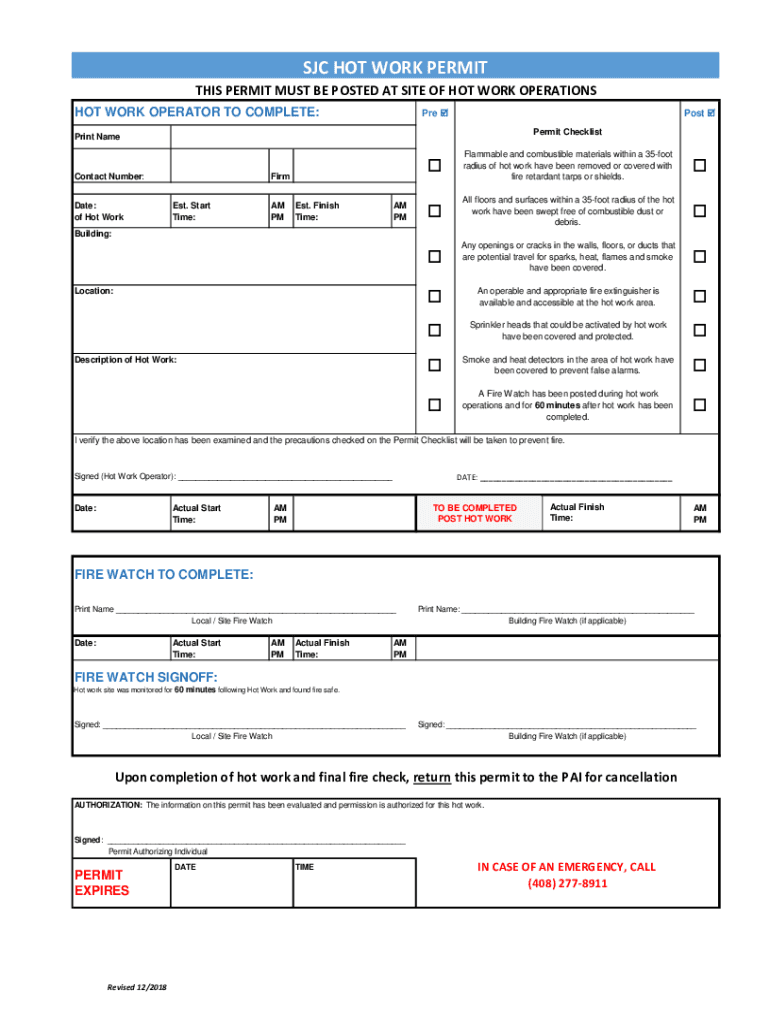
The Hot Work Permit is an essential document for ensuring safety during operations involving the use of open flames or heat-producing tools. It serves as an official record that confirms important safety precautions have been reviewed and implemented before starting any hot work like welding or cutting. Designed to minimize fire hazards, this fillable and printable form is crucial in maintaining a safe work environment by detailing necessary steps to manage and mitigate risks associated with hot work operations. This permits oversight and responsibility, typically recorded by management personnel, illustrating the commitment to safety compliance in any work setting.
Key Elements of the Hot Work Permit
There are several vital components that make up the Hot Work Permit. Key elements include:
- Identification Details: The section captures the location, date, and specific details about the job being conducted.
- Work Duration: Specifies the start and expected completion time for the hot work.
- Pre-Work Checklist: This includes safety measures such as removing flammable materials, ensuring fire extinguishers are accessible, and notification procedures.
- Authorization and Monitoring: Persons responsible for authorizing the work and monitoring the site must sign this part, ensuring accountability.
- Post-Work Monitoring: It mandates a stipulated 60-minute fire watch period after the job is completed, to promptly address any potential hazards.
Steps to Complete the Hot Work Permit
Completing a hot work permit involves several detailed steps to ensure all safety measures are addressed:
- Pre-Work Assessment: Evaluate the work area and remove any combustible and flammable materials.
- Completion of the Pre-Work Checklist: Ensure all safety precautions, including fire extinguishers and smoke detectors, are addressed.
- Authorization: Obtain signatures from authorized personnel, usually from site management or safety officers.
- Execution of Work: Conduct the hot work within the guidelines and specified time.
- Post-Work Safety Measures: Monitor the area for any signs of fire or hazards for a minimum of one hour post-operations.
How to Use the Hot Work Permit - Fill Online, Printable, Fillable, BlankDocHub
Using DocHub, the Hot Work Permit can be filled out efficiently online. The platform supports import from various devices and storage options, making it accessible from anywhere. You can add text, signatures, and other necessary elements using the intuitive online editor, which simplifies the entire permit completion process. The ability to collaborate with team members ensures that all necessary signatures and inputs are collected before the work begins.
Benefits of Using DocHub:
- Accessibility: Accessible from both desktop and mobile web browsers, ensuring flexibility in managing documents.
- Security: With secure 256-bit SSL encryption for all data transfer processes.
- Integration: Direct connectivity with services such as Google Workspace for seamless file management.
Who Typically Uses the Hot Work Permit - Fill Online, Printable, Fillable, BlankDocHub
This permit is primarily utilized by individuals and entities engaged in activities that involve high-temperature equipment. Typical users include:
- Manufacturing Plants: Where welding, cutting, or similar heat-producing activities are conducted.
- Construction Companies: During building development or refurbishment that involves soldering or similar processes.
- Maintenance Crews: For repair works in environments where fire risks need to be managed effectively.
- Safety Officers and Managers: In charge of coordinating and overseeing compliance with safety protocols.


Legal Use of the Hot Work Permit
In the U.S., compliance with safety regulations involving hot work operations is often mandated by workplace safety authorities like OSHA. The form serves a legal purpose by documenting that all necessary precautions have been taken to prevent workplace accidents. It can serve as evidence of due diligence in risk management in case of any audits or incident investigations, underscoring its legal significance within a professional environment.
State-Specific Rules for the Hot Work Permit
While the core elements of the Hot Work Permit are standardized, certain states may have additional requirements or emphasize different aspects due to local fire safety legislation. These differences can include:
- Specific training for personnel: Some states may require specific certifications for those conducting hot work.
- Additional monitoring measures: Enhanced supervision might be mandated under region-specific workplace safety guidelines.
- Document retention periods: Variations exist in how long these permits need to be retained for record-keeping.
Examples of Using the Hot Work Permit
Real-world examples demonstrate the importance and application of the hot work permit. For instance:
- A Construction Site: A large-scale project involving the installation of metal frameworks might require numerous permits, with supervisors checking each site for compliance before the work starts.
- Industrial Maintenance Work: During routine checks involving repairs using blowtorches, the review of each work area secures a safe environment.
- Public Infrastructure Projects: Municipal workers involved in routine repairs of city utilities may utilize these permits to ensure compliance and safety in public spaces.