






Definition & Meaning
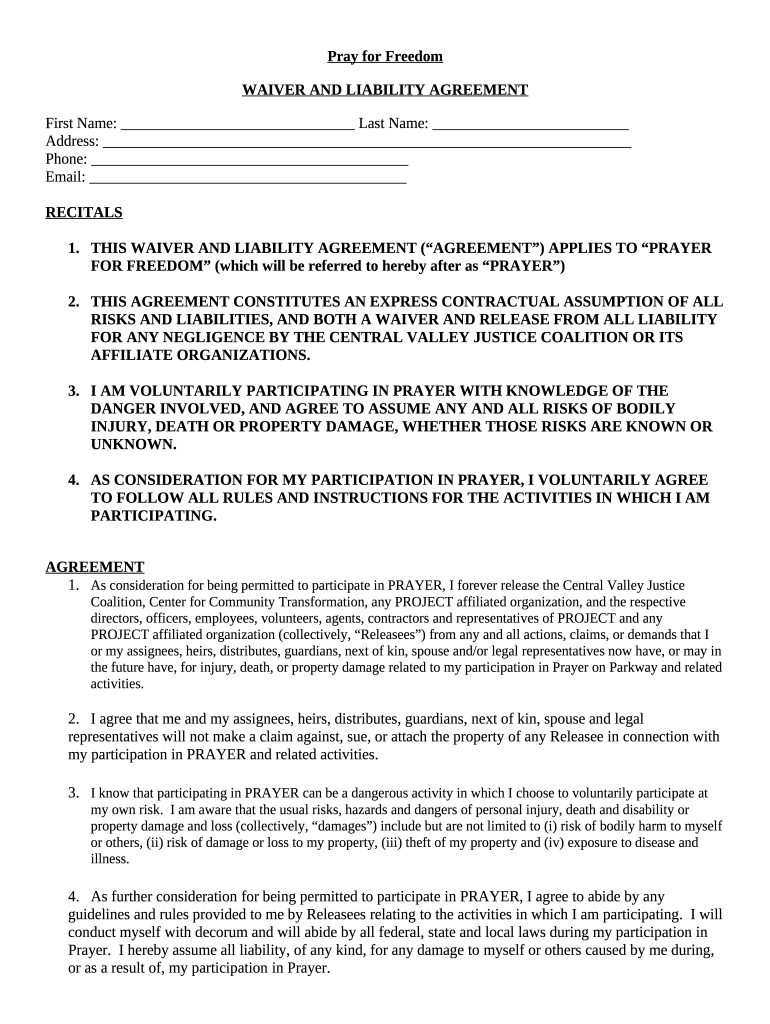
A Waiver and Liability Agreement is a legal document designed to protect organizations and event hosts from potential claims related to risks associated with participation in certain activities or events. Participants often sign this document to acknowledge the inherent risks involved and to release the organization from liability for injuries or damages that may occur. The agreement is crucial in ensuring that participants voluntarily assume any risks and comply with event rules, thus providing a legal shield for the organization.
Key Elements of the Waiver and Liability Agreement
The core components of a Waiver and Liability Agreement include the following:
- Identification of Parties: Clearly names the involved parties, typically the organizer of the event and the participant.
- Assumption of Risk: Details the potential risks inherent to the activity, ensuring the participant acknowledges understanding these risks.
- Release of Liability: Participants release the organization from any claims or damages arising from participation in the activity.
- Indemnification Clause: Requires participants to indemnify the organization against any further claims or suits.
- Governing Law: Specifies which state’s laws govern the agreement, providing legal clarity.
These elements are crafted to ensure adequate legal protection while making the expectations and obligations of both parties transparent.
Steps to Complete the Waiver and Liability Agreement
Completing a Waiver and Liability Agreement involves several steps:
-
Read the Document Thoroughly: Participants should carefully read and understand the complete content of the waiver, paying particular attention to the risks acknowledged.
-
Provide Required Information: Fill in personal details such as name, contact information, and any pertinent details about the event or activity.
-
Acknowledge Risks: Explicitly acknowledge understanding of the risks and confirm agreement to assume such risks.
-
Sign and Date the Document: Ensure that both the participant and, if necessary, a witness or guardian sign and date the waiver.
-
Submit the Completed Form: Return the document to the organization hosting the event, either in paper form or via a digital upload, as required.
Who Typically Uses the Waiver and Liability Agreement
Waiver and Liability Agreements are widely used across various sectors to manage risk. Common users include:
- Event Organizers: For events like marathons, concerts, or festivals where participant safety cannot be fully controlled.
- Sports Teams and Gyms: To mitigate liability from potential sports injuries.
- Volunteer Organizations: To cover activities that involve physical exertion or potential hazards.
These organizations use waivers as a form of risk management tool to protect themselves legally while offering their services.

Legal Use of the Waiver and Liability Agreement
The legal enforceability of Waiver and Liability Agreements depends on several factors:
- Clarity and Comprehensiveness: The language must be clear, without legal jargon, ensuring participants understand the terms.
- Voluntary Consent: The participant must voluntarily sign the document without coercion.
- Reasonableness of Terms: Certain jurisdictions review whether the scope of the waiver is reasonable relative to the risks involved.
When structured correctly, these agreements serve as a robust defense against lawsuits stemming from accidental injuries.
Important Terms Related to Waiver and Liability Agreement
Certain terms are pivotal in comprehending Waiver and Liability Agreements:
- Negligence: Failing to take proper care in doing something, especially causing injury or damage.
- Indemnification: Security against legal liability for one's actions.
- Gross Negligence: A conscious and voluntary disregard for the need to use reasonable care.
Understanding these terms can significantly impact how the agreement is interpreted in legal contexts.
State-Specific Rules for the Waiver and Liability Agreement
Each state within the U.S. may have unique regulations affecting the enforceability of Waiver and Liability Agreements. For example:
- California: Often scrutinizes waivers involving minors more stringently.
- New York: Traditionally does not enforce waivers within certain labor and recreational contexts.
It’s essential for organizations to tailor their waivers to comply with state-specific laws to ensure their legal enforceability.
Examples of Using the Waiver and Liability Agreement
Real-world scenarios demonstrate the diverse applications of Waiver and Liability Agreements:
- Music Festivals: Require attendees to sign waivers acknowledging risks linked to large crowds.
- Adventure Sports: Require waivers to participate in activities like bungee jumping or rock climbing.
In these cases, the waiver acts as a mutual acknowledgment of risk between the organizers and the participants, providing legal coverage for the event hosts.
How to Use the Waiver and Liability Agreement
To use a Waiver and Liability Agreement effectively, organizations should:
- Draft a Comprehensive Document: Tailor the document to specific activities and risks.
- Educate Participants: Provide clear communication on the nature of the waiver to ensure understanding.
- Maintain Records: Keep accurate records of all signed waivers to protect against future claims.
Utilizing a properly structured waiver streamlines risk management and enhances legal protection.