






Definition & Meaning
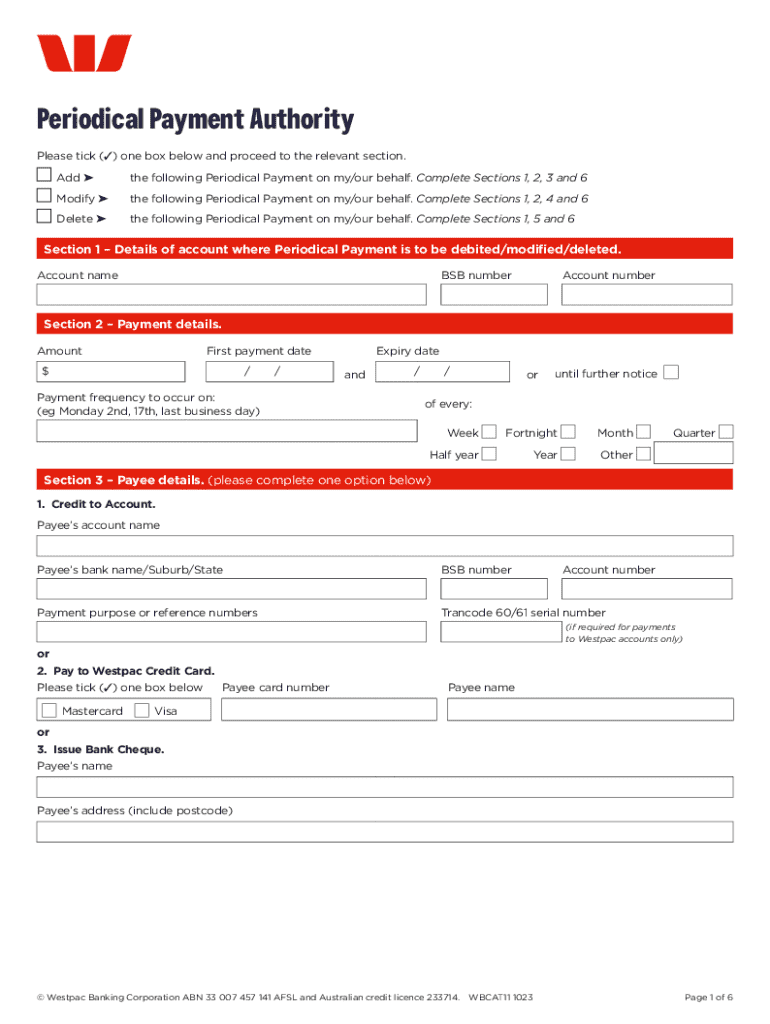
The "Periodical Payment Authority" is a form used by financial institutions like Westpac Banking Corporation to set up, modify, or cancel regular payments from a customer's account. This document authorizes the bank to automatically deduct a specified amount at regular intervals to pay bills or transfer funds to a designated payee. Such arrangements simplify transaction processes for recurring expenses, such as utilities, subscriptions, or loan repayments, by ensuring timely and consistent payments without the need for manual intervention each time.
Key Elements of the Periodical Payment Authority
The form comprises several sections, each essential for authorizing recurring transactions. These sections include:
- Account Details: Information about the account from which payments will be deducted.
- Payment Specifics: The amount, frequency, and start date of the payments.
- Payee Information: Details of the recipient, such as account number and bank details for transfers.
- Customer Declarations: Consent from the account holder to initiate and manage the payments as specified.
Steps to Complete the Periodical Payment Authority
- Gather Required Information: Collect details of the account for outgoing payments, the payee’s information, and specifics of the payment agreement.
- Fill Out Account Details: Enter the account number and other related particulars.
- Specify Payment Details: Indicate the payment amount, frequency (e.g., weekly, monthly), and start date.
- Provide Payee Information: Include the payee’s bank information for accurate transfer facilitation.
- Read Terms and Conditions: Understand the terms, including any fees and customer support provisions.
- Sign the Declaration: Confirm agreement with the terms by signing the declaration section.
How to Obtain the Periodical Payment Authority
The form can typically be acquired directly from the bank's website or by visiting a local branch. Customers can download the document, fill it out digitally or manually, and then submit it as directed by the financial institution.
Legal Use of the Periodical Payment Authority
This form is a legally recognized document that enables recurring payments. It ensures that both the account holder’s and the payee’s rights and obligations are clear. The processing of such payments aligns with financial regulations and consumer protection laws in the United States, ensuring secure and authorized transactions.
Who Typically Uses the Periodical Payment Authority
- Individuals managing routine bill payments, such as utilities or mortgage installments.
- Businesses needing to automate vendor payments or regular payroll distributions.
- Organizations like charities for automatic donor contributions, providing convenience and consistency.


Examples of Using the Periodical Payment Authority
Consider a scenario where an individual sets up recurring payments for gym membership fees. By filling out the form, the gym receives payments on the same date each month, reducing the risk of late fees. Similarly, businesses could automate supplier payments, ensuring timely operations and fostering good supplier relationships.
Form Submission Methods (Online / Mail / In-Person)
- Online: Some banks allow online submission through their secure website portals.
- Mail: Completed forms can be mailed to the bank’s specified address.
- In-Person: Customers could visit a branch for direct submission and confirmation.
Digital vs. Paper Versions
Digital versions of the form are increasingly common, allowing users to complete and submit the document electronically. They provide convenience, reduce paperwork, and enable faster processing. However, paper versions remain available for those who prefer traditional methods or lack digital access.
Important Terms Related to Periodical Payment Authority
- Autopay: The process of automating bill payments through regular deductions.
- Payee: The entity or individual receiving the payment.
- Frequency: How often the payment occurs, such as weekly or monthly.
- Declaration: Legal acknowledgment and consent by the account holder to authorize the payments.
Why Use a Periodical Payment Authority
Utilizing this form offers several benefits:
- Ensures Timely Payments: Reduces the chance of missing due dates.
- Simplifies Financial Management: Automates regular transactions, freeing up personal and administrative resources.
- Builds Credit: Consistent payments can positively impact credit scores for both individuals and businesses.
Penalties for Non-Compliance
Failing to adhere to the terms outlined in the authority, such as insufficient funds, can result in penalties. These might include fees assessed by the bank or the interruption/cancellation of the payment arrangement. Understanding these potential implications underscores the importance of maintaining adequate account balances and ensuring that all terms are met.
Business Types That Benefit Most from Periodical Payment Authority
- Service-Based Company: Automates client billing cycles.
- Retail Chains: Consistent supplier settlements streamline inventory management.
- Non-Profits: Receives regular donations with minimal manual oversight.