
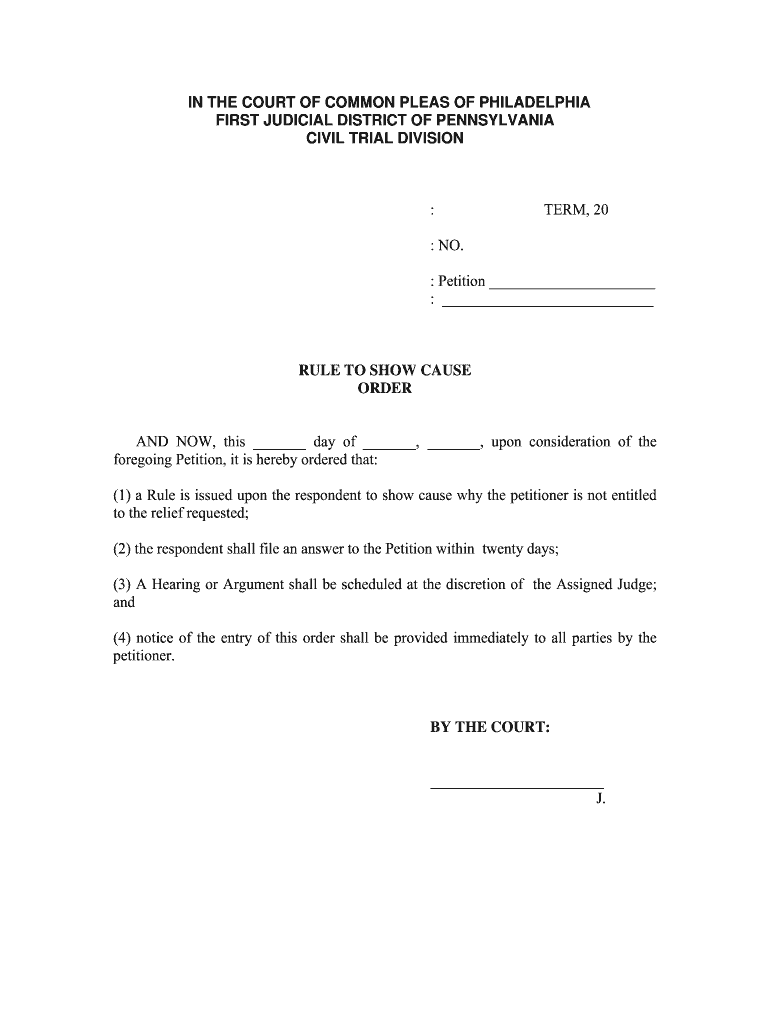







Definition and Meaning of Show Cause Order
A show cause order is a legal document issued by a court that requires a respondent to explain or justify why a particular action should not be taken. This order is often associated with a petition from a party seeking some form of relief, prompting the respondent to provide a valid reason for their stance within a specified timeframe. The underlying purpose of this order is to ensure that parties involved in a legal proceeding have a fair opportunity to present their case to the court, particularly in situations where immediate action is deemed necessary.
- Purpose: The show cause order serves as a mechanism to compel a response before a judge takes any further action, such as issuing a contempt order or granting a petition.
- Typical Scenarios: Common uses include divorce proceedings, custody disputes, or any case where one party believes the other is not fulfilling legal obligations.
Key Elements of a Show Cause Order
Understanding the key elements of a show cause order is vital for effective compliance and response. Here are the main components you can expect to find:
- Petitioner Information: The name and contact information of the party initiating the order.
- Respondent Information: The name and contact details of the individual or entity required to respond.
- Timeframe for Response: A specific deadline is provided, typically ranging from five to twenty days, during which the respondent must submit their answer.
- Hearing Date: The order will outline if and when a formal hearing is scheduled, at the discretion of the court.
- Substance of the Request: The order articulates the subject matter of the dispute, specifying what the petitioner seeks.
These elements are crucial as they clearly delineate the expectations and obligations of parties involved in the legal proceedings.
Steps to Complete and Respond to a Show Cause Order
Responding appropriately to a show cause order is essential to maintaining compliance with court requirements. Here are the steps involved in this process:
- Review the Order: Thoroughly read the show cause order to understand the request, deadlines, and relevant laws.
- Gather Evidence: Compile any documentation or evidence that supports your position. This may include contracts, correspondence, or affidavit statements.
- Draft Your Response: Tailor your answer to directly address the claims made in the show cause order. Ensure clarity and detail in your submission.
- Submit Your Response: File your written response with the appropriate court by the specified deadline. Ensure compliance with formatting and procedural guidelines.
- Prepare for the Hearing: If a hearing is scheduled, organize your materials, evidence, and any necessary witnesses to support your case.
By following these steps, you can effectively mount a defense or justification in response to the show cause order.
Importance of the Show Cause Order in Legal Proceedings
Understanding why a show cause order is essential can shed light on its role within the justice system. This order performs several critical functions:
- Encourages Adherence to Court Orders: By compelling a response, it helps ensure that parties comply with existing agreements or responsibilities.
- Balances Responsibilities: It allows respondents to articulate their position and avoid unilateral decisions by the court.
- Facilitates Resolution: The order aids in expediting legal resolutions by addressing disputes early in the process.
The impact of a show cause order can have significant implications for legal outcomes, making compliance and timely response highly important.
Examples of Show Cause Orders in Practice
Real-world examples illuminate how show cause orders are utilized across various contexts. Here are a few scenarios:
- Child Custody: A parent may file a show cause order when the other parent fails to adhere to a child custody agreement, requiring them to justify non-compliance.
- Divorce Proceedings: One spouse may request an order compelling the other to show cause why they should not be required to pay temporary alimony.
- Regulatory Compliance: A business may receive a show cause order from a regulatory agency regarding non-compliance with safety standards, requiring justification to avoid penalties.
These examples highlight the versatility and necessity of show cause orders in both civil and regulatory contexts.
Common Penalties for Non-Compliance with a Show Cause Order
Neglecting to respond to a show cause order can lead to serious repercussions. Common penalties include:
- Contempt of Court: The court may find a respondent in contempt, which can result in fines or even incarceration.
- Default Judgment: If a respondent fails to appear or submit a response, the court may grant the petitioner's request by default, leading to unfavorable outcomes.
- Increased Legal Costs: Non-compliance can lead to additional legal actions, resulting in increased costs for the non-compliant party.
Understanding these potential penalties can motivate timely and effective responses to show cause orders.




