




01. Edit your form online
Type text, add images, blackout confidential details, add comments, highlights and more.

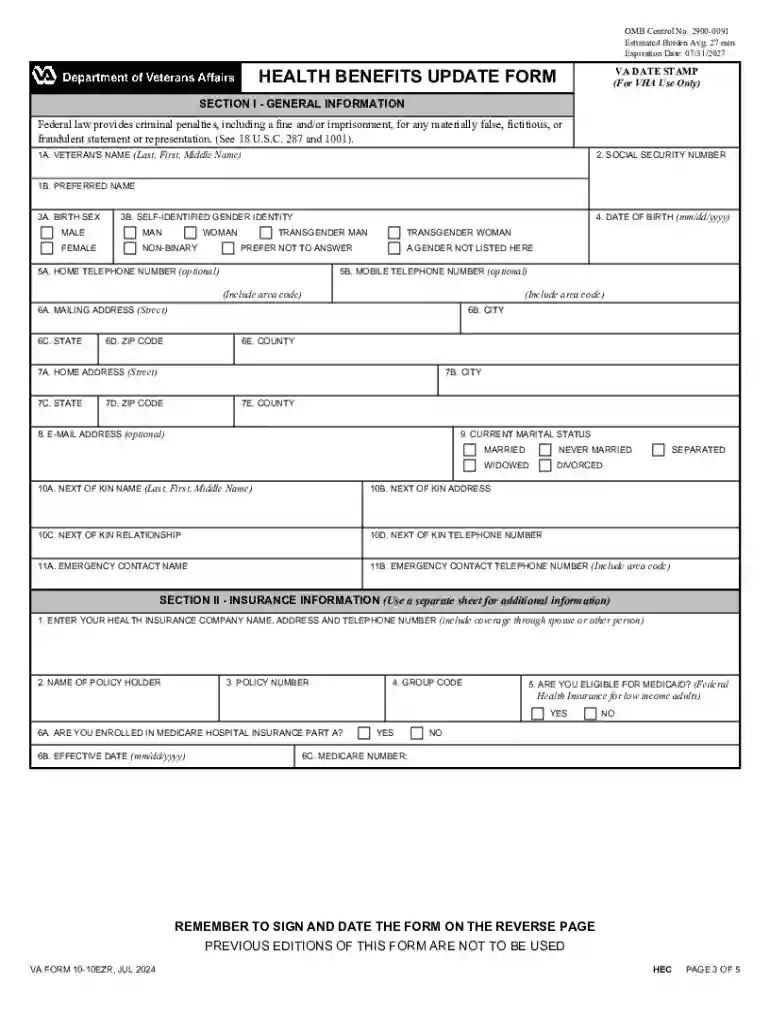
Type text, add images, blackout confidential details, add comments, highlights and more.

Draw your signature, type it, upload its image, or use your mobile device as a signature pad.

Send it via email, link, or fax. You can also download it, export it or print it out.
The term "service-connected" (SC) refers to a specific determination made by the U.S. Department of Veterans Affairs (VA). This designation indicates that a veteran's illness or injury was incurred or aggravated during military service. Understanding this classification is vital, as it forms the basis for veterans to receive various benefits and compensations from the VA. The process involves a detailed review of medical records, service history, and sometimes a medical examination to establish a direct correlation between the service time and the medical condition.
Service-connected determinations hold significant importance for veterans seeking benefits. Recognizing a condition as SC influences the eligibility for disability compensation, access to VA healthcare, and other related benefits. Identifying an illness or injury as service-connected provides a gateway to financial assistance, vocational training, and adaptive housing grants, among other support mechanisms. Such recognition also extends to benefits for family members in certain circumstances, making it a critical process for comprehensive veteran care.
Gather Required Documentation:
File a Claim:
VA Review Process:
Receive Decision:
Navigating the legal aspects of service-connected determination involves understanding the obligations and rights under U.S. law. It includes adhering to submission guidelines and meeting deadlines for appeals if initial claims are denied. The Veterans Appeals Improvement and Modernization Act of 2017 provides a framework for veterans seeking recourse on VA decisions, emphasizing timely and compliant application submissions.
The primary users include veterans who have suffered injuries or developed illnesses during active duty. It also extends to National Guard and Reserve members on active duty, along with dependents who may qualify for auxiliary benefits. Typically, veterans recently transitioned to civilian life are the most frequent applicants, often seeking initial evaluations or re-evaluations of existing conditions.


Veterans with documented exposure to hazardous materials, such as those present in Agent Orange or burn pits, often apply for SC determinations. Situations like a documented injury from a training exercise or the aggravation of a pre-existing condition during service form typical scenarios. Another common example is for veterans who developed post-traumatic stress disorder (PTSD) from service-related experiences.
Prompt filing is crucial. Veterans are advised to submit their claims as soon as they identify a possible service connection. There is no statute of limitations for filing an initial claim; however, meeting specific deadlines is critical, particularly for appealing decisions. Veterans must file Notices of Disagreement (NOD) within one year of the VA’s decision if they wish to contest the outcome.
We've got more versions of the SERVICE-CONNECTED (SC): A VA determination that an illness or injury was incurred or aggravated in t form. Select the right SERVICE-CONNECTED (SC): A VA determination that an illness or injury was incurred or aggravated in t version from the list and start editing it straight away!
| Versions | Form popularity | Fillable & printable |
|---|---|---|
| 2024 | 4.2 Satisfied (54 Votes) | |
| 2024 | 4.9 Satisfied (26 Votes) | |
| 2023 | 4.9 Satisfied (48 Votes) | |
| 2022 | 4.4 Satisfied (53 Votes) | |
| 2021 | 4.8 Satisfied (75 Votes) | |
| 2020 | 4.3 Satisfied (55 Votes) | |
| 2017 | 4.3 Satisfied (90 Votes) | |
| 2015 | 4.3 Satisfied (48 Votes) | |
| 2011 | 4.3 Satisfied (99 Votes) | |
| 2010 | 4 Satisfied (47 Votes) |
At DocHub, your data security is our priority. We follow HIPAA, SOC2, GDPR, and other standards, so you can work on your documents with confidence.

Compensation is a tax-free monetary benefit paid to Veterans with disabilities that are the result of a disease or injury incurred or aggravated during active
from disease or injury incurred or aggravated in line or duty (Title 10 status) The Veteran died from a non service-related injury or disease, but was.Read more


