






Definition and Purpose of Academic Internship at Clark
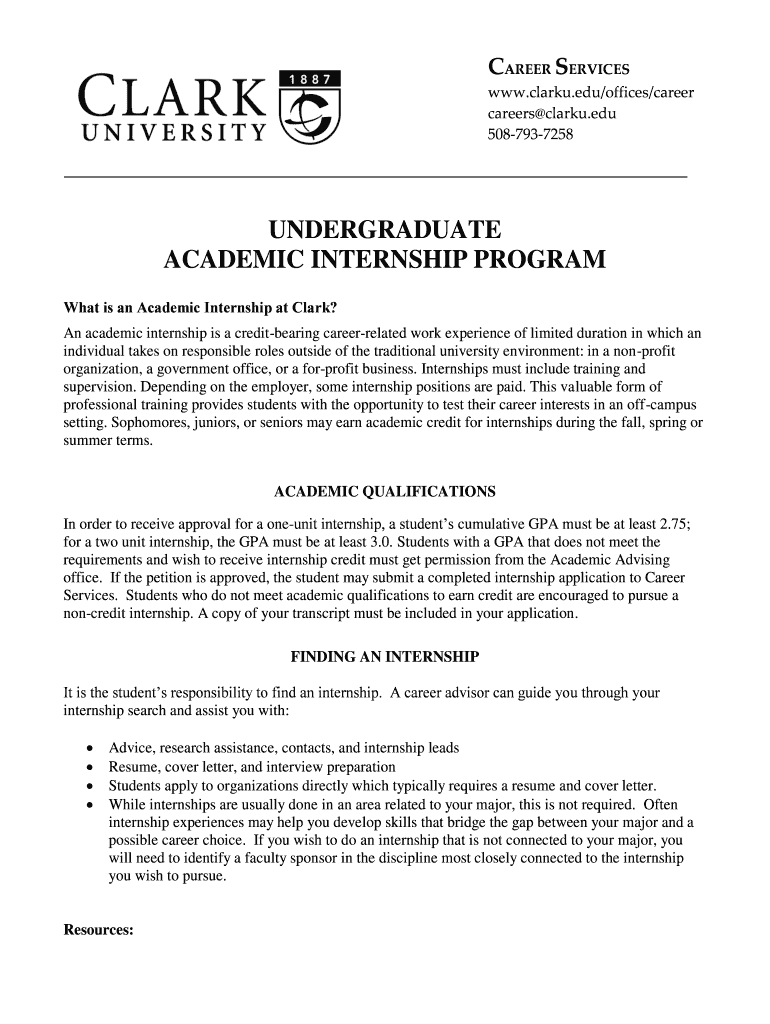
An academic internship at Clark University is a structured program designed to provide undergraduate students with practical work experience in their chosen field while earning academic credit. The program integrates professional settings with academic learning, enabling students to apply theoretical knowledge in real-world environments. By participating in the academic internship, students gain valuable insights into their future careers, develop professional skills, and build networks that can facilitate post-graduation opportunities.
Eligibility Criteria for Student Participation
Students interested in participating in an academic internship must meet certain eligibility criteria set by Clark University. Typically, these include:
- Enrolled undergraduate status at Clark University
- Completion of prerequisite courses relevant to the internship field
- Maintenance of a minimum GPA as specified by the program
- Approval from a faculty sponsor who oversees academic progress during the internship
These criteria ensure that students are adequately prepared to contribute effectively in a professional setting and benefit academically from the experience.


Application Process and Approval Time
The application process for an academic internship involves several key steps:
- Identifying Suitable Internship Opportunities: Students should search for internships that align with their career goals and academic requirements.
- Consulting with Faculty Sponsors: Before applying, students need to discuss potential internships with their faculty sponsor to ensure alignment with their academic programs.
- Submitting Required Documentation: Applications typically require a resume, cover letter, and the internship proposal form.
- Receiving Approval: After submission, the application is reviewed by faculty sponsors and internship coordinators to ensure compliance with program standards.
The approval process may take several weeks, so early application is advised to accommodate any administrative requirements.
Responsibilities of Site Supervisors and Faculty Sponsors
Site supervisors and faculty sponsors play crucial roles in the success of an academic internship:
-
Site Supervisor Responsibilities:
- Providing a structured and supportive work environment
- Offering guidance and feedback to enhance student learning and skill development
- Completing evaluations of the student’s performance during the internship
-
Faculty Sponsor Responsibilities:
- Supporting students in aligning internship activities with academic goals
- Monitoring and evaluating the student's progress through regular check-ins and assignments
- Grading the student based on set academic criteria and internship performance
These roles ensure that students gain maximum benefit from their internship experiences while fulfilling academic requirements.
Key Elements and Structure
The key elements of an academic internship at Clark include:
- Academic Component: Students must complete assignments or projects that relate their internship experience to academic theory and objectives.
- Professional Component: This involves practical work experience where students apply academic knowledge in industry-settings.
- Feedback and Reflection: Continuous feedback from site supervisors and reflection assignments help students assess their learning and professional growth.
This structure helps students understand the connection between academic learning and practical application, contributing to their overall educational experience.
Special Circumstances: International Students and Management Majors
Certain groups may have additional considerations when participating in academic internships:
- International Students: Often require additional documentation, such as work visas, and may have restrictions on the type and length of internships.
- Management Majors: These students might have tailored requirements that align with the specific demands of their field, such as specific project deliverables or management-oriented roles.
These special circumstances highlight the importance of consulting with academic advisors to ensure compliance with university policies and immigration regulations.
Examples of Successful Academic Internships
Examples of successful internships can serve as guidance for prospective students:
- A biology student working at a research lab developed a data analysis project that was integrated into their final thesis.
- A marketing major leveraged their internship at an advertising firm to create a digital marketing campaign, which was later added to their professional portfolio.
These case studies demonstrate how academic internships can enhance a student's academic achievements and career readiness.
Submission Methods and Important Dates
Maintaining awareness of submission methods and deadlines is critical:
-
Submission Methods:
- Online through the university's internship portal.
- In-person by handing in documents to the internship coordinator.
-
Important Dates: It’s crucial to adhere to deadlines for applications, mid-term evaluations, and final project submissions to ensure a smooth internship process.
By adhering to these guidelines, students can effectively manage the logistical aspects of their academic internships.
Evaluation and Grading Policies
The assessment of a student's performance in an academic internship includes several components:
- Performance Evaluations: Conducted by site supervisors to assess a student's professional competencies.
- Academic Assignments: Graded by faculty sponsors and may include reports, presentations, or reflective journals.
- Feedback Loop: Students receive constructive feedback allowing them to understand areas of strength and opportunities for improvement.
This comprehensive evaluation process ensures that students receive a balanced assessment of both their academic and professional development.