






Definition & Meaning
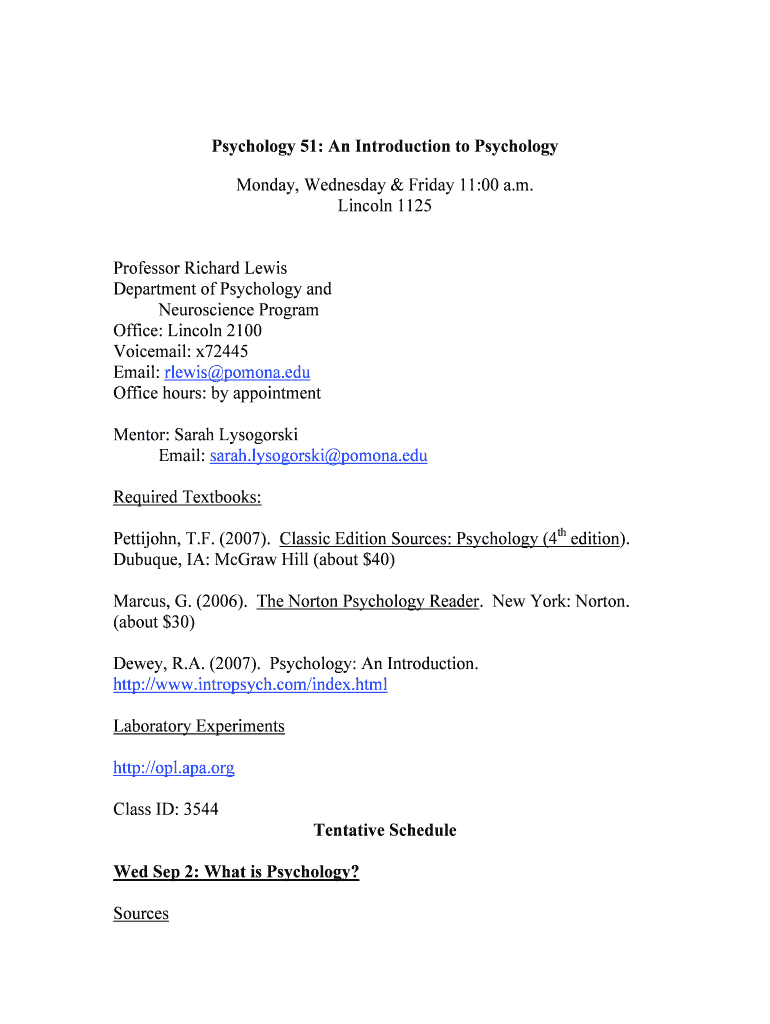
"Psychology 51: An Introduction to Psychology" serves as a fundamental course designed to provide students with a comprehensive overview of psychological concepts. It aims to explore the scientific study of behavior and mental processes, focusing on various psychological theories, research methodologies, and practical applications. The course is structured to meet the needs of students entering the field of psychology, as well as those seeking a broad understanding of psychological principles for application in other disciplines.
Core Components of Psychology 51
- Research Methods: Gain insight into the scientific approaches used to study behavior and mental processes. Understand the importance of experimental design, data collection, and interpretation of results.
- Developmental Psychology: Study the growth and change across a person's lifespan, focusing on cognitive development, social change, and emotional maturation from infancy to adulthood.
- Learning Perspectives: Explore various theories related to the acquisition of new knowledge and behaviors, including classical conditioning, operant conditioning, and observational learning.
Practical Applications
The relevance of this course extends beyond academic learning and includes practical applications such as enhancing communication skills, understanding human behavior in personal and professional settings, and improving problem-solving abilities. Psychology 51 lays a foundation for more specialized studies within the field.
How to Use the Course Syllabus
The syllabus for "Psychology 51: An Introduction to Psychology" acts as a roadmap for the course, detailing important aspects like class schedules, required readings, assignments, and examination dates. It helps students organize their study timelines and prepare adequately for each class session.
Key Features of the Syllabus
- Class Schedule and Topics: Each session's focus is outlined to ensure students are prepared for upcoming discussions and assignments.
- Assignment Details: Provides clarity on project submissions and due dates to manage workload effectively and avoid penalties for late submissions.
- Lab Component: An independent research project component, encouraging students to apply theoretical knowledge in practical scenarios and fostering critical thinking skills.
Using the syllabus effectively can enhance participation in class activities and improve academic performance by fostering a proactive approach to learning.
Steps to Complete the Course Successfully
Completing "Psychology 51: An Introduction to Psychology" requires a structured approach that integrates attendance, active participation, and consistent study habits.
Step-by-Step Guide
- Attend Regularly: Presence in lectures and labs provides an opportunity to engage directly with the instructor and peers, facilitating a deeper understanding of the material.
- Participate Actively: Engage with course materials during and after class through discussions, asking questions, and joining study groups.
- Meet Deadlines: Prioritize and complete assignments and projects by their due dates to avoid last-minute rushes that could compromise quality.
- Prepare for Exams: Review session notes regularly, utilize available resources, and undertake practice quizzes to reinforce knowledge and uncover areas needing clarification.
Following these steps ensures a comprehensive grasp of course content, which is crucial in achieving academic success.
Who Typically Uses the Course
"Psychology 51: An Introduction to Psychology" is typically utilized by undergraduate students at the freshman or sophomore level who are embarking on a path in the field of psychology or seeking to understand the principles for application in other areas such as social sciences, education, or health care.


Target Audience
- Psychology Majors: Laying the foundation for advanced studies in specific psychological disciplines.
- Non-Major Students: Gaining insight into human behavior to apply psychological principles in varied fields such as marketing, education, or management.
- Educators and Counselors: Enhancing understanding of psychological theories applicable to educational and counseling settings.
By catering to a varied audience, the course supports fostering versatile and applicable knowledge for diverse career paths.
Important Terms Related to the Course
Understanding the vocabulary used in "Psychology 51: An Introduction to Psychology" is essential for effective communication and comprehension of the material.
Key Terms
- Cognitive Dissonance: A psychological theory referring to the discomfort felt when new information conflicts with existing beliefs or values.
- Neuroplasticity: The brain's ability to reorganize itself by forming new neural connections throughout life.
- Self-Efficacy: Belief in one's ability to succeed in specific situations or accomplish tasks.
Familiarity with these terms aids students in grasping complex concepts and engaging more effectively in class discussions and assignments.
Key Elements of the Course
The syllabus of "Psychology 51: An Introduction to Psychology" outlines essential components that form the backbone of the course, ensuring an enriching learning experience.
Core Elements
- Textbooks and Readings: Selected carefully to provide both a theoretical framework and contemporary perspectives on psychological science.
- Examination Structure: Details on grading criteria, including a combination of multiple-choice questions, short answer essays, and practical assessments.
- Participation in Experiments: Encouraged as part of the learning process to experience firsthand the principles of psychological research.
Recognizing these elements enables students to focus their efforts and resources effectively throughout the duration of the course.
Examples of Applying Psychological Principles
The principles learned in "Psychology 51: An Introduction to Psychology" can be applied in various real-world scenarios, enriching both personal and professional life.
Application Scenarios
- Business and Management: Utilize psychological principles to improve team dynamics, leadership skills, and customer relationships, resulting in enhanced productivity and employee satisfaction.
- Education: Enhance teaching methods and student engagement by understanding diverse learning styles and motivational strategies.
- Healthcare: Apply psychological theories to improve patient care and communication, fostering better patient outcomes and satisfaction.
These applications demonstrate the versatility of psychological studies, showcasing the importance of foundational courses like Psychology 51.
Software Compatibility for Course Materials
Ensuring access to digital resources is a crucial aspect of participating in "Psychology 51: An Introduction to Psychology" efficiently, particularly for students who rely on technology for learning.
Compatible Software
- Google Workspace: Seamless integration with Google Drive and Gmail supports easy access and sharing of course materials.
- Microsoft Office Suite: Compatibility with Word documents and PowerPoint presentations ensures that all students can access and create required documents and reports.
- PDF Readers: Essential for viewing course documents such as syllabi, readings, and assignment details.
Having the right software ensures uninterrupted access to important resources, facilitating an effective learning environment.