






Definition & Meaning
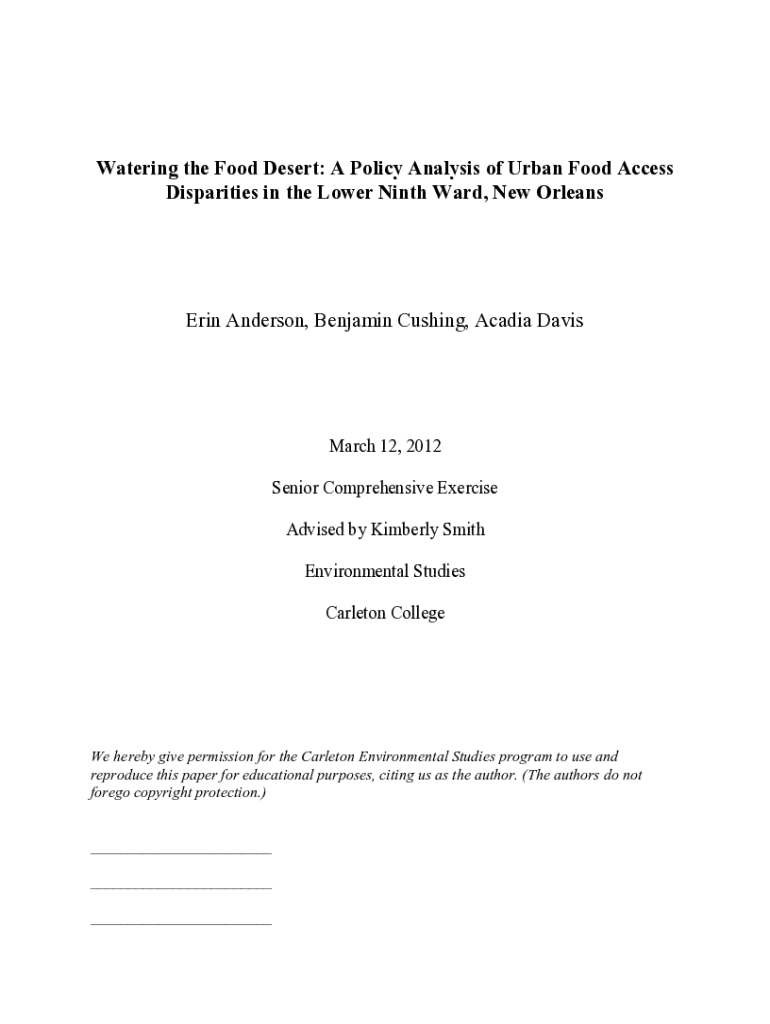
"Watering the Food Desert: A Policy Analysis of - Carleton College" is an in-depth exploration of urban food access challenges, using a particular focus on the Lower Ninth Ward in New Orleans. This policy analysis investigates the disparities in food availability faced by residents in these areas, largely due to socio-economic factors. By examining potential solutions like introducing corporate supermarkets or nurturing local food systems, the document aims to propose actionable strategies for improving access to healthy foods in low-income neighborhoods.
Key Elements of the Watering the Food Desert
This analysis comprises several critical elements designed to address food access disparities. It considers the impact of different interventions on public health, economic development, and environmental quality. The analysis highlights:
- Local Food Systems: Solutions like farmers' markets and community gardens that provide economic and social benefits.
- Policy Interventions: The need for targeted policies to ensure equitable food distribution and access.
- Justice and Access: Emphasizes the importance of food access as a right, not a privilege.
How to Use the Analysis
When using "Watering the Food Desert," consider integrating its recommendations into policy formulation or community initiatives. This document can guide:
- Policy Makers: In creating equitable food distribution policies.
- Community Leaders: Implementing local food systems to enhance accessibility.
- Researchers: Further investigation into urban food deserts and potential solutions.
Steps to Complete the Analysis
To fully utilize the analysis, follow these steps:
- Review the Document: Understand the context and the issues addressed.
- Analyze Recommended Solutions: Evaluate the feasibility of solutions like local food systems in your area.
- Identify Stakeholders: Engage with partners who can support implementation efforts.
- Formulate Policies: Develop policy proposals based on successful case studies highlighted in the analysis.
Examples of Using the Analysis
Several communities have used similar analyses to address food deserts:
- Community Gardens: Cities like Detroit have transformed vacant lots into productive gardens.
- Farmers' Markets: Establishing markets in underserved areas to provide fresh produce.
- Supermarket Incentives: Various municipalities offering tax breaks to encourage supermarkets to open in low-access areas.
Legal Use of the Analysis
This document serves as an educational resource, informing policy and decision-making processes. It may be referenced in:
- Legislative Proposals: Providing data-driven insights to support new laws.
- Academic Research: Utilized in studies focusing on urban development and public health.
- Community Plans: Forming the basis for strategic planning by advocacy groups.
Important Terms Related to the Analysis
Understanding the following terms is key to navigating the policy analysis:
- Food Desert: Areas with limited access to affordable and nutritious food.
- Socio-economic Disparities: Differences in income, education, and access impacting food availability.
- Local Food Systems: Community-based food production and distribution networks.
Who Typically Uses the Analysis
The primary users of this analysis include:
- Policy Makers: Those developing urban planning and public health policies.
- Urban Planners: Professionals tasked with community development and zoning.
- Community Organizations: Groups advocating for equitable food access and nutrition education.