






Definition and Meaning
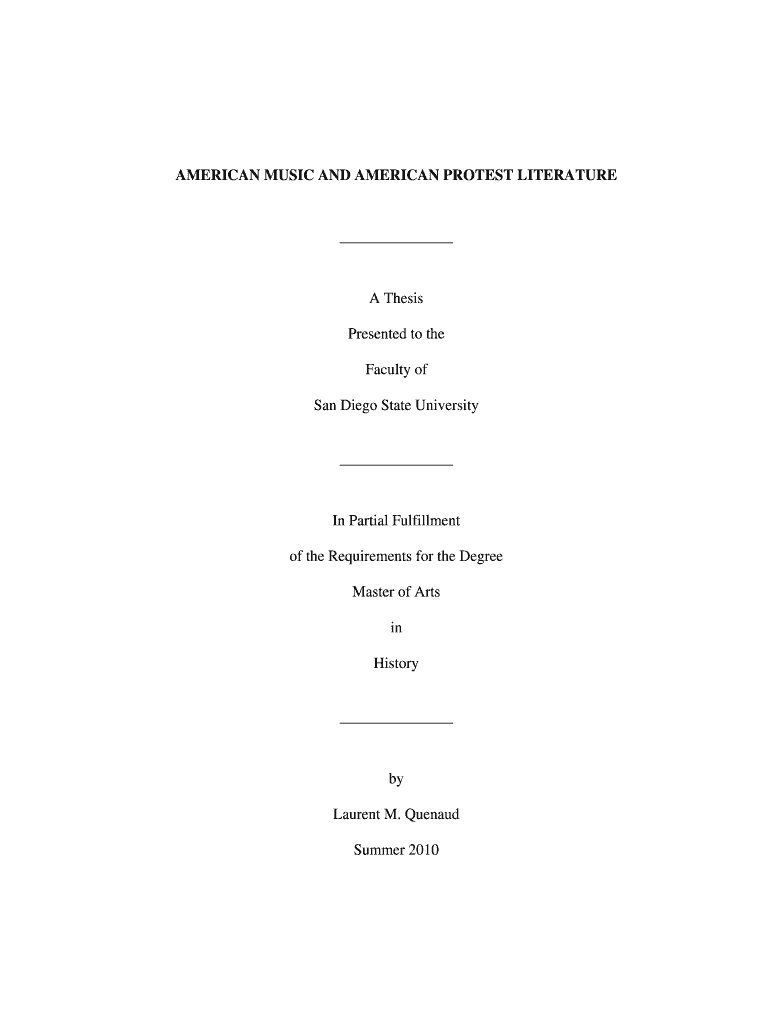
The term "American Music and American Protest Literature - sdsu-dspace calstate" refers to an academic study examining the role of music as a form of protest literature. This study highlights how American music, particularly during the Vietnam War, served as an influential medium for political dissent. It underscores the impact of antiwar songs by artists such as Bob Dylan and Joan Baez, who used their music to inspire activism and shape public consciousness on social issues.
Key Elements of the Study
- Artists and Songs: The study focuses on artists like Bob Dylan, Joan Baez, and The Doors, analyzing songs such as 'Blowin' in the Wind' and 'Ohio' for their protest messages.
- Historical Context: Examines the 1960s and 1970s, a period marked by significant societal change and antiwar sentiment in the U.S.
- Cultural Impact: Investigates how music actively contributed to the antiwar movement, facilitating mobilization and awareness.
Historical Significance
American music during the Vietnam War era was not just entertainment but an essential part of the protest literature. It provided a platform for voices of dissent and played a pivotal role in shaping public discourse. Songs often reflected the emotional state of the country and galvanized people to action.
Important Terms Related to the Study
- Protest Literature: Written or spoken expressions intended to protest against social or political issues.
- Antiwar Movement: Collective activities aimed at opposing military interventions and advocating for peace.
- Cultural Mobilization: The use of cultural elements, such as music, to inspire and organize social movements.
Legal and Ethical Considerations
While exploring American protest literature through music, one must consider the legal and ethical aspects of using copyrighted material for educational purposes. It's crucial to adhere to fair use policies, ensuring that the use of song lyrics and musical references aligns with academic and research standards.
Who Typically Engages with this Study
This academic study caters primarily to students, researchers, and educators interested in American history, musicology, cultural studies, and political science. These individuals seek to understand the dynamic interplay between music and social movements.
Real-world Applications
- Education: Incorporating this study into curricula can provide valuable insights into how music influences societal change.
- Cultural Preservation: Documenting the protest music of past eras helps preserve it for future generations.
State-specific Interpretations
While the core themes of American music and protest literature remain consistent, interpretations can vary by state, especially considering each state's unique historical context during the Vietnam War era. Local adaptations may include region-specific protest music and movements.
Examples of Protest Music Used in the Study
- 'Blowin' in the Wind' by Bob Dylan: A timeless protest anthem questioning social injustice and inspiring introspection.
- 'I-Feel-Like-I'm-Fixin'-To-Die Rag' by Country Joe and the Fish: A satirical take on the Vietnam War, emphasizing antiwar sentiment through humor.
Digital vs. Traditional Research Methods
The use of digital databases like SDSU DSpace allows for broader access to academic theses and resources, facilitating research into American protest literature. However, traditional research methods, such as library visits and physical archives, provide additional depth and authenticity to the study.
Academic Recognition
Corroborating the significance of this study, academic institutions across the United States might reference it in their programs, recognizing its contribution to understanding the social impact of music.