







Definition & Meaning
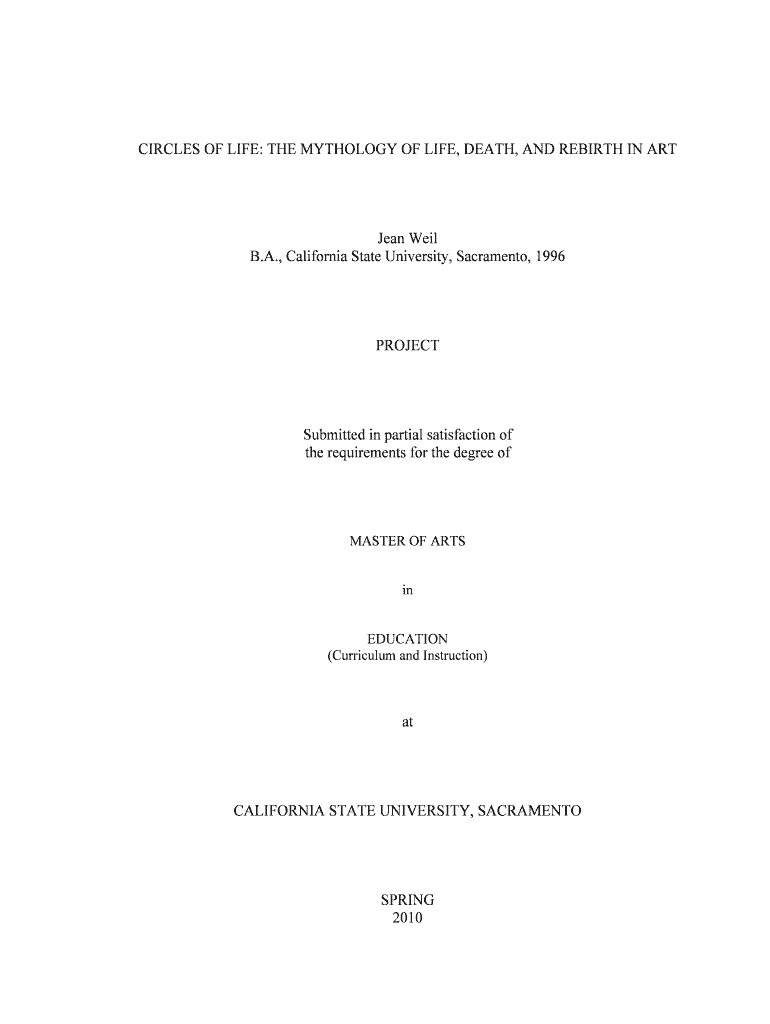
The document titled "Circles of Life: The Mythology of Life, Death, and Rebirth in Art" by Jean Weil explores the integration of cultural mythologies in art. The project consists of four oil paintings, each depicting themes such as life, death, rebirth, and transcendence. These themes are drawn from a personal journey of artistic development, emphasizing the importance of art in education, specifically for teaching world civilizations to sixth graders. The work is grounded in historical and contemporary influences, highlighting the universality of these themes through art.
How to Use the Document
This document serves as an educational resource, particularly valuable for educators and students interested in the intersection of art and mythology. It can be used to facilitate discussions on cultural narratives and how these are represented through visual arts. Educators might incorporate this document into lesson plans that cover art history and mythology. Art enthusiasts and scholars can use this as a reference for exploring how mythological themes continue to influence modern artistic techniques and interpretations.
Steps to Complete the Form
When engaging with this document, readers might consider the following steps:
- Review Background Information: Begin by understanding the historical context and personal journey of the author in creating the paintings.
- Analyze the Themes: Identify and examine the themes of life, death, and rebirth in each painting.
- Connect with Education: Consider how these themes can be woven into educational curriculum, especially within social studies or art classes.
- Reflect on Influences: Assess how historical figures like Caravaggio and Gentileschi, as well as modern artists like Remedios Varos, have influenced the author's work.
- Explore Personal Impact: Reflect on how these art pieces might influence personal artistic or educational practices.
Who Typically Uses the Document
The document is primarily used by:
- Art Educators: For curriculum development in art and social studies.
- Students: Especially those studying art history or cultural studies.
- Art Enthusiasts: Interested in the narrative aspects of art.
- Researchers and Scholars: Exploring the impact of mythology on modern art.
- Cultural Historians: Looking at the role of mythology in contemporary artistic practices.


Key Elements of the Document
- Thematic Exploration: Focus on life, death, rebirth, and transcendence.
- Artistic Creation: Discussion around the four oil paintings created by Jean Weil.
- Educational Context: Integration of art themes into sixth-grade education.
- Influential References: The impact of past and contemporary artists.
- Exhibition: Culmination of work presented at California State University, Sacramento.
Examples of Using the Document
- Classroom Discussions: Facilitating debates on how mythology is represented across cultures through art.
- Art Workshops: Using the document as a foundation for workshops that explore thematic painting.
- Cultural Programs: Implementing insights into cultural programs that celebrate mythology and art.
- Student Projects: Incorporating the themes into student art or history projects for a comprehensive understanding.
Legal Use of the Document
Since the document is a Master's project, it may have specific usage rights associated with academic and educational purposes. Users should respect intellectual property rights, crediting Jean Weil where appropriate and ensuring the document is used in accordance with educational and academic guidelines established by institutions such as California State University, Sacramento.
Versions or Alternatives to the Document
While "Circles of Life" is a unique Master's project, there may be other scholarly approaches or resources that explore similar themes of mythology in art:
- Peer-Reviewed Journals: Articles that explore similar intersections of art and cultural mythology.
- Books by Art Historians: Texts that delve into the influences of mythology in artistic practices.
- Documentaries and Lectures: Visual mediums where similar artistic narratives are discussed.
Application Process & Approval Time
Upon completion, the project would typically be submitted for academic review. The approval process may involve:
- Faculty Review: By professors or a review committee to ensure the project meets academic standards.
- Presentation: A formal presentation or defense of the project, detailing methodology and findings.
- Exhibition: Approval for the art show as part of academic fulfillment.
Understanding these steps provides context on the rigor and standards required for such scholarly projects.




