







Definition & Meaning
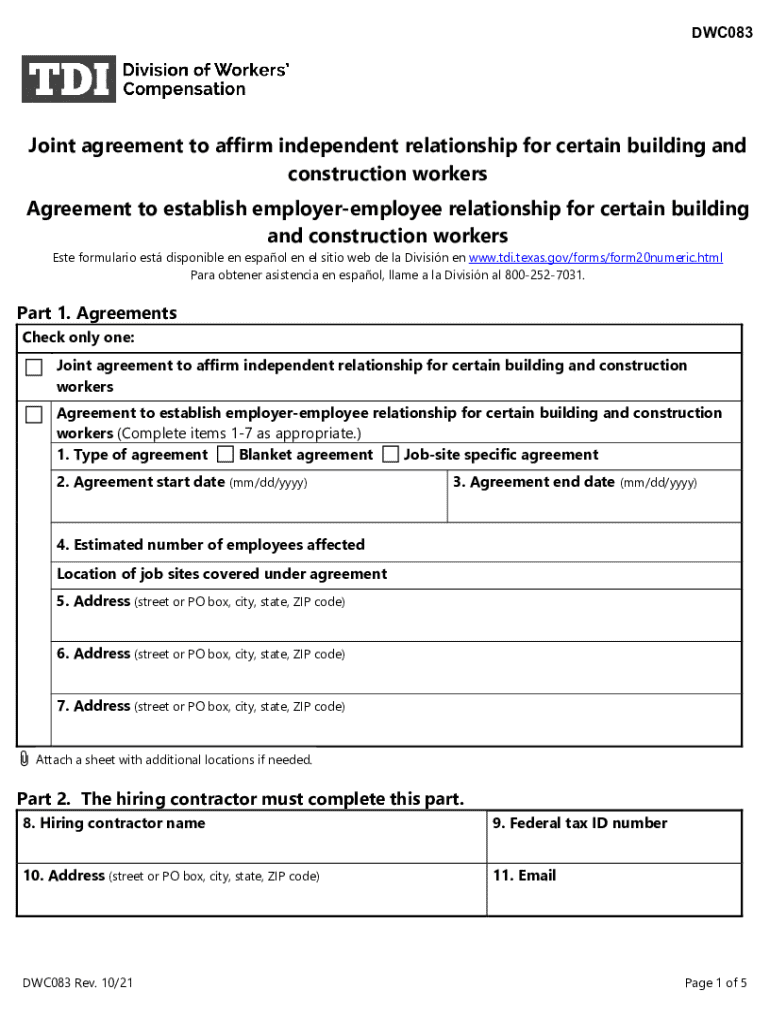
The "Joint Agreement to Affirm Independent Relationship for Certain Building and Construction Workers" is a legal document used to establish the nature of the working relationship between hiring contractors and independent contractors in the building and construction industry. This form allows both parties to confirm whether the arrangement is an independent contractor relationship or an employer-employee relationship, particularly regarding workers' compensation insurance. The document outlines legal definitions, terms, and conditions under which these agreements take effect and ensures that both parties provide their necessary information and affirmations.
Importance of Definition
- Clarifies legal status: Establishing whether a worker is an independent contractor or employee influences tax obligations, insurance coverage, and labor rights.
- Supports business compliance: The agreement ensures businesses comply with state-specific regulations in terms of labor and employment classifications.
- Minimizes disputes: By clearly defining the relationship, potential disagreements or misinterpretations about roles and responsibilities are reduced.
Steps to Complete the Joint Agreement
-
Gather Necessary Information: Both parties should gather personal information, such as names and contact details, along with any relevant business registration numbers or tax identification numbers.
-
Review Legal Definitions: Understand the distinctions between independent contractors and employees per the legal standards applicable in your jurisdiction.
-
Complete Personal Details Section: Input required personal details for both the hiring and independent contractor along with signatures to affirm the information.
-
Specify Relationship Type: Clearly indicate the nature of the relationship, whether it is independent or employer-employee, for clarity on worker's compensation roles.
-
Sign and Submit: Once completed, both parties should sign the document. Submit it to the relevant workers’ compensation insurance carrier if required.
Key Elements of the Joint Agreement
-
Parties Involved: This section includes information about both the hiring entity and the contracting party, detailing names, addresses, and business details.
-
Relationship Declaration: The agreement mandates a section where the nature of the working relationship is explicitly defined.
-
Signatures: Both parties are required to submit signatures affirming the details of the relationship outlined in the agreement.
-
Insurance Information: This part of the form details how workers' compensation insurance coverage is to be handled, aligning with legal mandates.
Importance of Key Elements
- Establishes clear roles and responsibilities.
- Provides legal protection for both parties.
- Ensures compliance with workers' compensation and labor laws.
Legal Use of the Joint Agreement
Compliance With Workers’ Compensation Laws
-
This agreement is used to document the working relationship for workers’ compensation insurance purposes, affecting how coverage is provided or omitted.
-
It is pivotal in regulatory audits or disputes to show concrete evidence of the nature of a working relationship.
Legal Documentation
-
Serves as a formally recognized document that evidences both parties’ intent to maintain either an independent contractor relationship or an employer-employee setup.
-
Helps avoid penalties or compliance issues by aligning the business arrangements with state laws.
State-Specific Rules
-
Texas Use Case: In Texas, the DWC083 document serves explicitly for such determinations, and the agreement must be filed with the workers' compensation insurance carrier.
-
Variability Across States: While some states may not require a formal filing, others do, and the intricacies of what needs to be included might differ.
Importance of State-Specific Compliance
-
Ensures local compliance: State law variations mean businesses must adjust documentation practices accordingly.
-
Protects workers’ rights specifically as per state statutes, ensuring fair treatment and legal compliance.
Important Terms Related to the Agreement
-
Independent Contractor: An individual or business providing services to another entity under terms specified in a contract.
-
Employer-Employee Relationship: A relationship where the employer has control over work performed, influenced by labor laws, eligibility for benefits, and tax responsibilities.
-
Worker’s Compensation Insurance: Coverage for workers injured on the job, dictated by the legal nature of a worker’s relationship with a contractor or employer.
Understanding Key Terms
- Provides clarity around roles and legal obligations.
- Helps in drafting precise agreements free from ambiguity.
- Important for constructing contracts that align with legal standards.
How to Obtain the Joint Agreement
-
Request from Insurance Providers: Often available upon request to employers engaging in building and construction sectors.
-
Download from State Agencies: Some state workers’ compensation boards offer downloadable forms for legal affirmations.
-
Business Legal Advisors: Many consultants provide this form as a part of their service to ensure compliance in contractor relationships.
Availability & Access
- Ensures that businesses have accessible pathways to legally empowering their contractor relationships.
- Reduces the administrative burden of obtaining necessary legal documents.
Form Submission Methods
-
Online Submission: Many state systems allow for digital submission through dedicated portals with requisite electronic signatures.
-
Mail: For those preferring or required to use traditional methods, completed forms can often be mailed in paper format to the state insurance department or provided carrier.
-
In-Person: Some jurisdictions offer the option to submit these forms in person at designated state offices.
Pros and Cons of Different Methods
-
Online: Offers speed and convenience, but requires technical know-how and access to digital platforms.
-
Mail/In-Person: Ensures receipt confirmation via physical means but can be subject to delays and requires postal handling.
Penalties for Non-Compliance
-
Financial Penalties: Fines or additional insurance premiums may be levied if improper classifications of workers occur.
-
Legal Repercussions: Misclassification can lead to lawsuits or audits that may impact future business operations.
-
Reputational Damage: Non-compliance may harm a company's reputation, affecting client trust and business relationships.
Mitigation Techniques
- Regularly update and audit worker classifications.
- Engage legal experts or consultants for intricate compliance checks.
- Clearly communicate and document employment terms upfront.
These sections provide a comprehensive overview of the "Joint Agreement to Affirm Independent Relationship for Certain Building and Construction Workers" while maintaining compliance with legal requirements and ensuring clarity for both hiring and contracting parties.




