






Definition & Meaning
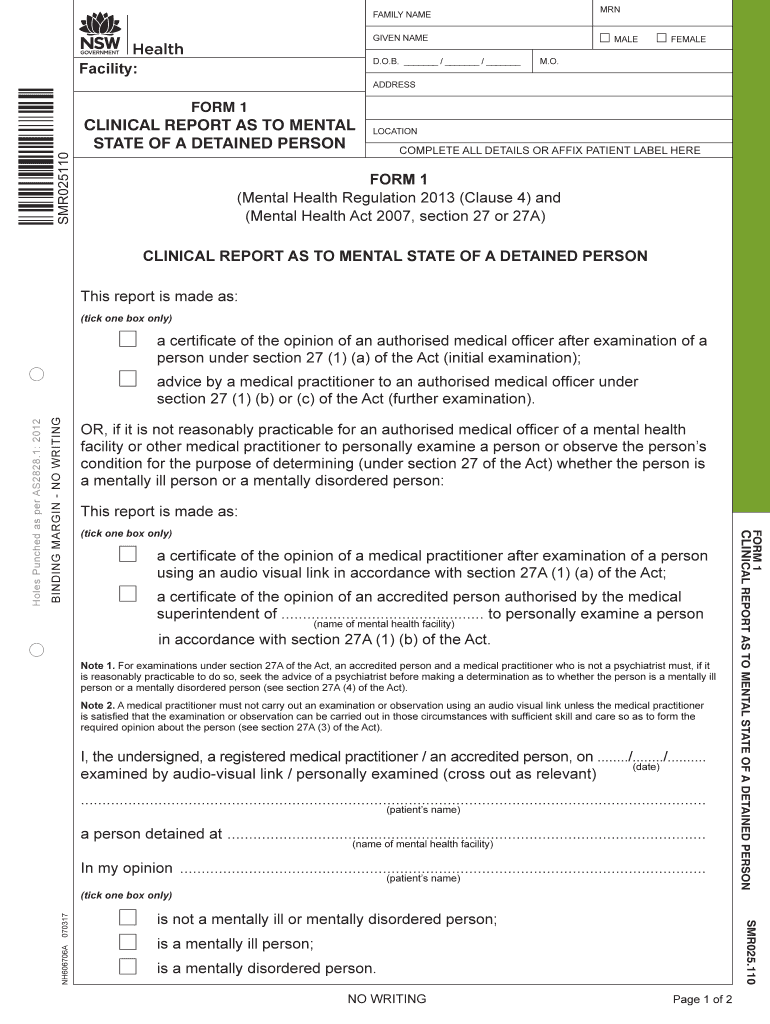
The Clinical Report as to Mental is a form used to assess the mental state of an individual, primarily within a legal or medical context. This document is crucial for evaluating whether a person meets the criteria for mental illness or disorder as defined under applicable laws such as the Mental Health Act. It includes sections for personal details, examination results, and the medical practitioner's opinion. The form must be completed by an authorized medical officer or accredited individual to ensure its legal validity.
Essential Components of the Form
- Personal Information: Includes the individual's name, date of birth, and other identifying details.
- Examination Results: Findings from the mental health assessment conducted by a qualified professional.
- Professional Opinion: The medical practitioner's interpretation of the results concerning the mental state of the individual.
How to Use the Clinical Report as to Mental
When using the Clinical Report as to Mental, it is essential to follow a structured approach to ensure the form is completed accurately and comprehensively. Here’s a step-by-step guide:
- Gather Required Information: Collect all necessary personal and medical details about the individual being assessed.
- Conduct a Comprehensive Assessment: Perform a detailed examination following standard psychiatric evaluation practices, ensuring all relevant psychological parameters are covered.
- Complete Each Section: Fill out the form's sections based on the assessment, ensuring that all questions are answered thoroughly and accurately.
- Review for Accuracy: Double-check the form for any errors or incomplete sections before submission to ensure it meets all legal and procedural requirements.
Steps to Complete the Clinical Report as to Mental
Completing the Clinical Report as to Mental involves detailed procedures to ensure all necessary information is captured correctly. Here’s how to proceed:
- Personal Details: Begin with the personal information section; ensure all fields are filled accurately.
- Conduct a Psychiatric Evaluation: Use standard diagnostic methods to assess the individual's mental health, making note of any significant findings or symptoms.
- Document Examination Results: Carefully record the findings of the evaluation in the appropriate section of the form.
- Provide Professional Opinion: Based on the examination results, give a detailed opinion regarding the individual's mental state, referencing specific observations and conclusions.
- Review and Revise: Check the completed form for accuracy and clarity, revising any sections as necessary.
Additional Considerations
- Consultation with Colleagues: For complex cases, consider collaborating with other mental health professionals to ensure a well-rounded assessment.
- Legal Compliance: Ensure that all information provided aligns with relevant laws and regulations.
Key Elements of the Clinical Report as to Mental
Understanding the crucial elements of the Clinical Report as to Mental is important for both compliance and efficacy:
- Examination Findings: Documented results of the individual's mental health assessment.
- Diagnosis and Recommendations: Any mental health diagnoses made and recommendations for treatment or further evaluation.
- Certifying Authority: Information about the authorized medical officer or accredited individual completing the form.
Legal Use of the Clinical Report as to Mental
The Clinical Report as to Mental serves several legal purposes, particularly relating to the assessment of mental competence and the application of the Mental Health Act:
- Involuntary Commitment: Used to support decisions related to the involuntary commitment of individuals deemed a danger to themselves or others.
- Competency Hearings: Provides evidence in legal proceedings concerning an individual's mental capacity to make decisions.
- Guardianship Cases: Assists in determinations of guardianship for individuals unable to manage their affairs due to mental incapacity.
Who Typically Uses the Clinical Report as to Mental
Several professionals rely on the Clinical Report as to Mental in their work:
- Psychiatrists and Psychologists: For assessing the mental health of individuals and providing expert opinions.
- Legal Professionals: To support court proceedings that involve mental health considerations.
- Social Workers: When involved in cases requiring an assessment of an individual's mental state.

State-Specific Rules for the Clinical Report as to Mental
Variations in state laws can influence how the Clinical Report as to Mental is used and interpreted:
- State Regulations: Some states may have additional requirements or variations in terms used in the report.
- Local Legal Standards: States may differ in legal standards for involuntary commitment or competency hearings.
Examples of Using the Clinical Report as to Mental
Real-world applications of the Clinical Report as to Mental illustrate its importance in diverse scenarios:
- Emergency Room Assessments: Used to quickly evaluate patients exhibiting signs of mental instability.
- Forensic Psychiatry: Acts as an essential tool in assessing defendants' mental state for legal defenses.
- Community Health Services: Assists in creating treatment plans for individuals within community health programs.
Practical Scenarios
- Case Management: Social workers use the form to ensure clients receive appropriate mental health services.
- Judicial Proceedings: Provides key evidence in court to support legal arguments surrounding mental health issues.