
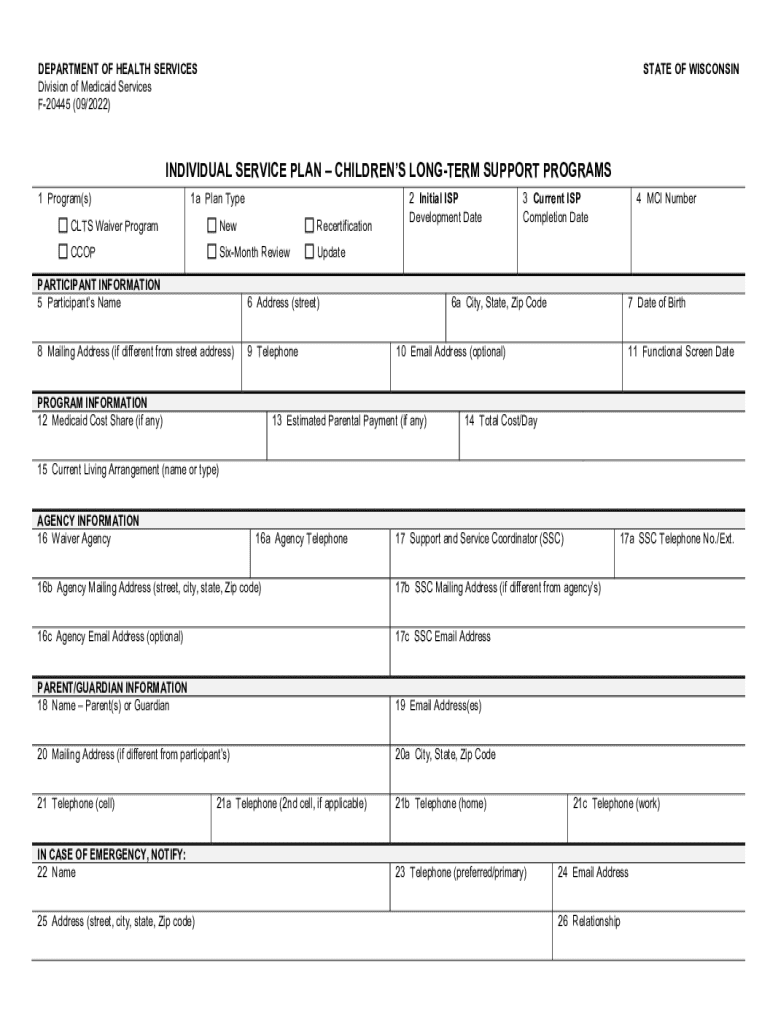







Definition and Purpose of the Individual Service Plan
The Individual Service Plan (ISP) for Children's Long-Term Support is a critical document designed to outline tailored services for children with disabilities or special needs in the United States. This plan details the unique supports and resources necessary to meet the specific requirements of each child involved in the Children's Long-Term Support (CLTS) Waiver Program. Its primary purpose is to ensure that the child receives the appropriate care and assistance to thrive within their home and community.
The ISP includes various elements, such as individual goals, support strategies, and the roles of caregivers and service providers. It also features comprehensive information about the child's needs, both medical and developmental, to help in formulating an effective plan. By detailing the nature of the services required and the designated providers, the ISP establishes a clear framework for delivering consistent, person-centered care.
How to Use the Individual Service Plan
Utilizing the ISP effectively requires collaboration among families, guardians, and service providers. The process starts with reviewing the child's strengths and needs, which forms the basis for identifying relevant goals and objectives within the plan. Participants in this process must engage in open dialogues to ensure clarity regarding expectations and responsibilities.
- Review and Assessment: Analyze the existing ISP to ensure that all sections are comprehensively filled out and reflect the child's current situation.
- Goal Setting: Work with the child and family to set achievable yet ambitious targets tailored to the child's capabilities, focusing on enhancing their quality of life.
- Resource Allocation: Determine the necessary resources and support services required, such as therapy, educational assistance, and healthcare services.
- Implementation: Service providers execute the plan by delivering the designated support and interventions, monitored through regular updates and assessments.
- Review and Update: Periodically reassess the ISP to adapt to the child's changing needs, ensuring that the plan remains relevant and effective.
By following these steps, families and service providers can ensure that the ISP functions as a living document that evolves with the child's growth and changing circumstances.
How to Obtain the Individual Service Plan
Acquiring an ISP for the Children's Long-Term Support involves several steps. Initially, a child must qualify for the CLTS Waiver Program, which typically includes a service eligibility determination. Here's how to navigate this process:
- Eligibility Assessment: Begin by contacting your local social services department or a CLTS case manager to evaluate your child's eligibility for the program.
- Initial Consultation: Arrange a meeting with a healthcare professional or case coordinator who specializes in children's services to discuss the child's needs.
- Documentation Gathering: Collect and submit all necessary documentation, such as medical records, assessment reports, and educational evaluations that support the child's eligibility and unique needs.
- Plan Development Meeting: Participate in a development meeting with relevant stakeholders, including healthcare providers and educators, to draft the initial ISP.
- Approval and Implementation: Submit the draft ISP to the appropriate state department for approval. Upon approval, commence with implementing the plan under the guidance of a case manager.
This process ensures that the Individual Service Plan is both comprehensive and tailored to meet the specific needs of the child, providing a structured approach to securing necessary long-term support.
Steps to Complete the Individual Service Plan
Completing an individual service plan requires coordination and thorough attention to detail. Here's a step-by-step guide to navigating the ISP completion process:
- Initial Assessment: Collaborate with healthcare and educational professionals to assess the child's current condition and support needs.
- Defining Objectives: Set precise, measurable goals that align with the child's developmental stage and personal aspirations.
- Identify Services and Supports: Determine the types of services, such as therapeutic interventions, educational programs, and equipment necessary to meet those objectives.
- Assign Roles and Responsibilities: Clearly articulate the responsibilities of each family member, practitioner, and service provider involved in the ISP.
- Create a Timeline: Establish a timeline with milestones for implementing each part of the ISP.
- Review and Revise: Schedule regular updates to review progress and make necessary adjustments to the plan to address evolving needs or unforeseen challenges.
These steps offer a structured methodology for creating an effective ISP that maximizes the resources available to improve the child's quality of life.
Key Elements of the Individual Service Plan
The core components of an effective ISP focus on personalized support and measurable progress. Here are some critical elements to include:
- Participant Information: Comprehensive personal details about the child, including diagnosis, strengths, and specific needs.
- Goals and Objectives: Clearly defined short-term and long-term goals designed to optimize the child's development and independence.
- Support Services: Listings of required services and supports, such as physical therapy, educational assistance, and community activities.
- Responsible Parties: Identification of caregivers and service providers responsible for different aspects of the child's care.
- Progress Monitoring: Methods and intervals for assessing progress toward the goals outlined, ensuring accountability and transparency.
- Contingency Planning: Strategies for addressing potential challenges or setbacks and alternative approaches to support the child.
Incorporating these elements ensures that the ISP is comprehensive and capable of effectively supporting the child's development and well-being.
Important Terms Related to Individual Service Plans
Understanding specific terminologies associated with the ISP can enhance communication and execution. Some important terms include:
- Participant: The child for whom the ISP is designed.
- Support Coordinator: An individual responsible for overseeing and managing the implementation of the ISP.
- Goals: Targeted outcomes stated in the plan that address developmental, social, and educational progress.
- Service Provider: Professionals or agencies providing services outlined in the plan.
- Waiver Program: Refers to the Children's Long-Term Support Waiver Program, which facilitates service delivery outside of institutional settings.
- Adaptations and Modifications: Adjustments made to support materials or environments to better suit the child's needs.
These terms are fundamental for understanding the dynamics and requirements of the Individual Service Plan and ensuring effective implementation.
Legal Standards and Compliance
The Individual Service Plan must adhere to several legal standards to ensure the protection of the child’s rights. Here's an exploration of compliance requirements:
- Privacy Regulations: Compliance with the Health Insurance Portability and Accountability Act (HIPAA) to maintain the confidentiality of the child's information.
- Legal Guardianship: Verification of custodial and legal authority concerning decisions relating to the child's care.
- Consent Requirements: Obtaining necessary consents for sharing information with involved providers or agencies.
- Eligibility Criteria: Meeting the specific criteria outlined by state and federal guidelines to qualify for services under the CLTS Waiver Program.
- Rights and Responsibilities: Clear articulation of the child's rights and the responsibilities of all parties involved in the ISP.
Adhering to these legal standards is essential for the ethical and effective execution of the Individual Service Plan.
Examples of Using the Individual Service Plan
Real-world applications of the ISP demonstrate its practical utility and impact:
- Educational Support: Implementing tailored education plans that address specific learning disabilities with the guidance of special educators and therapists.
- Healthcare Coordination: Facilitating complex medical care routines by organizing consultations and regular check-ups across various medical specialists.
- Community Integration: Encouraging community participation through organized social activities and programs that foster social skills and independence.
- Behavioral Management: Creating structured environments and interventions to support positive behavioral development, guided by behavioral therapists.
These examples illustrate how the ISP functions as a dynamic tool to enhance the quality of support provided to children in long-term care programs.




