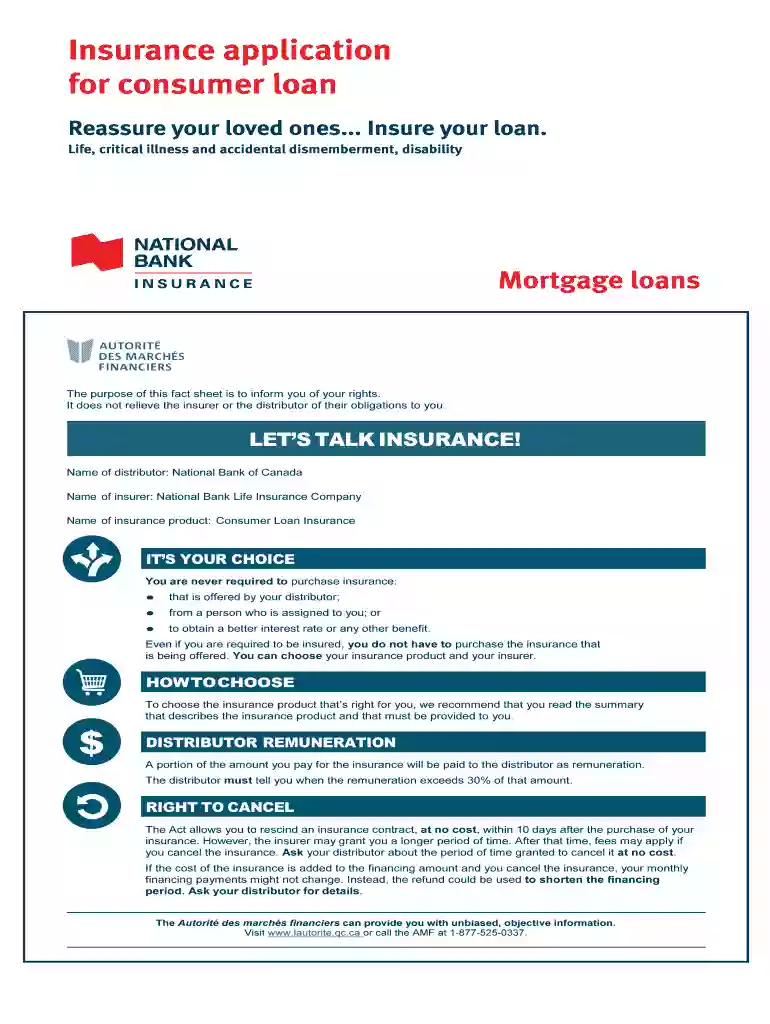
Definition and Meaning of Insurance Certificate for Mortgage Loans
The insurance certificate for mortgage loans serves as an official document that verifies a borrower has acquired the necessary insurance coverage to fulfill the terms of their mortgage agreement. This certificate is crucial for lenders, as it guarantees that the loan remains secured in case of unforeseen events affecting the borrower's ability to repay the loan. Insurance types typically included are life insurance, critical illness coverage, accidental dismemberment, and disability insurance.
Core Components of the Insurance Certificate
- Coverage Details: Specifies the type of insurance coverage, such as life or disability insurance, attached to the mortgage loan.
- Effective Dates: Lists when the coverage begins and ends, ensuring continuous protection for the duration of the mortgage term.
- Premium Calculations: Outlines how premiums are calculated, including factors such as age, health status, and the amount of coverage.
- Termination Conditions: Describes scenarios in which the insurance coverage may be terminated before the loan is fully repaid.
How to Use the Insurance Certificate with Mortgage Loans
Understanding how to use the insurance certificate effectively can enhance security and compliance with your mortgage terms. A borrower needs to periodically review the certificate’s details to ensure that coverage remains adequate.
Steps for Effective Utilization
- Regular Review: Periodically check the coverage details and adjust as needed to align with changes in your life circumstances, such as income or employment status.
- Proof for Lenders: Submit the certificate to lenders to demonstrate compliance with the insurance requirements specified in mortgage terms.
- Claims Process: Understand the necessary procedures and contact information to initiate a claim should an insured event occur.
Obtaining an Insurance Certificate for Mortgage Loans
Securing this certificate involves several steps, beginning with choosing an insurance provider that meets the lender's requirements.
Steps to Obtain the Certificate
- Assess Coverage Needs: Determine the types and amounts of insurance necessary, based on income, dependents, and loan amount.
- Select a Provider: Research and choose an insurance company that offers policies compatible with mortgage loan stipulations.
- Submit Application: Complete the necessary application forms accurately; this might include health information or financial assessments.
- Wait for Approval: The provider will evaluate the application, potentially requiring additional documentation or medical examinations.
- Receive Certificate: Once approved, the insurance provider will issue the certificate, which should be submitted to the mortgage lender.
Key Elements of the Insurance Certificate
Understanding the critical elements of the insurance certificate helps you manage the mortgage and maintain compliance without hiccups.
Breakdown of Key Elements
- Insurance Holder: Clearly identifies the insured individual and any additional covered parties.
- Coverage Amount: Specifies the sum insured that would cover outstanding mortgage amounts in case of claims.
- Policy Number: Unique identifier for reference and verification purposes.
- Lender Information: Contains details about the mortgage lender, ensuring that benefits are directed appropriately.
Step-by-Step Instructions for Completing the Certificate
Completing an insurance certificate accurately is crucial to avoid delays or denials in coverage.
Completion Steps
- Fill Personal Information: Enter all required personal data such as name, address, and Social Security number.
- Specify Coverage: Clearly indicate the types and amounts of coverage desired.
- Lender Details: Provide complete contact information for the mortgage lender.
- Sign and Date: Ensure the application is signed and dated before submission.
Legal Use and Compliance for Insurance Certificates
Staying informed about the legal uses of these certificates is crucial for both borrowers and lenders, to protect against unforeseen liabilities.
Compliance Requirements
- Adherence to Regulations: Ensure the certificate complies with federal and state laws regarding mortgage loan protections.
- Disclosure Obligations: Keep transparent records of all communications related to insurance agreements and share them with lenders on request.
- Timely Updates: Inform the lender immediately if there are any changes to the coverage or terms of insurance.
Real-World Examples of Using the Insurance Certificate
Examples and scenarios can provide a practical grasp of how these certificates function in real life.
Illustrations of Certificate Use
- Scenario 1: An unexpected critical illness requires the borrower to claim insurance benefits ensuring that the mortgage remains paid without financial strain on the family.
- Scenario 2: A borrower transitions to a new job with a better salary and reviews their insurance to adjust coverage, ensuring it still meets new financial needs.
Important Terms Related to Insurance Certificates for Mortgage Loans
Understanding all relevant terms can greatly aid in navigating the complexities associated with these certificates.
Glossary of Terms
- Premium: The periodic payment required to maintain insurance coverage.
- Beneficiary: The individual or entity designated to receive insurance benefits.
- Exclusions: Specific conditions or circumstances that are not covered by the insurance policy.
By understanding and utilizing the detailed information available in this guide, borrowers can ensure that they are adequately protected and in full compliance when dealing with insurance certificates for mortgage loans.