




01. Edit your form online
Type text, add images, blackout confidential details, add comments, highlights and more.

Type text, add images, blackout confidential details, add comments, highlights and more.

Draw your signature, type it, upload its image, or use your mobile device as a signature pad.

Send it via email, link, or fax. You can also download it, export it or print it out.
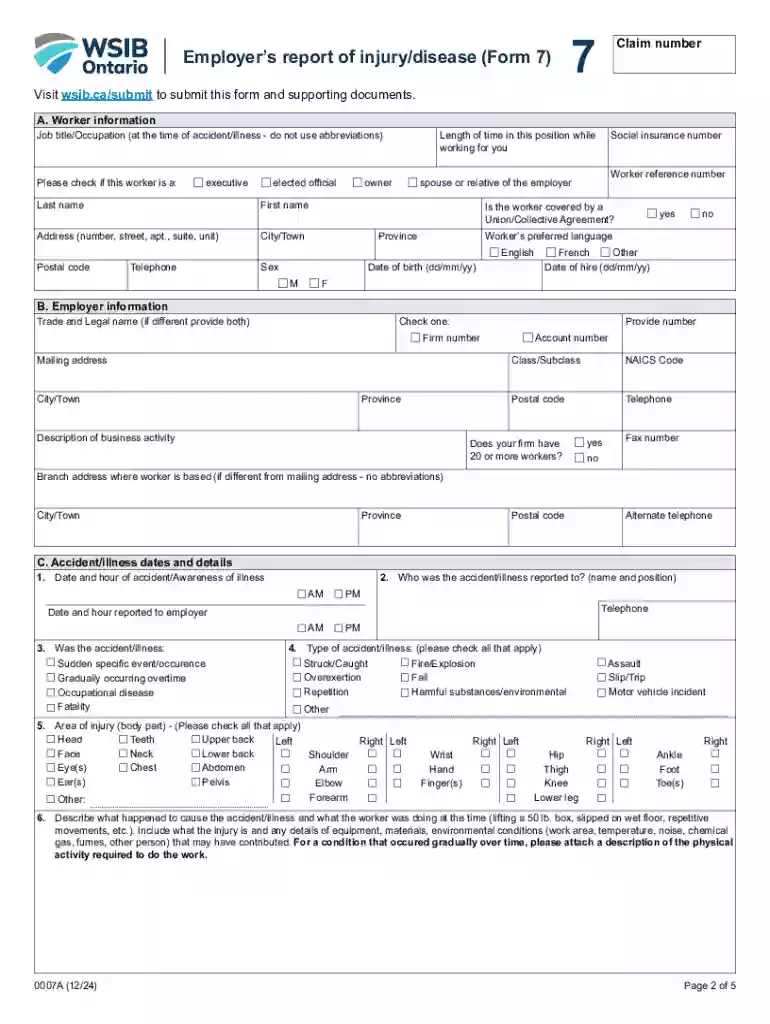
The Employer's Report of Injury/Disease, commonly referred to as Form 7, is a crucial document used to officially report workplace injuries or illnesses. This form is intended to facilitate the structured reporting of incidents that occur within the workplace, ensuring all relevant details are captured for insurance or legal purposes. Included in the form are sections detailing the worker's and employer's information, specifics of the incident or illness, medical care received, lost work time, wage details, and work schedules. This comprehensive approach ensures that both employee and employer interests are duly noted, aiding in the claims process and compliance with legal requirements.
Gather Necessary Information: Before beginning, ensure you have all the required information, including employee details, incident specifics, and medical care data.
Complete Worker and Employer Sections: Fill out parts of the form that ask for basic details about the worker and the employer, such as names, contact information, and employment status.
Accident/Illness Details: Provide a detailed account of the incident, including date, time, location, and a description of the event. Be accurate with details to avoid discrepancies.
Health Care Information: Document any medical treatment received by the employee, including the name and contact of the healthcare provider, and type of care given.
Lost Time and Wage Details: Accurately report any time lost due to the accident or illness and any compensation paid to the employee during this period.
Review and Submit: Carefully review all sections for completeness and accuracy before submission. Submit via the required method, whether online, by mail, or in person.
Employers are legally required to submit Form 7 accurately and timely. Compliance is critical as improper filing can result in fines or legal consequences. Employers should be aware of deadlines for submission and ensure complete documentation to support the claims process. The form serves not just as an internal document but can also play a role in legal and insurance evaluations, underscoring the importance of accurate information.
In addition to completing Form 7, employers must often provide supplementary documentation to support the report. This includes medical records, witness statements, and any correspondence related to the incident. These documents help to provide a fuller picture of the event and facilitate validation by insurance companies or legal entities when needed.
Employers can submit Form 7 through various methods, depending on the requirements or options provided by the relevant authority. Options typically include:
Each submission method may have specific requirements to ensure proper processing, so it is important to confirm these details ro ensure compliance.
Form 7 is typically issued by the state or federal labor or insurance departments. Employers should ensure they are using the most current version of the form, as outdated forms may not be accepted. The issuing authority also provides guidelines and support for completing and submitting the form.
Failure to properly submit Form 7 can result in penalties such as fines or increased scrutiny from regulatory bodies. Non-compliance can delay the claims process and result in legal disputes, emphasizing the need for timely and accurate reporting.
Form 7 may be completed digitally or on paper, depending on the employer's resources and preferences. Digital forms offer advantages such as easier storage and sharing, while paper forms may still be preferred by businesses requiring hardcopy records. The digital version often allows for more efficient tracking and integration with digital document management systems like DocHub, enhancing workflow efficiency.
We've got more versions of the Free Employer's Report of Injury Disease Form 7 Guide form. Select the right Free Employer's Report of Injury Disease Form 7 Guide version from the list and start editing it straight away!
At DocHub, your data security is our priority. We follow HIPAA, SOC2, GDPR, and other standards, so you can work on your documents with confidence.




This booklet includes the forms needed for maintaining occupational injury and illness records. Many but not all employers must complete the OSHA injury and.Read more
If injured while working a report of injury or illness must be reported within 24 hours of occurrence to your supervisor no matter how minor the job related


