California Residential Lease Agreement 2026

Get Form
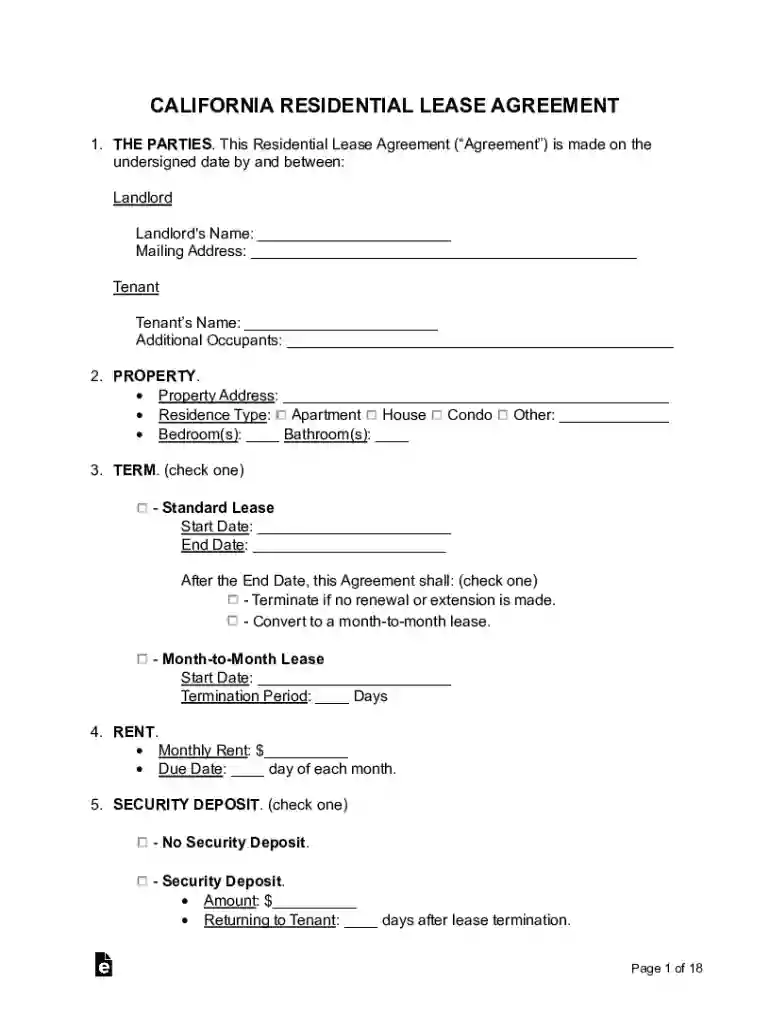
California Residential Lease Agreement Preview on Page 1

Here's how it works

01. Edit your form online
Type text, add images, blackout confidential details, add comments, highlights and more.

02. Sign it in a few clicks
Draw your signature, type it, upload its image, or use your mobile device as a signature pad.

03. Share your form with others
Send it via email, link, or fax. You can also download it, export it or print it out.

Definition and Meaning of the California Residential Lease Agreement

A California Residential Lease Agreement is a legally binding contract between a landlord and a tenant, specifying the rights and responsibilities of each party regarding the rental of a residential property. The document outlines various aspects of the tenancy, such as the duration of the lease, rent amount, due dates, and terms for renewal or termination. This agreement is essential for establishing clear expectations and ensuring compliance with California's specific housing laws.

Key Components

  • Parties Involved: The agreement must clearly identify the landlord and the tenant, including their legal names and contact information.
  • Lease Term: Specifies the duration of the lease, typically stated in months or years, with start and end dates.
  • Rent and Security Deposit: Details the rent amount, payment schedule, late fees, and security deposit requirements.

How to Use the California Residential Lease Agreement

Using the California Residential Lease Agreement efficiently requires understanding its provisions and how they apply to your situation. This document ensures that both parties are aware of their obligations and rights throughout the lease term.

Utilization Tips

  1. Review All Provisions: Before signing, both parties should thoroughly review the entire document to ensure clarity and understanding of each term.
  2. Customize Necessities: Customize any standard terms to fit the specific landlord-tenant arrangement, such as pet policies or subletting permissions.
  3. Seek Legal Advice: Consult with a legal professional if there are any questions or uncertainties concerning specific clauses or conditions.

Key Elements of the California Residential Lease Agreement

Several critical components are integral to the California Residential Lease Agreement, ensuring protection and legal compliance for both parties.

Detailed Breakdown

  • Legal Disclosures: The lease must include any disclosures required by California law, such as information on lead-based paint if the property was built before 1978.
  • Maintenance and Repairs: Outlines who is responsible for routine maintenance and repairs, specifying the process for addressing repairs and how maintenance requests should be made.
  • Termination Conditions: Defines the terms under which the lease can be terminated early, including any required notice periods, penalties, or conditions for breaking the lease.

Legal Use of the California Residential Lease Agreement

The agreement serves as a vital legal document to prevent disputes and resolve conflicts. By clearly stating each party's rights and duties, it provides a framework for legal recourse if needed.

Legal Considerations

  • Enforceability: The document’s enforceability hinges on its compliance with California housing laws and regulations, ensuring all included terms align with state guidelines.
  • Conflict Resolution: Details the process for handling tenant-landlord disputes, which may include mediation or court proceedings if necessary.

State-Specific Rules for the California Residential Lease Agreement

California imposes particular rules and regulations that landlords and tenants must abide by, ensuring fair housing practices are upheld.

Important Regulations

  • Rent Control: Some areas within California have rent control laws limiting the amount rent can be increased under specific circumstances.
  • Habitability Standards: Landlords must maintain a safe and habitable living environment, adhering to health and safety codes.
  • Security Deposit Limits: State law dictates the maximum amount a landlord can charge for a security deposit, typically not exceeding two months’ rent for unfurnished units and three months for furnished ones.

Steps to Complete the California Residential Lease Agreement

Completing the lease agreement correctly ensures that it is valid and enforceable. Following a standardized process can help prevent oversights.

  1. Provide Complete Information: Ensure all sections requiring personal or property details are filled out completely and accurately.
  2. Negotiate Terms: Discuss and agree on specific terms with the other party, adjusting standard clauses as needed to reflect the mutual agreement.
  3. Sign and Date: Both landlord and tenant must sign and date the agreement to make it legally binding. Copies should be distributed to all parties.

Important Terms Related to the California Residential Lease Agreement

Understanding the terminology used within the lease agreement is critical for interpreting its terms accurately.

Common Terms

  • Tenant and Landlord: The primary parties involved in the lease, with the tenant renting from the landlord.
  • Rental Period: Refers to the duration specified in the lease, often expressed in months or years.
  • Premises: The property or portion thereof that is being leased to the tenant.

Examples of Using the California Residential Lease Agreement

Practical application of this agreement can be illustrated through various scenarios, showcasing its versatility and necessity in real-world situations.

Real-World Scenarios

  • Single-Family Home Rental: A tenant leasing a full residential property for family occupancy, where specific rules about yard maintenance are included.
  • Apartment Lease: A landlord renting out an apartment within a multi-unit building, with provisions for shared amenities like a pool or gym.
  • Subletting Situations: Circumstances under which the tenant may sublet a portion of the premises with the landlord’s written approval, often seen in larger apartments or houses.
be ready to get more

Complete this form in 5 minutes or less

Get form

Got questions?

We have answers to the most popular questions from our customers. If you can't find an answer to your question, please contact us.
Contact us
In a pure or straight lease, there is no accumulation of equity and no provision for the buyout of the leased personal property. A lease purchase is a lease contract with terms providing for transfer of title during or at the end of the lease term.
A fixed-term lease is the most traditional lease. Theyre called fixed term because tenants and landlords are agreeing to abide by the lease for a fixed amount of time, normally six to 14 months.
Verbal and Written Agreements Californias Statute of Frauds requires a lease to be in writing if it either: 1. has a term longer than one year; or 2. has a term less than one year which expires more than one year after the agreement is reached.
The standard lease agreement in California, whether for residential or commercial property, is a legal contract between the property owner and the prospective tenant.
How to write a California lease agreement Identify the parties involved. Clearly state the names and contact information of both the landlord and the prospective tenant. Define the rental property. Specify the lease term. Outline rent and payment terms. Include important provisions. Comply with legal requirements.

Security and compliance

At DocHub, your data security is our priority. We follow HIPAA, SOC2, GDPR, and other standards, so you can work on your documents with confidence.
Learn more
ccpa2
pci-dss
gdpr-compliance
hipaa
soc-compliance
be ready to get more

Complete this form in 5 minutes or less

Get form

People also ask

Landlords cannot raise rent more than 10% total or 5% plus the percentage change in the cost of living whichever is lower over a 12-month period. If the tenants of a unit move out and new tenants move in, the landlord may establish the initial rent to charge. (Civ. Code 1947.12.)

Related links