




01. Edit your form online
Type text, add images, blackout confidential details, add comments, highlights and more.

Type text, add images, blackout confidential details, add comments, highlights and more.

Draw your signature, type it, upload its image, or use your mobile device as a signature pad.

Send it via email, link, or fax. You can also download it, export it or print it out.
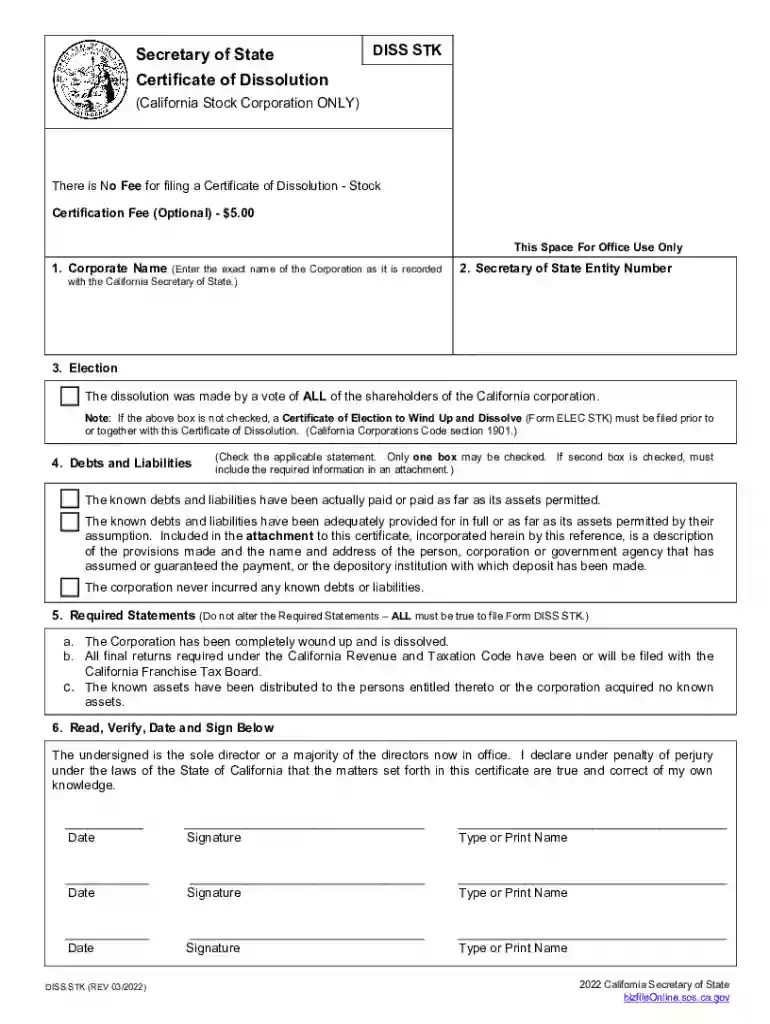
A Certificate of Dissolution is a legal document that formally terminates the existence of a corporation. When a corporation intends to close its operations, this document must be submitted to the appropriate state authority to officially dissolve the entity. It includes confirmations such as whether shareholder voting occurred and any pertinent information about debt settlements or liabilities. Once filed and accepted, the corporation is no longer recognized as an active business entity by the state.
To obtain a Certificate of Dissolution, corporations must first ensure that all necessary internal approvals, such as board and shareholder consent, are secured. The process involves contacting the state business filing agency, most often the Secretary of State's office, either online or in person. Specific forms must be filled out, detailing corporate identity and confirming the liquidation of assets and the settling of debts. It's important also to check for state-specific requirements, such as additional forms or fees associated with the dissolution process.
Completing a Certificate of Dissolution involves several critical steps:
Understanding key terms associated with the Certificate of Dissolution is essential for a smooth filing process:
The Certificate of Dissolution serves a legal purpose by formally ending a corporation's existence. It ensures that the entity is not liable for taxes or legal obligations after dissolution and provides a public record that the enterprise is no longer operational. Legal compliance in filing this document protects shareholders, directors, and officers from future claims or misunderstandings about corporate status.
Essential components of a Certificate of Dissolution include:
Each state in the U.S. may have unique rules regarding the dissolution process. Common differences include filing fees, specific forms, and additional documentation requirements. Some states might necessitate a tax clearance certificate before dissolution can proceed. It's vital for corporations to consult their Secretary of State or a legal expert to ensure compliance with local regulations.
Corporations use Certificates of Dissolution in various scenarios, such as:
We've got more versions of the Certificate of Dissolution form. Select the right Certificate of Dissolution version from the list and start editing it straight away!
| Versions | Form popularity | Fillable & printable |
|---|---|---|
| 2022 | 4.3 Satisfied (56 Votes) |
At DocHub, your data security is our priority. We follow HIPAA, SOC2, GDPR, and other standards, so you can work on your documents with confidence.

Within 120 days after the final distribution of assets to members is started, a duly executed Certificate of Dissolution and Liquidation shall be filed with theRead more
The document is intended to provide current knowledge in support of sound decisions. It is not intended to foster or discourage efforts to clean upRead more


