






Definition & Meaning
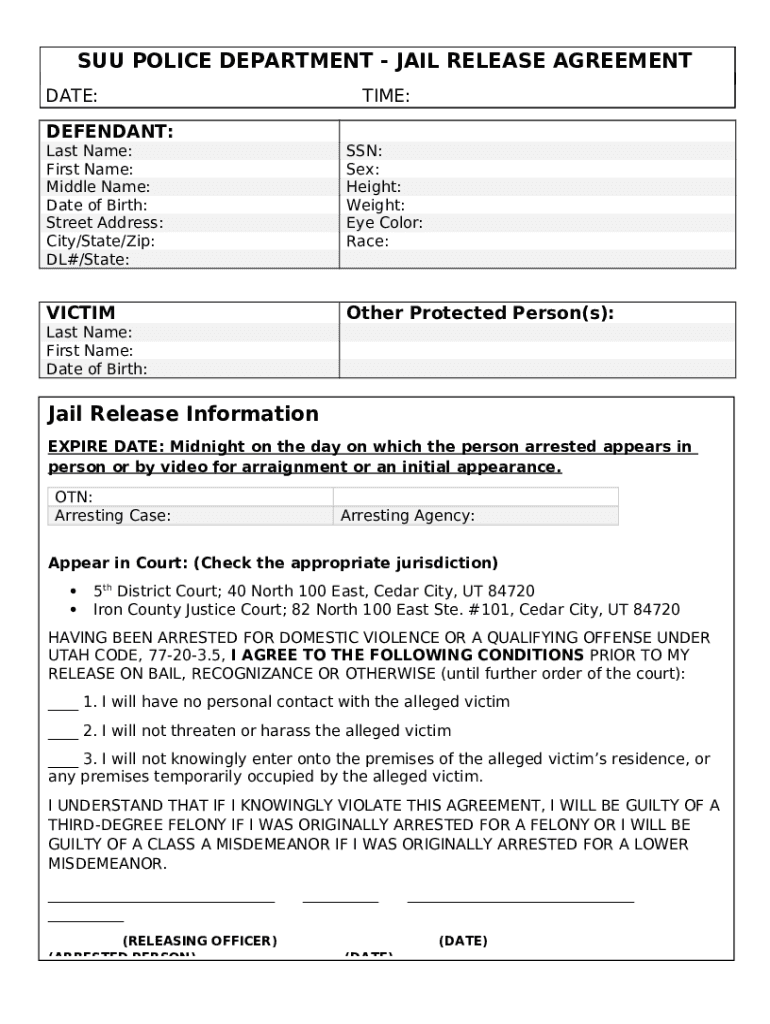
The Jail Release Agreement is a legal document used primarily in the United States to outline the conditions under which a defendant may be released from custody following an arrest for domestic violence or a qualifying offense. This agreement typically includes personal information about the defendant and any involved parties, as well as the specific terms and conditions that must be adhered to for the defendant to remain out of jail. Violating these conditions can result in further legal consequences, including potential felony or misdemeanor charges.
Key Components
- Personal Information: Details about the defendant, including name, address, and contact information.
- Court Appearance Information: Dates and locations for required court appearances.
- Conditions of Release: Specific rules such as prohibiting contact with the victim.
- Legal Consequences: Potential penalties for violations of the agreement.
How to Use the Jail Release Agreement
Using the Jail Release Agreement effectively involves understanding how to read and comply with each condition set forth in the document. Here are some key steps to ensure proper usage:
- Carefully Review All Terms: Understand each condition and its implications.
- Adhere to Conditions: Follow all conditions precisely as stated, such as non-contact clauses.
- Document Compliance: Keep records of your adherence to the agreement's terms.
- Communicate with Legal Counsel: Seek advice if any conditions are unclear or seem unfeasible.
This document ensures defendants are aware of their obligations and helps prevent future legal issues.
Steps to Complete the Jail Release Agreement
Filling out a Jail Release Agreement requires attention to detail to ensure accuracy and completeness. The following is a streamlined guide:
- Obtain the Form: Typically provided upon release by law enforcement or legal counsel.
- Personal Information Entry: Fill out all personal details, ensuring accuracy.
- Review Conditions: Understand each release condition, making note of any that require special attention.
- Sign the Agreement: Sign the form to acknowledge your understanding and acceptance of the terms.
- Submit to Authorities: Turn in the completed form to the issuing agency or representative.
Each step is crucial to avoid any misunderstandings or legal pitfalls.
Important Terms Related to Jail Release Agreement
Comprehending the terms and language used in a Jail Release Agreement is vital for proper compliance. Here are some essential terms and their meanings:
- Defendant: The individual who has been charged and is seeking release.
- Victim: The individual(s) who is alleged to have been harmed or affected by the defendant's actions.
- No-Contact Order: A condition prohibiting the defendant from contacting the victim.
- Conditional Release: Freedom from custody based on adherence to specific terms.
These terms frequently appear in legal agreements and understanding them ensures accurate application and compliance.
Legal Use of the Jail Release Agreement
The Jail Release Agreement serves vital legal purposes. It is designed to:
- Ensure Court Appearance: Encourages the defendant to attend all scheduled legal proceedings.
- Protect the Victim: Implements measures like no-contact orders to safeguard victims.
- Manage Defendant Behavior: Conditions help regulate the defendant’s actions while out on release.
From a legal perspective, these agreements balance public safety with the rights of the accused.
Key Elements of the Jail Release Agreement
A Jail Release Agreement's effectiveness hinges on several critical elements, each contributing to its overall framework:
- Compliance Requirements: Specific duties the defendant must fulfill, such as attending court dates.
- Court Mandates: Legal obligations to appear at future proceedings.
- Behavioral Conditions: Requirements to avoid certain actions or locations, often related to the victim.
- Penalties for Non-Compliance: Defined consequences if conditions are violated.
Understanding each component is necessary to follow the agreement properly.
State-Specific Rules for the Jail Release Agreement
Each U.S. state may have variations in how Jail Release Agreements are enforced due to differing laws and policies. Key differences may include:
- Condition Specifications: Certain conditions may be more or less stringent depending on state law.
- Enforcement Practices: Methods for monitoring and ensuring compliance vary by region.
- Penalties and Consequences: The severity and type of punishment for violations can differ.
Familiarizing yourself with local statutes is imperative for thorough understanding and compliance.
Examples of Using the Jail Release Agreement
Scenarios where a Jail Release Agreement might be used provide real-world context and illustrate its functions:
- Domestic Violence Case: Following arrest, a defendant may be released with conditions to avoid contact with the victim.
- Bail Hearing: In court, the judge may issue a Jail Release Agreement as part of the bail terms.
- Law Enforcement Situation: Officers may use the agreement to outline conditions before releasing an individual from custody.
Each example highlights practical application and the benefits of meeting the agreement's conditions.