




01. Edit your form online
Type text, add images, blackout confidential details, add comments, highlights and more.

Type text, add images, blackout confidential details, add comments, highlights and more.

Draw your signature, type it, upload its image, or use your mobile device as a signature pad.

Send it via email, link, or fax. You can also download it, export it or print it out.
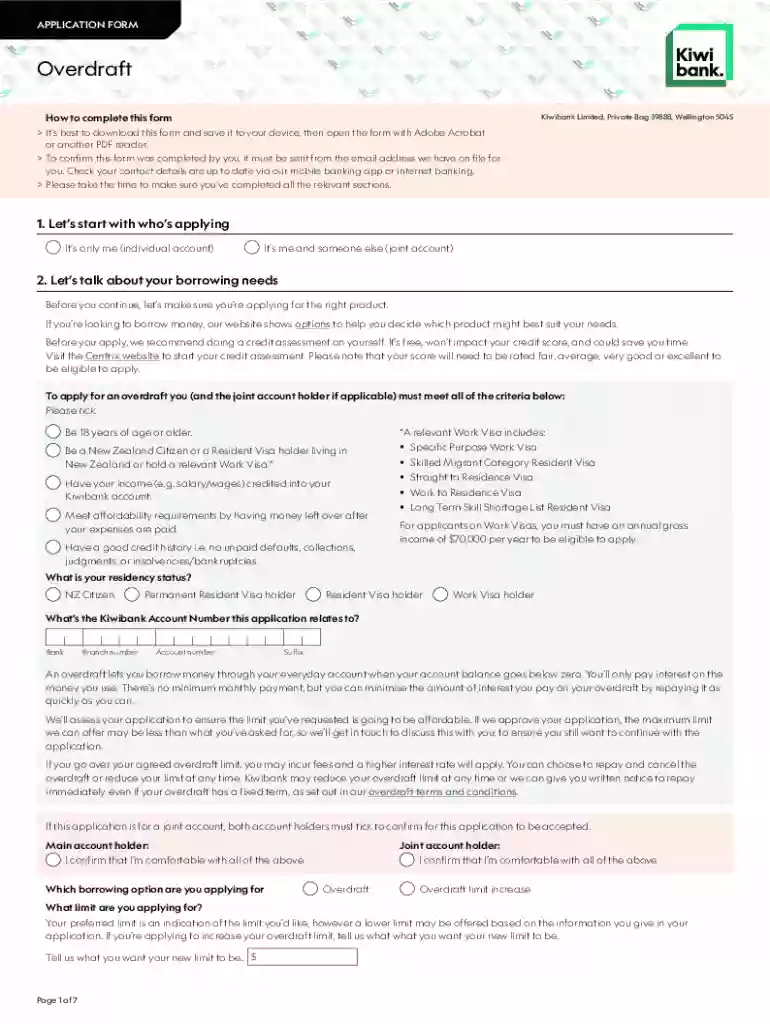
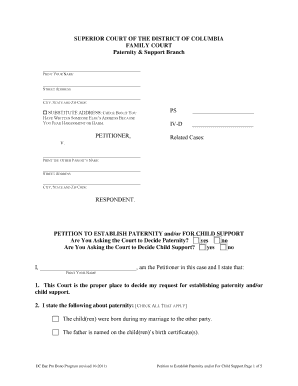
Application forms are comprehensive documents designed to collect specific information from applicants. They typically include sections for personal details, which capture essential information about the applicant, such as name, address, contact information, and social security number. These sections ensure the organization has the necessary details to identify and communicate with the applicant.
Financial information is another critical component, especially for financial services like overdraft applications. This section may include details about income, expenses, and existing debts to assess the applicant's financial situation and evaluate their creditworthiness. Such information is crucial for determining eligibility and the terms of service that can be offered to the applicant.
In many application forms, there is a section for the applicant's declaration or certification. This part requires the applicant to affirm the truthfulness and accuracy of the information provided. It often includes a space for the applicant's signature, confirming their agreement to the outlined terms and conditions.
Completing an application form accurately is essential for ensuring a successful submission. The first step is to carefully read through the form's instructions to understand the requirements and expectations. This initial review helps in identifying the necessary documents and information needed for a complete application.
Next, gather all required information and documentation before starting to fill out the form. For a financial application, this might include pay stubs, bank statements, or tax returns. Having these documents ready will streamline the process and reduce the risk of omissions.
Once all information is gathered, proceed to fill out each section of the form. Ensure that all entries are legible and accurate, paying close attention to required fields. Incomplete or incorrect information can lead to delays or rejection of the application.
Before submitting the form, review all entries for completeness and accuracy. It’s crucial to recheck each section to ensure that no information is missing and that all data entered corresponds with the provided documentation.
Application forms can typically be submitted using various methods depending on the organization’s processes and applicant preferences. Online submission is a popular and efficient method that allows applicants to fill out and submit their forms digitally. This method often includes options for uploading necessary documents and is beneficial for its convenience and speed.
Mail submission requires the applicant to send a physical copy of the completed form, along with any required documentation, to the designated address. While it may take longer for the application to be processed compared to digital submissions, it remains a preferred method for those who are more comfortable with traditional paperwork.
In-person submission involves delivering the form directly to the organization’s office. This method allows applicants to receive immediate feedback on their submission and address any issues on the spot. It can also provide a personal touch and the opportunity to ask questions about the process.
Application forms, particularly those related to financial services, must be used in compliance with applicable legal and regulatory standards. For instance, they must adhere to privacy laws that protect the applicant's personal and financial information. This ensures that sensitive data is handled securely and ethically throughout the process.
The Employment and Income Verification systems, along with other similar regulations, may require certain forms to include disclosures about how the collected data will be used. This might also involve informing applicants about their rights concerning data access and correction.
Moreover, a legally binding section for consent or acknowledgment is often included to ensure the applicant understands and agrees to the terms and conditions outlined in the form. These elements are vital for ensuring that both parties engage in a transparent and legally sound transaction.
For most application forms, providing supplementary documentation is a standard requirement to verify the details provided by the applicant. A driver’s license or passport may be needed to confirm identity, while financial forms could require additional verification through bank statements or tax returns.
These documents serve to corroborate the applicant's claims and aid the organization in making informed decisions. It is important for applicants to ensure that all documents are up to date and relevant to avoid delays or complications in the processing of their application.
Applicants should also be prepared to provide explanations or justifications for any discrepancies between their form and the supporting documents. Such readiness can streamline the approval process and minimize the need for further inquiries.
Certain application forms are more prevalent among specific business types or sectors. For example, banking and financial institution forms are commonly used by businesses that require financing or credit facilities. These forms allow businesses to apply for loans, lines of credit, or overdraft services to support their operational needs.
Similarly, tax-related application forms are indispensable for small-business owners and self-employed individuals. These forms can be used to request extensions or apply for deductions and credits during tax season, ensuring compliance and optimizing financial outcomes.
Understanding which forms are most relevant to a particular business type can help organizations streamline their administrative processes and focus on core business activities. Tailoring the application process to the specific needs of the business type enhances efficiency and ensures all necessary information is captured accurately.
Application forms, especially those used for government-related services or financial transactions, may be subject to state-specific rules and regulations. These variations often arise from differing state laws around privacy, data protection, or financial services, necessitating adjustments to the form to maintain compliance.
Applicants should be aware of these state-specific differences when filling out and submitting their forms. For example, certain states might require additional disclosures or impose stricter eligibility criteria. Being informed about these requirements will help prevent application errors and facilitate smoother transactions.
Organizations providing forms must ensure they are updated regularly to reflect any legislative changes at the state level. This ongoing compliance helps maintain trust with applicants and ensures continued adherence to legal standards.
Eligibility criteria are crucial components of any application form process, determining who qualifies to complete the form and access the associated services. For financial applications, these criteria might include minimum income thresholds, credit score requirements, or residency status.
Understanding the specific eligibility criteria before beginning the form is important for determining whether one is qualified to apply. It helps save time and resources by preventing submissions that are unlikely to be approved.
Applicants should also be aware that eligibility criteria can vary significantly between organizations or depending on the service type. Clarifying these requirements in advance ensures that applications are well-prepared and stand a better chance of success.


We've got more versions of the Application Form form. Select the right Application Form version from the list and start editing it straight away!
| Versions | Form popularity | Fillable & printable |
|---|---|---|
| 2024 | 4.8 Satisfied (20 Votes) |
At DocHub, your data security is our priority. We follow HIPAA, SOC2, GDPR, and other standards, so you can work on your documents with confidence.


Jun 13, 2025 An application for the exclusive shop, the Tenshodo. Take it to the headquarters to become a member. Used In Quest(s):. Tenshodo Membership.Read more
Discretionary grant application forms and other forms for federal education assistance, budget information, certifications and assurances, and performance


