Definition & Meaning
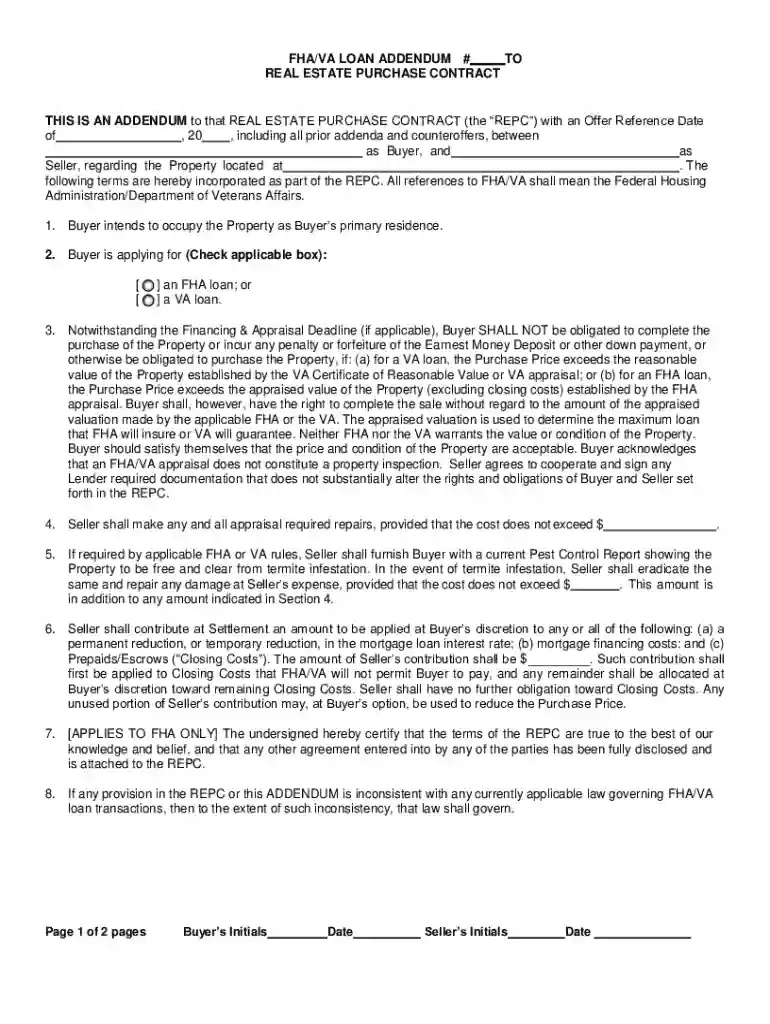
The FHA/VA Loan Addendum to a Real Estate Purchase Contract is a formal document that outlines specific terms and conditions applicable when a property buyer intends to use a Federal Housing Administration (FHA) or Veterans Affairs (VA) loan for financing. This addendum serves to modify the main real estate purchase contract, ensuring compliance with the guidelines set by FHA and VA loan programs. It primarily focuses on the buyer's intent to occupy the property as a primary residence and the protection offered if the property appraisal does not meet the agreed purchase price.
Core Purpose
- Buyer's Occupancy Intention: The addendum confirms that the buyer plans to use the property as their primary residence, a key requirement for eligibility under FHA and VA loan programs.
- Loan Contingency: This document provides a contingency that allows the buyer to back out of the transaction without penalty if the property does not appraise for the contract price, protecting the buyer financially.
- Seller Contributions: It may also detail any contributions the seller agrees to make towards closing costs or necessary repairs, as required by the appraisal.
Key Elements of the FHA/VA Loan Addendum
The FHA/VA Loan Addendum is structured to ensure that all parties comply with federal regulations and provide an additional level of transparency in the transaction.
Appraisal Clause
- Appraisal Requirement: The addendum specifies conditions related to the property's appraisal value. If the appraisal is lower than the purchase price, the buyer can opt to withdraw from the contract without forfeiting their deposit.
- Repair Requests: Any necessary repairs identified during the appraisal process must be addressed. The addendum may specify whether the seller or buyer is responsible for these repairs.
Seller Contributions
- Closing Costs: The addendum can outline the seller's contribution towards the buyer's closing costs, which can be a percentage of the loan amount or a fixed dollar figure.
- Pest Control: Seller responsibilities may include pest control treatments if required by the loan program or state laws.
Legal Compliance
- Conflict with Laws: The addendum ensures that any conflicting provisions with existing federal or state laws are overridden by those laws, ensuring compliance.
Steps to Complete the FHA/VA Loan Addendum
Completing the FHA/VA Loan Addendum accurately is crucial for a smooth transaction. Here are step-by-step instructions on how to fill out this form:
- Gather Necessary Information: Ensure you have all relevant details, such as the property's address, buyer's and seller's names, and loan specifics.
- Fill Buyer & Seller Details: Enter both the buyer’s and seller’s information accurately, as it appears on the primary real estate contract.
- Specify Loan Type: Indicate whether the buyer is applying for an FHA or VA loan, as different terms may apply.
- Detail Appraisal Conditions: Fill in the clauses regarding the appraisal, ensuring that all conditions are clear, such as who handles repairs if required.
- Outline Seller Contributions: Clearly note any contributions the seller will make towards closing costs or repairs.
- Sign and Date: Both parties must sign and date the form, acknowledging their agreement to the terms outlined.
Important Terms Related to the FHA/VA Loan Addendum
Certain terms are central to understanding and utilizing this form effectively:
- Primary Residence: The property must be intended as the buyer's main living place, not a secondary home or investment property.
- Appraisal Contingency: A condition that allows the buyer to withdraw if the property does not appraise at or above the purchase price.
- Closing Costs: Fees associated with finalizing the purchase of a property, such as loan origination fees, appraisal fees, and taxes, which can sometimes be offset by seller contributions.
Who Typically Uses the FHA/VA Loan Addendum
This addendum is typically used by:
- Homebuyers: Individuals purchasing a primary residence with the help of an FHA or VA loan.
- Real Estate Agents: Professionals assisting buyers with the home purchasing process and ensuring all contract forms are completed legally and efficiently.
- Sellers: Property owners entering into a contract with a buyer using FHA or VA financing, agreeing to specific terms, such as repairs and closing cost contributions.
Legal Use of the FHA/VA Loan Addendum
The legal use of this addendum supports compliance with government-backed loan program requirements:
- Regulatory Compliance: Ensures adherence to FHA and VA guidelines, which are designed to protect both buyers and lenders.
- Binding Agreement: Once signed, it becomes a binding part of the real estate purchase contract, carrying significant legal obligations for all parties involved.
State-Specific Rules for the FHA/VA Loan Addendum
While the general principles of the FHA/VA Loan Addendum are consistent across the United States, there might be state-specific rules and considerations:
- Pest Control and Repairs: Certain states may have additional requirements for pest inspections or repair obligations that need to be incorporated into the addendum.
- Seller Contribution Limits: Some states limit the percentage or amount a seller can contribute to the buyer's closing costs, which must be adhered to within the addendum.
Examples of Using the FHA/VA Loan Addendum
Understanding practical applications can clarify the effectiveness of the FHA/VA Loan Addendum.
Scenario 1: Appraisal Below Purchase Price
A buyer offers $250,000 for a property, but the appraisal returns at $240,000. The addendum allows the buyer to renegotiate a lower price or withdraw without penalty.
Scenario 2: Required Repairs
During the appraisal, it is discovered that the roof needs repairs. The addendum specifies whether the seller, buyer, or both share the repair costs, ensuring clarity and compliance.
These examples illustrate the flexibility and protection the FHA/VA Loan Addendum offers to both buyers and sellers, fostering smoother real estate transactions.