







Definition & Meaning
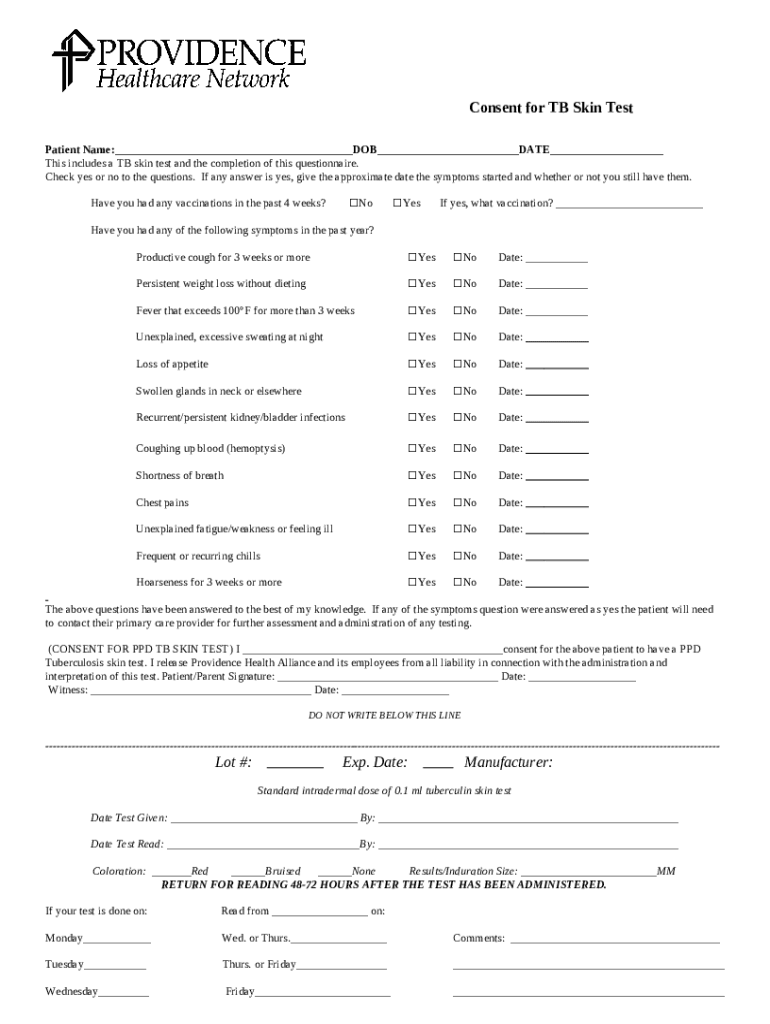
The "Providence Health Center TB Skin Test Record" refers to a documentation tool used by healthcare facilities to record the administration and results of a Tuberculosis (TB) skin test. This form is typically filled out when a patient undergoes a Mantoux TB test, which involves injecting a small amount of tuberculin under the skin. The primary purpose of this document is to capture essential details about the patient's health status, test administration, and outcomes. It ensures both the patient and healthcare provider have a clear and accurate record of the testing process and results.
The record is critical in identifying whether a person has been infected with TB bacteria, aiding in timely intervention and treatment if necessary. Given its medical context, the form includes sections for patient identification, consent, symptom reporting, and a detailed record of the test findings.
How to Use the PROVIDENCE HEALTH CENTER TB SKIN TEST RECORD
Using the "Providence Health Center TB Skin Test Record" correctly is essential for an accurate assessment and documentation process. Below are key steps to follow when using the form:
-
Patient Information Section: Enter accurate personal details such as name, date of birth, and contact information. Ensure that these details are verified against the patient's identification to prevent any clerical errors.
-
Symptom Assessment: This section requires the patient to disclose any symptoms related to TB, such as persistent cough, fever, or weight loss. Healthcare providers should guide patients through this section to ensure all pertinent information is captured.
-
Consent and Liability Release: The patient or guardian must sign this part to provide informed consent for the test administration. This signature also releases the healthcare provider from liability associated with the procedure, as long as it is conducted according to medical standards.
-
Test Administration Details: Healthcare providers must document the date and time of test administration, the exact injection site on the body, and the type of tuberculin used. This information is vital for tracking the test validity.
-
Results Documentation: After 48 to 72 hours, measure and record the induration size at the injection site. The results are interpreted based on set medical guidelines to determine TB exposure.
-
Provider Sign-Off: Finally, a licensed healthcare provider must sign and date the form, confirming all information is accurate and complete.
Steps to Complete the PROVIDENCE HEALTH CENTER TB SKIN TEST RECORD
Completing the TB Skin Test Record is a systematic process involving several steps:
- Preparation: Gather all necessary personal and medical details about the patient before the test.
- Administering the Test: Use approved techniques for injecting the tuberculin and mark the injection site for later evaluation.
- Observation and Measurement: Check the site after 48 to 72 hours, measuring and documenting the reaction.
- Documentary Evidence: Fill in all parts of the form, ensuring no sections are skipped.
- Verification and Submission: Ensure both the patient and practitioner sign, then store the record securely within patient files.
Important Terms Related to PROVIDENCE HEALTH CENTER TB SKIN TEST RECORD
Understanding the terminology associated with the TB Skin Test Record is crucial for both patients and healthcare providers:
- Tuberculin: A protein derivative used in the Mantoux test to detect TB infection.
- Induration: The area of swelling measured around the injection site, crucial in interpreting test results.
- Mantoux Test: The standard method for conducting the TB skin test through intradermal injection.
- Consent: Legal agreement from the patient to undergo the TB test, signifying understanding and acceptance of potential risks.
Why Should You Use the PROVIDENCE HEALTH CENTER TB SKIN TEST RECORD
Utilizing this form provides multiple benefits:
- Accurate Documentation: Ensures detailed records are kept for future reference and healthcare provider accountability.
- Legal Compliance: Meets medical standards for documenting patient consent and test results.
- Health Monitoring: Facilitates early detection and management of TB infections, promoting public health safety.
Key Elements of the PROVIDENCE HEALTH CENTER TB SKIN TEST RECORD
Several key elements are included in the TB Skin Test Record:
- Identification Information: Details that uniquely identify the patient.
- Test Specifications: Documentation of the tuberculin used, including batch number and expiration date.
- Reaction Analysis: Descriptions of the skin reaction measured, critical in determining TB exposure.
- Signatures: Essential for verifying that the consent is informed and the process is completed correctly.
Legal Use of the PROVIDENCE HEALTH CENTER TB SKIN TEST RECORD
The form must be used within the legal and ethical framework set by healthcare regulations:
- Informed Consent: Patients must authorize testing after being informed of its nature and purpose.
- Confidentiality: Medical records, including test results, must be secured in compliance with HIPAA regulations.
Examples of Using the PROVIDENCE HEALTH CENTER TB SKIN TEST RECORD
Real-world scenarios illustrate the form's usage:
- Preventative Screening: Schools or employers may require TB tests for students or staff, ensuring that TB spread is controlled.
- Medical Diagnosis: Physicians use the record to establish or rule out TB in patients presenting symptoms compatible with TB infection.
These sections provide a comprehensive understanding of the "Providence Health Center TB Skin Test Record," encasing its function, importance, and procedural requirements.




