




01. Edit your nc lien online
Type text, add images, blackout confidential details, add comments, highlights and more.

Type text, add images, blackout confidential details, add comments, highlights and more.

Draw your signature, type it, upload its image, or use your mobile device as a signature pad.

Send north carolina release via email, link, or fax. You can also download it, export it or print it out.
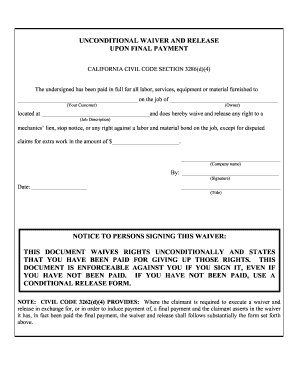
An "NC lien form," or North Carolina lien form, is a legal document used in the construction industry to secure payment for work performed or materials supplied. When contractors, subcontractors, suppliers, or laborers have not been paid for their services or products, they can file a lien form to claim a legal right to the property they worked on. This form serves as a public notice to ensure the property owner honors their payment obligations. The lien is typically filed with the county recorder’s office or the appropriate court to make it officially part of the public record. North Carolina lien laws require strict adherence to procedures, as it directly affects a party's ability to claim owed payments.
To effectively use the NC lien form, follow these steps:
Identify the Appropriate Lien Form: Depending on your role in the project (e.g., contractor, subcontractor), you may need different forms. Make sure you select the one that correctly corresponds to your stakeholder position.
Prepare the Information: Gather all necessary information, including the property owner's name, property description, details of the provided work or materials, and the total amount owed.
Complete the Form Accurately: Fill out all sections of the form meticulously. Errors or omissions can invalidate the lien.
File the Lien Form: Submit the completed form to the county recorder where the property is located. Ensure it is filed within the statutory period (generally within 120 days after the last day of furnishing labor or materials).
Serve Notice: Send a copy of the filed lien to the property owner and any other relevant parties. Proper service of the notice is crucial to uphold the lien's legality.
Enforce the Lien if Necessary: If payment is still not received, further legal action might be required to enforce the lien, such as initiating a lawsuit to foreclose the lien.
Completing the NC lien form involves a sequence of steps to ensure its validity:
Input Personal and Project Information: This includes providing your name, address, and the details of the property and project.
Detail the Services Rendered: Clearly articulate what materials were supplied or what work was performed, including dates and the nature of the work.
State the Amount Owed: Specify the exact amount you are claiming, as inaccuracies can lead to the lien being voided.
Obtain Notarization: Many North Carolina lien forms require notarization to verify that all statements are true under penalty of perjury.
Copy Filing for Your Records: Always keep a copy of the filed form for your own records and future reference.
The legal use of an NC lien form involves ensuring compliance with state-specific guidelines:
Compliance with North Carolina Lien Laws: North Carolina's lien statutes define how and when a lien can be filed, the parties who can file, and the process to enforce the lien.
Timeline Adherence: The law requires strict adherence to filing timelines, usually within four months from the last day labor or supplies were provided.
Notice to Property Owners: North Carolina law necessitates serving a Notice of Lien Rights to property stakeholders, preventing surprise claims.
North Carolina imposes specific rules that govern the use of lien forms:
Filing Location: Lien forms are typically filed at the clerk of court’s office in the county where the property is situated.
Filing Fees: There may be fees associated with filing the lien, which vary by county.
Liens on Residential vs. Commercial Properties: Different rules or limitations may apply depending on whether the property is used for residential or commercial purposes.
An NC lien form must include several key elements to be valid:
Detailed Description of Work: Accurate and detailed descriptions help establish the basis of the lien claim.
Correct Property Identification: The property description must be accurate to link the lien to the correct entity.
Claim Amount and Date of Last Work: This establishes the financial claim and the timeline, both crucial for legal enforceability.
Understanding and adhering to deadlines is critical:
Initial Notice of Lien: Must be filed within 120 days after the claimant last performed labor or supplied materials.
Foreclosure Action: Legal action to enforce the lien must be commenced within 180 days after the last day labor or materials were provided.
Failing to comply with lien requirements can result in penalties:
Invalidation of Lien: Improperly filed or untimely liens may be invalidated, forfeiting the right to collect payment through the lien process.
Court Costs and Attorney Fees: If the lien is contested and found invalid, the claimant may be liable for the other party's court costs and attorney fees.
These sections provide detailed insights into the NC lien form, serving as a comprehensive resource for understanding its purpose, usage, requirements, and compliance.
At DocHub, your data security is our priority. We follow HIPAA, SOC2, GDPR, and other standards, so you can work on your documents with confidence.


APPLICATION MUST BE FILED WITHIN 20 DAYS OF DATE OF SECURITY AGREEMENT OR LIEN DATE WILL BE PERFECTED BY THE DIVISION TO THE DATE OF RECEIPT OF APPLICATION.
Order Jack in the Box online for pickup or delivery. Explore the menu and find locations near you.


