




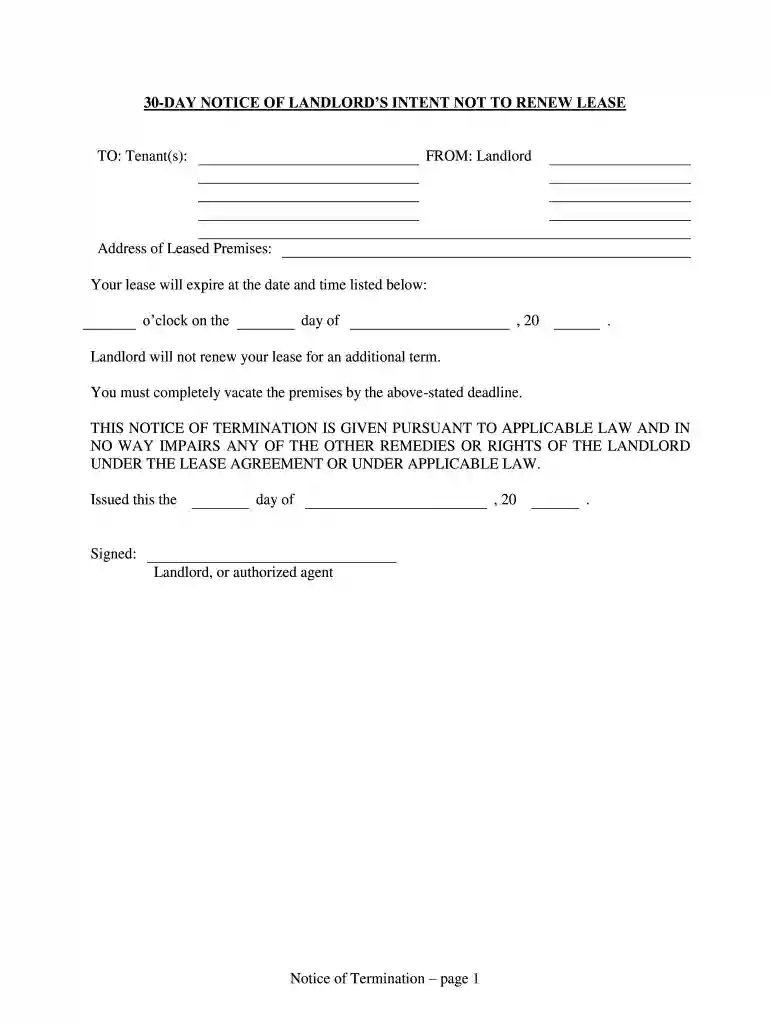
01. Edit your notice not renew lease online
Type text, add images, blackout confidential details, add comments, highlights and more.

Type text, add images, blackout confidential details, add comments, highlights and more.

Draw your signature, type it, upload its image, or use your mobile device as a signature pad.

Send illinois residential via email, link, or fax. You can also download it, export it or print it out.
A 30-day notice is a legal document used primarily in tenant-landlord relationships in the United States. Its main purpose is to formally notify the tenant or landlord of the intention to terminate or not renew a rental agreement. This document typically outlines the date by which the tenant must vacate the premises, and it includes any conditions that pertain to their departure. The notice does not impact any other legal rights or remedies that the landlord or tenant might have under the lease or the law.
When using a 30-day notice, the sender should ensure all essential information is included for it to be valid. The notice must clearly state the date by which the tenant should vacate the property, which is 30 days after the notice has been delivered. Additionally, it should include the address of the property in question and the names of both the tenant and the landlord.
Steps to utilize a 30-day notice effectively:
Tenants or landlords can obtain a 30-day notice form from various sources. Pre-printed template forms are available in office supply stores, or you can download templates from legal document websites. Ensure that any purchased forms comply with the specific legal requirements of the state where the property is located.
To complete a 30-day notice:
Issuing a 30-day notice is essential for maintaining legal compliance in ending a lease agreement. This document provides a formal record of the intent to terminate the lease, offering both parties the opportunity to address issues or make arrangements for the transition. It helps prevent potential disputes by clearly setting out expectations.
Understanding key terms associated with a 30-day notice is critical. Some of these include:
The 30-day notice is governed by state landlord-tenant laws, which dictate how such notices must be delivered and what they must contain. These variations can include specific wording requirements and methods of service that ensure the notice is legally binding. Compliance with these laws is crucial to avoid disputes or prolonging the tenant's stay beyond the desired time frame.
Essential components of a 30-day notice generally include:
Different states have their own requirements for what constitutes a valid 30-day notice. For example, in California, landlords must provide proof of service and may need to offer additional days for mailing. It is important to consult the local landlord-tenant laws to ensure compliance with regional requirements. Understanding these rules can prevent misunderstandings or legal challenges.
Consider a landlord who wants to renovate their property once a lease expires. A 30-day notice would be necessary to inform the tenant of the lease's non-renewal. Alternatively, a tenant who has found a new job in another state may issue a 30-day notice to the landlord, indicating their intention to vacate the property by a specific date.
These practical examples illustrate the utility of a 30-day notice in facilitating smooth transitions in rental arrangements while maintaining legal compliance.
At DocHub, your data security is our priority. We follow HIPAA, SOC2, GDPR, and other standards, so you can work on your documents with confidence.

When a tenant refuses to vacate after the agreement expires, you cannot evict them yourself. First send a written notice to quit and vacate by registered post.Read more
A 30-day notice is a written letter from tenant to landlord or landlord to tenant informing the other party of their intent to terminate or change a month-to-Read more
A landlord uses a 30-day Notice to Quit (move out) to end a month-to-month tenancy if the tenant has been renting for less than 1 year.


