
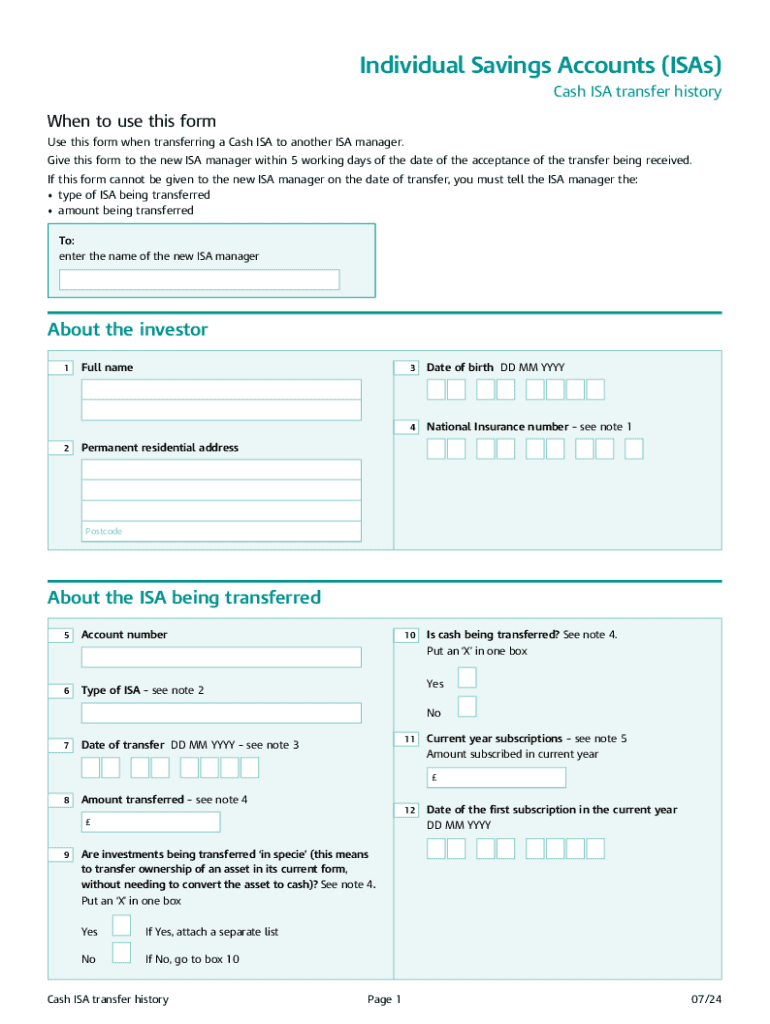







Definition & Meaning
A Cash ISA transfer history is a detailed record of transfers related to a Cash Individual Savings Account (ISA). This history tracks significant actions and transactions, such as when an account holder moves their ISA funds from one manager to another. The primary purpose of maintaining this history is to provide transparency and account integrity, ensuring compliance with regulatory requirements concerning ISA transfers.
Cash ISAs are a tax-efficient savings vehicle available to UK residents. They offer the benefit of tax-free interest, making them an attractive option for savers. When transferring a Cash ISA, it is crucial to adhere to regulations set forth by HM Revenue and Customs (HMRC). A comprehensive transfer history helps account holders and ISA managers ensure all guidelines are met and any potential discrepancies are resolved promptly.
Key Elements of the Cash ISA Transfer History
The transfer history of a Cash ISA includes several critical components that make the document comprehensive and informative. The detailed record usually contains:
- Account Holder Information: This includes the name, address, and account details of the ISA holder.
- Details of the Transfer: Date of transfer, the amount involved, and the type of assets (cash or investments) transferred.
- Previous and New ISA Managers: Information about the ISA managers participating in the transfer, including contact details and identifier numbers if applicable.
- Confirmation Numbers: Unique identifiers that validate the transfer's authenticity and traceability.
Each component of the transfer history plays a vital role in ensuring that the transfer process is seamless and compliant with legal standards.
How to Use the Cash ISA Transfer History
To utilize the Cash ISA transfer history effectively, account holders and ISA managers should regularly review this document. Here’s how you can make the most of it:
- Verification and Record Keeping: Use the history to verify all completed transfers, ensuring each transaction aligns with documentation from both the previous and new ISA managers.
- Assessing Transfer Limits: Track accumulated deposits to ensure they do not exceed annual ISA allowance limits, helping to maintain eligibility for tax benefits.
- Fraud Prevention: Regularly reviewing transfer history helps quickly identify unauthorized transactions or discrepancies.
- Financial Planning: Analyze past transfers to inform future decisions, aiding in strategic planning and optimizing savings growth.
Steps to Complete the Cash ISA Transfer History
Completing the transfer history involves several critical steps, ensuring accuracy and compliance:
- Gather Necessary Documentation: Collect all relevant documentations, such as transfer confirmation emails, previous account statements, and communication from both ISA managers.
- Record Transfer Details: Accurately input details such as the transfer date, amount, and involved managers into a structured format or tracking system.
- Validate the Information: Cross-reference the recorded details with official documentation from involved parties to confirm accuracy.
- Secure Documentation: Ensure all records are stored securely, either digitally or physically, adhering to data protection regulations.
Following these steps helps prevent errors and ensures the integrity of the transfer history.
Why You Should Maintain a Cash ISA Transfer History
There are several compelling reasons to maintain a detailed Cash ISA transfer history:
- Compliance with Regulations: Ensures adherence to rules established by relevant authorities, avoiding potential penalties.
- Facilitates Smooth Transfers: Provides clear records that facilitate prompt and efficient future transfers.
- Enhanced Financial Transparency: Offers a clear overview of past financial activities, crucial for budgeting and financial analysis.
- Dispute Resolution: Serves as evidence in case of any discrepancies or disputes between the ISA holder and managers.
Maintaining this history is a proactive measure that helps individuals and organizations manage their financial affairs effectively.
Who Typically Uses the Cash ISA Transfer History
The primary users of Cash ISA transfer histories are:
- Individual Account Holders: Individuals who own a Cash ISA and need to track their financial activities for personal management and compliance.
- ISA Managers: Financial institutions that provide ISA services; they use the histories to maintain accurate records and regulatory compliance.
- Financial Advisors: Professionals who manage client portfolios and provide strategic advice based on historical financial data.
- Regulatory Authorities: Organizations that oversee financial institutions and ensure adherence to laws governing ISAs.
Each stakeholder relies on the transfer history to fulfill their respective roles effectively.


Legal Use of the Cash ISA Transfer History
In a legal context, a Cash ISA transfer history is crucial for several reasons:
- Regulatory Compliance: Maintains compliance with the ISA regulations stipulated by HMRC, avoiding legal repercussions.
- Audit Purposes: Provides a record that can be used during audits or investigations to verify compliance with financial regulations.
- Dispute Resolution: Acts as evidence in legal disputes between ISA holders and managers regarding transaction discrepancies.
- Tax Reporting: Assists in providing accurate data for tax returns to profit from the tax-advantaged nature of ISAs.
The legal utility of a well-maintained transfer history underscores the importance of this document in financial management.
Form Submission Methods for Cash ISA Transfer History
The submission of the Cash ISA transfer form can be executed through various methods:
- Online Submission: Many financial institutions facilitate online processes for initiating and completing transfers, providing a quick and efficient means of submission.
- Mail Submission: Alternatively, traditional postal services can be used for submitting transfer documents, ensuring official paperwork is properly handled and received.
- In-Person Submission: Visiting financial institutions directly may be necessary for individuals requiring direct assistance or verification, ensuring personal service is given to important transactions.
Each method gives account holders flexibility, depending on their preferences and circumstances, ensuring the process remains accommodating and user-friendly.




