
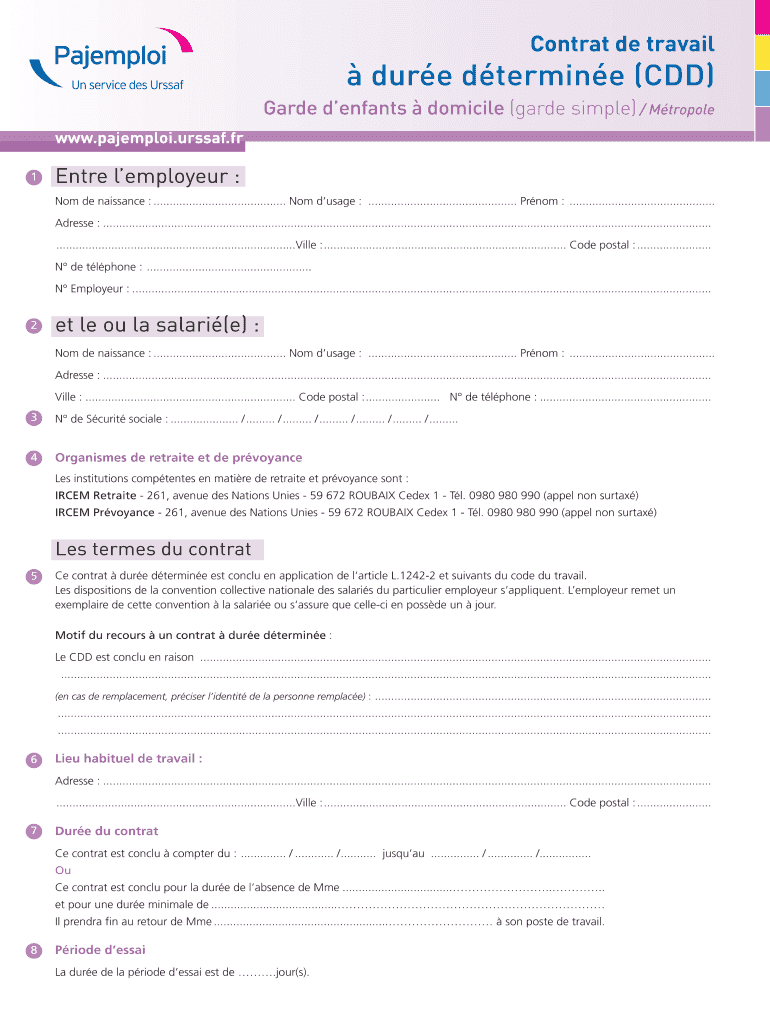







Definition and Meaning of the Contrat de travail
The "Contrat de travail" is a legally binding document that formalizes the relationship between an employer and an employee. In France, this contract defines the specific terms of employment, including roles, responsibilities, compensation, and conditions under which an individual will work. Understanding the components and implications of this contract is crucial for both parties as it dictates the rights and obligations during the employment period. It is typically governed by French labor laws, providing specific guidelines regarding trial periods, working hours, and remuneration.
Components of the Contrat de travail
- Employer and employee details: Clearly identifies both parties involved.
- Job responsibilities: Specifies the duties and tasks expected of the employee.
- Working hours: Details standard working hours, breaks, and any overtime conditions.
- Remuneration: Outlines the salary, potential bonuses, and benefits the employee is entitled to.
How to Use the Contrat de travail
Utilizing the "Contrat de travail" effectively ensures that both employer and employee are protected and aware of their mutual expectations. This contract should be drafted meticulously, ideally with legal guidance, to ensure compliance with applicable labor laws and to protect against potential disputes.
Drafting the Contract
- Identify the key terms: Include job title, duties, and working hours.
- Clarify compensation details: State base salary and any additional compensation.
- Outline conditions of employment: Specify probation periods, termination processes, and resignation terms.
Importance of Legal Review
- Employ a legal professional to review the contract to ensure compliance with local employment laws and to safeguard against common pitfalls.
Steps to Complete the Contrat de travail
Creating a comprehensive "Contrat de travail" involves several careful steps to ensure accuracy and legality. Precision in every element is crucial to prevent misunderstandings and legal issues.
- Gather personal information: Ensure correct details of both parties.
- Define employment conditions: Clearly state job expectations and conditions.
- Finalize compensation: Detail salary structure and payment timeline.
- Include termination clauses: Define conditions under which the contract can end.
- Seek legal validation: Have the document reviewed for compliance.
Detailed Sections Explanation
- Probationary Period: Outline length and conditions of any initial trial employment.
- Termination Clauses: Clearly define notice periods and conditions for leaving the job.
- Leave Entitlements: Specify types and duration of permissible leave.
Key Elements of the Contrat de travail
The core function of the "Contrat de travail" is to set clear terms for employment, covering a range of critical areas to facilitate a mutual understanding between employer and employee.
Major Sections to Include
- Duties and responsibilities: Specific roles and expectations.
- Compensation details: Includes base pay, bonuses, and any benefit entitlements.
- Leave policies: Delineate different types of leave available to employees.
- Dispute resolution processes: Lay out processes for addressing workplace disputes.
Practical Examples
- An IT technician requires clear job responsibilities to prevent scope creep.
- A sales representative may have performance targets linked to their compensation.
Legal Use of the Contrat de travail
The "Contrat de travail" must adhere to legal requirements and employment laws relevant to the jurisdiction in which it is executed. In France, these contracts are subject to specific labor regulations designed to protect both employers and employees.
Compliance with Labor Laws
- Ensure adherence to statutory minimums for wages, working hours, and workplace conditions.
- Contracts should comply with French regulations, such as those concerning fair dismissal and redundancy processes.
Protection Mechanisms
- Dispute Resolution: Legal pathways exemplified in the contract's clauses can mitigate conflict.
- Legal Recourses: Rights to legal recourse in instances of contractual breaches.
Who Typically Uses the Contrat de travail
The "Contrat de travail" is a versatile document utilized across various industries and professions. It is not limited to traditional employment sectors and applies broadly to any scenario where services are rendered under an employer's direction.


Common Industries
- Retail and Hospitality: High turnover positions where clear job definitions are crucial.
- Corporate and IT sectors: Roles with specific skill requirements and job descriptions.
- Domestic services: Legal grounding for roles such as childcare providers.
Examples of Usage
- A personal assistant in a corporate setting has a tailored "Contrat de travail" outlining specific duties and confidentiality agreements.
- An educator in a private institution is provided with a detailed contract specifying teaching responsibilities and benefits.
Important Terms Related to the Contrat de travail
Being familiar with key terminology in the "Contrat de travail" can help employers and employees navigate and understand the document more easily. These terms can clarify contractual intentions and help avert misunderstandings.
Key Terms and Definitions
- CDD: "Contrat à durée déterminée", a fixed-term employment contract.
- CDI: "Contrat à durée indéterminée", an open-ended or permanent contract.
- Clause de non-concurrence: Non-compete clause restricting the employee's activities post-employment.
- Période d'essai: Trial period during which either party may terminate the contract with reduced notice.
State-Specific Rules for the Contrat de travail
While the "Contrat de travail" holds general applicability across various regions, state-specific rules and additional stipulations may modify its application, particularly in terms of enforceability and local labor laws.
Regional Considerations
- Regional labor statutes may impose unique requirements on contract terms.
- Employer obligations and employee rights can vary based on regional economic conditions.
Adaptation to Local Jurisdictions
- Contracts should be reviewed for compliance with regional labor boards or employment standards committees to ensure alignment with local laws.
Incorporating nuanced legal interpretations, regional regulations, and professional legal advice ensures that the "Contrat de travail" functions effectively as a protective and clarifying document for all parties involved in the employment relationship.




