







Definition and Meaning
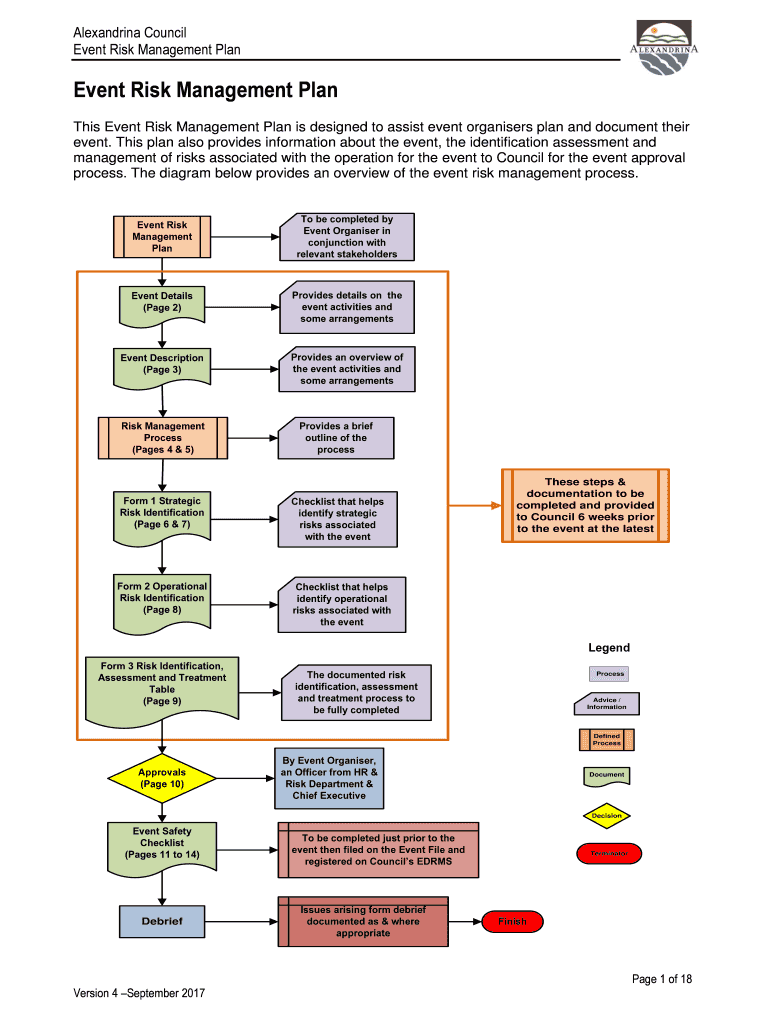
The Festivals and Events Risk Management Plan Template serves as a structured tool for event organizers to identify, assess, and manage risks associated with festivals and events. This template ensures that all potential hazards are methodically evaluated and mitigative strategies are established before an event proceeds. The ultimate goal is to safeguard participants, staff, and assets while ensuring compliance with legal and safety regulations.
Components of the Template
- Risk Identification: Recognizes potential risk factors that could impede the event.
- Risk Assessment: Evaluates the likelihood and impact of identified risks.
- Control Measures: Outlines strategies to mitigate identified risks.
- Contingency Planning: Provides alternative plans in the event of unforeseen incidents.
How to Use the Festivals and Events Risk Management Plan Template
The template is designed for ease of use, allowing event planners to systematically approach risk management. Here’s a step-by-step guide to utilizing the template effectively:
- Identify Risks: Brainstorm potential risks by involving key stakeholders familiar with the event context.
- Assess Risks: Use a risk matrix to rate each identified risk based on its likelihood and potential impact.
- Develop Control Measures: Document strategies to reduce or eliminate risks, and assign responsibility for each action.
- Create a Contingency Plan: Define actions to be taken if mitigation strategies fail.
Steps to Complete the Festivals and Events Risk Management Plan Template
Completing the template involves detailed analysis and documentation:
- Gather Information: Collect event-specific data such as location details, the number of attendees, and activity types.
- Engage Stakeholders: Include input from security personnel, emergency services, and legal advisors.
- Document Risks and Measures: Clearly outline the identified risks, their assessments, and planned control measures in the template.
- Review and Revise: Periodically reassess the plan to accommodate changes in event scope or environment.
- Seek Approval: Obtain buy-in from relevant authorities to validate the plan.
Key Elements of the Festivals and Events Risk Management Plan Template
The core components that must be detailed within the template include:
- Detailed Risk Register: Catalog of all identified risks with assessments.
- Clear Risk Control Measures: Specific actions assigned to team members for risk mitigation.
- Communication Procedures: Defined lines of communication in case of an incident.
- Roles and Responsibilities: Clearly identified roles for each member involved in the risk management activities.
Who Typically Uses the Festivals and Events Risk Management Plan Template
This template is primarily utilized by:
- Event Planners and Coordinators: To ensure comprehensive risk coverage for their events.
- Safety Officers: To establish safety protocols in collaboration with event organizers.
- Venue Managers: For coordinating risk measures specific to their facilities.
- Insurance Providers: To evaluate the adequacy of risk management in their underwriting processes.


Important Terms Related to Festivals and Events Risk Management
Understanding key terminology is essential for correctly using the template:
- Hazard: A potential source of harm.
- Mitigation: Steps taken to reduce risk levels.
- Contingency: Planned response to unforeseen events.
- Stakeholder: Any party with an interest in the event's success and safety.
Legal Use of the Festivals and Events Risk Management Plan Template
Ensuring legal compliance when implementing the plan is critical:
- Regulatory Compliance: Aligning the plan with local, state, and federal safety regulations.
- Documentation Standards: Maintaining thorough records as required by regulatory bodies for audit purposes.
- Liability Protections: Using the plan to establish a defense against potential legal claims.
State-Specific Rules for the Festivals and Events Risk Management Plan Template
While the template serves as a general guide, attention to state-specific laws is crucial:
- State Health and Safety Regulations: Varying requirements for safety protocols and emergency preparedness.
- Permits and Approvals: Specific documentation may be required for certain types of events.
- Insurance Requirements: States may impose minimum insurance coverages for event organizers.
By adhering to these detailed guidelines and utilizing the template effectively, event planners can successfully navigate the complexities of festival and event risk management.




