







Definition & Meaning
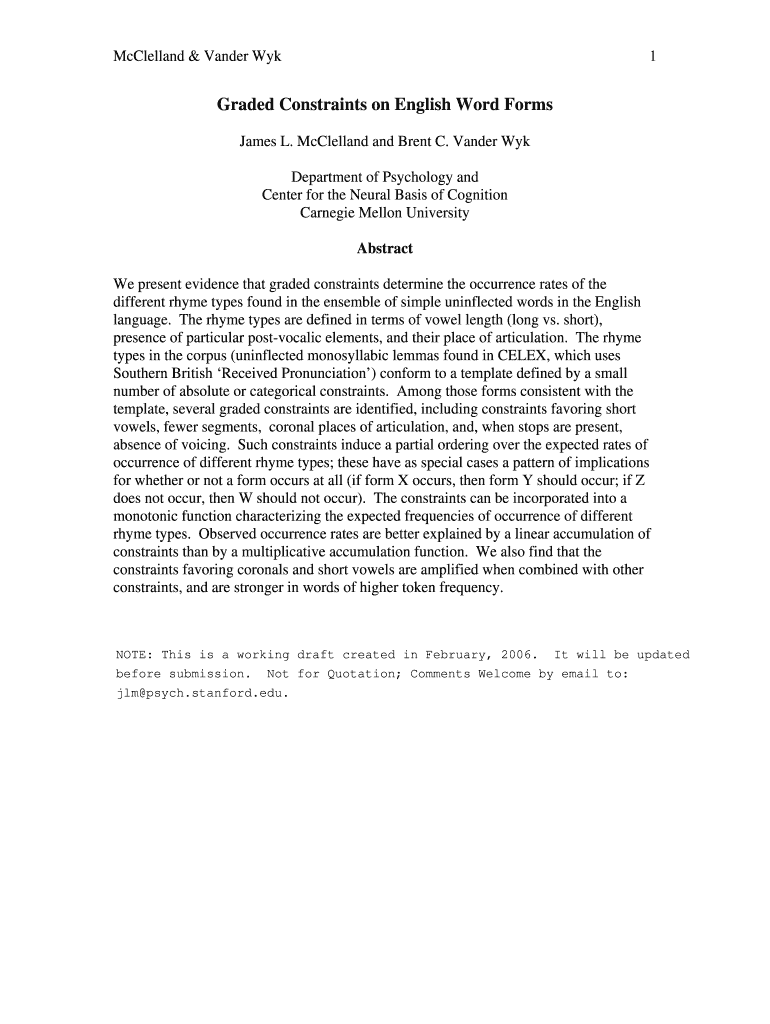
Graded Constraints on English Word Forms explores how varying factors impact the formation and acceptance of word structures in English. In the context of psychology, and specifically research conducted at Stanford, this concept examines the nuanced, gradual influences on word form instead of binary rules. It challenges traditional views by proposing that word forms adhere to a spectrum of constraints including vowel length, coda voicing, and place of articulation. This approach suggests that linguistic patterns are not strictly right or wrong but exist within a range of acceptability based on these graded constraints.
How to Use the Graded Constraints Framework
Utilizing the Graded Constraints framework involves analyzing linguistic data to discern patterns in word formation. Researchers can apply this framework by examining corpora like the CELEX database to observe how different phonetic and phonological features affect word acceptability. For instance, they might analyze the frequency of certain rhymes or phoneme combinations and correlate these with specific constraints. This methodology allows researchers to predict word form likelihood and propose adjustments to existing linguistic theories by demonstrating how subtle variations in pronunciation or structure impact word perception.
Steps to Complete a Study on Graded Constraints
- Define the Research Scope: Determine which English word forms or structures you will analyze.
- Select Data Sources: Choose corpora or databases that contain relevant linguistic data, like the CELEX corpus.
- Identify Constraints: Focus on the specific constraints you wish to study, such as vowel length or articulation features.
- Collect and Analyze Data: Extract data on word forms from your selected sources and combine them with statistical tools to detect patterns.
- Model Predictions: Use the Graded Constraint Theory to make predictions about word form occurrences.
- Compare and Adjust: Validate your model against observed data and adjust to improve accuracy.
Key Elements of Graded Constraint Theory
Graded Constraint Theory posits that multiple factors influence word form acceptability:
- Vowel Length: Longer or shorter vowels may fit better within certain word forms.
- Coda Voicing: Whether the final consonant is voiced or voiceless can impact word structure.
- Place of Articulation: Where and how sounds are produced in the mouth plays a critical role.
- Statistical Analysis: Data-driven approaches are crucial for identifying patterns in these elements.
Examples of Applying Graded Constraints
Consider the monosyllabic word "bat." The Graded Constraints might analyze how changing the final consonant to a voiced sound like "d" impacts acceptability. Similarly, examining the substitution of a short vowel with a long vowel could illustrate other constraints in action. These changes are evaluated within a spectrum, showing possible pronunciations and perceived correctness under different circumstances.
Important Terms Related to Graded Constraints
- Monosyllabic Words: Words consisting of a single syllable, often used in these studies for their simplicity.
- CELEX Corpus: A comprehensive database of English language forms used for linguistic analysis.
- Coda Voicing: The vocal cord vibration status during the pronunciation of consonants at the end of words.
Who Typically Uses the Graded Constraints Framework
The primary users of Graded Constraints are linguists, cognitive scientists, and psychologists who are interested in language processing and phonology. Stanford psychology researchers pioneering this field often apply these concepts to understand better how humans perceive and process language on a subconscious level. Additionally, language educators might use this framework to develop curricula that consider varied word acceptability.


Legal Use of Graded Constraints in Academic Research
While exploring Graded Constraints, it is essential for researchers at institutions like Stanford to adhere to ethical guidelines and standards for academic integrity. Proper citation of data sources like the CELEX corpus ensures compliance with intellectual property laws. Moreover, being transparent about methodologies facilitates replicability and validation by peers, reinforcing the legitimacy of findings and fostering further research in this nuanced area of language study.




