







Definition & Meaning
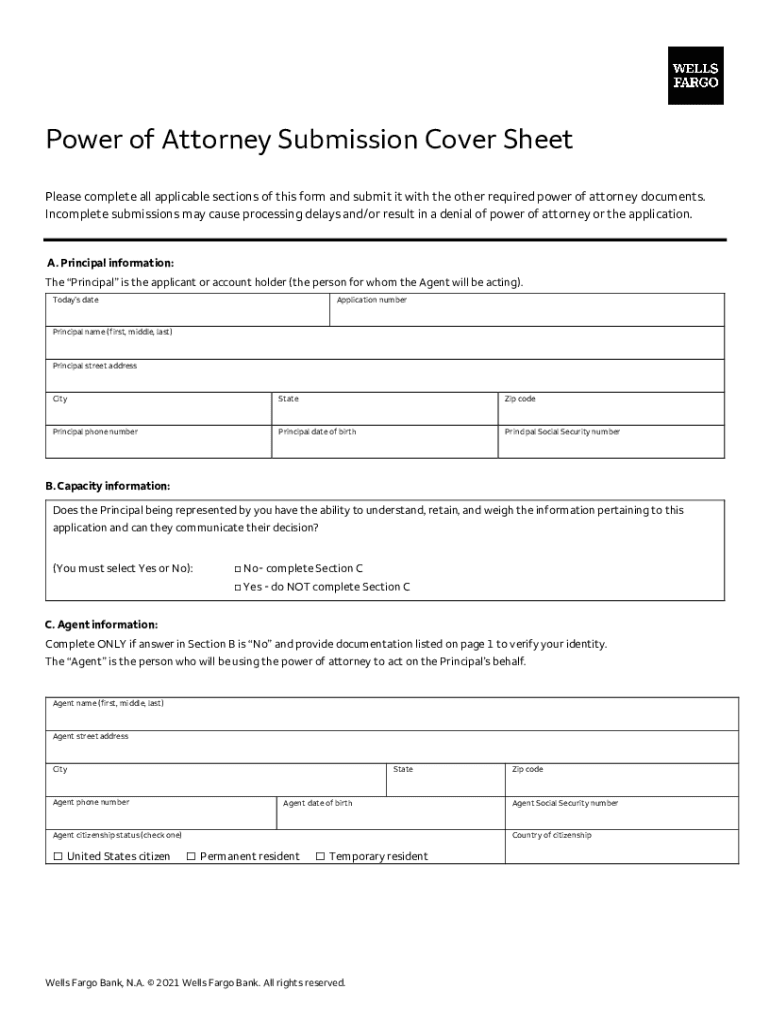
A power of attorney packet is a collection of documents that grants an individual or entity the legal authority to act on behalf of another person in specific matters. This typically includes financial, medical, or legal decisions. The packet usually consists of the power of attorney (POA) form itself, a submission cover sheet, and accompanying affidavits or clarifications, depending on the issuing entity or specific legal requirements. The packet provides comprehensive instructions and forms that ensure all legal aspects are covered, facilitating a smooth delegation of authority.
Steps to Complete the Power of Attorney Packet
-
Obtain the Packet: Begin by acquiring the power of attorney packet from a relevant source, such as a legal advisor, bank, or authorized online service.
-
Review Instructions: Carefully read through the instructions to understand the specific documents required and the details needed in each section.
-
Provide Personal Information: Fill out personal details for both the principal (the individual granting authority) and the agent (the person receiving authority).
-
Specify the Authority: Clearly define the scope of authority being granted, including any limitations or specific duties the agent can perform.
-
Legal Witnessing and Notarization: Some sections may require signatures to be witnessed or notarized to be legally binding. Ensure that these processes are followed accurately.
-
Submitting the Packet: Submit the completed packet to the relevant authority, such as a bank or legal firm, as dictated by the guidelines. Retain copies for personal records.
Key Elements of the Power of Attorney Packet
- Power of Attorney Form: The core document that outlines the authority being transferred to the agent.
- Submission Cover Sheet: Provides a summary of the packet contents and may include essential guidelines for submission.
- Attorney-in-Fact Affidavit: This may be required to affirm the agent's understanding and acceptance of the responsibilities involved.
- Supplementary Documents: Additional documentation may be necessary, especially in complex cases where the principal is incapacitated or if specific state regulations apply.
Legal Use of the Power of Attorney Packet
Power of attorney packets are crucial for legally validating the assignment of decision-making authority. They are typically used in personal, financial, healthcare, and business scenarios to ensure that the designated agent can lawfully act on behalf of the principal. These packets are legally recognized across the United States, with provisions for state-specific alterations. Their use is governed by the Uniform Power of Attorney Act in many states, providing a standardized framework for legal proceedings.
How to Use the Power of Attorney Packet
Once the power of attorney packet is complete, it needs to be properly utilized to ensure its legality and effectiveness:
- Activating the POA: The document must be validated through notarization and/or witnessing as required.
- Informing Parties: Notify any third parties involved, such as banks or healthcare providers, about the POA's existence and scope.
- Executing Decisions: The agent can begin making decisions as authorized by the POA, presenting the official document when necessary to confirm their authority.
- Revoking Authority: If circumstances change, the POA can be revoked through a formal process, which includes notifying all relevant parties.
State-Specific Rules for the Power of Attorney Packet
State laws can significantly impact how a power of attorney packet is completed and enforced. While many states adhere to the Uniform Power of Attorney Act, others may have unique requirements concerning notarization, witnessing, and format. For instance, certain jurisdictions might demand additional affidavits or specify different responsibilities for the agent. It is crucial to check any state-specific guidelines to ensure compliance and to seek legal advice when necessary to navigate these regional variations.
Required Documents
Creating a robust power of attorney packet involves assembling several essential documents:
- Identification for Principal and Agent: Photo IDs for verification.
- Proof of Residency: May be required to establish jurisdiction.
- Related Legal Documents: Include any previously signed agreements or relevant legal paperwork.
- Incapacity Evidence: If applicable, medical documentation proving the principal's incapacity might be necessary.
- Financial or Property Records: Could be included to clarify the scope of POA.
Who Typically Uses the Power of Attorney Packet
A diverse range of users can benefit from a power of attorney packet:
- Elderly Individuals: Often use POAs to delegate authority for financial matters or medical decisions.
- Busy Professionals or Business Owners: May appoint agents to manage business affairs during absences.
- Individuals With Health Concerns: Those anticipating potential incapacitation commonly establish a healthcare power of attorney.
- Families Handling Estate Planning: Use these packets to ensure the smooth transition of responsibilities.


Important Terms Related to Power of Attorney Packet
Understanding key terminology is vital for successful interaction with a power of attorney packet:
- Principal: The individual granting authority.
- Agent or Attorney-in-Fact: The person authorized to act for the principal.
- Durable Power of Attorney: Remains effective if the principal becomes incapacitated.
- Springing Power of Attorney: Takes effect only after a specified event occurs, such as incapacitation.
- Revocation: The process of terminating the authority granted by the POA.
Examples of Using the Power of Attorney Packet
Real-world applications help illustrate the power of attorney packet's utility:
- Financial Management: An elderly individual grants a trusted child the authority to manage finances and pay bills using a durable POA.
- Healthcare Decisions: A person undergoing major surgery establishes a healthcare POA to ensure medical decisions align with their wishes.
- Business Transactions: A business owner frequently traveling abroad appoints an agent to oversee day-to-day operations in their absence.
Software Compatibility
Power of attorney packets may be compatible with various software platforms for ease of completion and submission:
- Document Editing Software: Tools like Microsoft Word or Google Docs for filling out parts of the packet.
- PDF Readers: Software such as Adobe Acrobat ensures the packet can be read and submitted seamlessly.
- Digital Signature Software: Programs like DocHub facilitate electronic signing and sharing of the packet.
By implementing these structured, detailed explanations, users can effectively navigate the nuances of a power of attorney packet, ensuring a comprehensive understanding and legal compliance.




