




01. Edit your form online
Type text, add images, blackout confidential details, add comments, highlights and more.

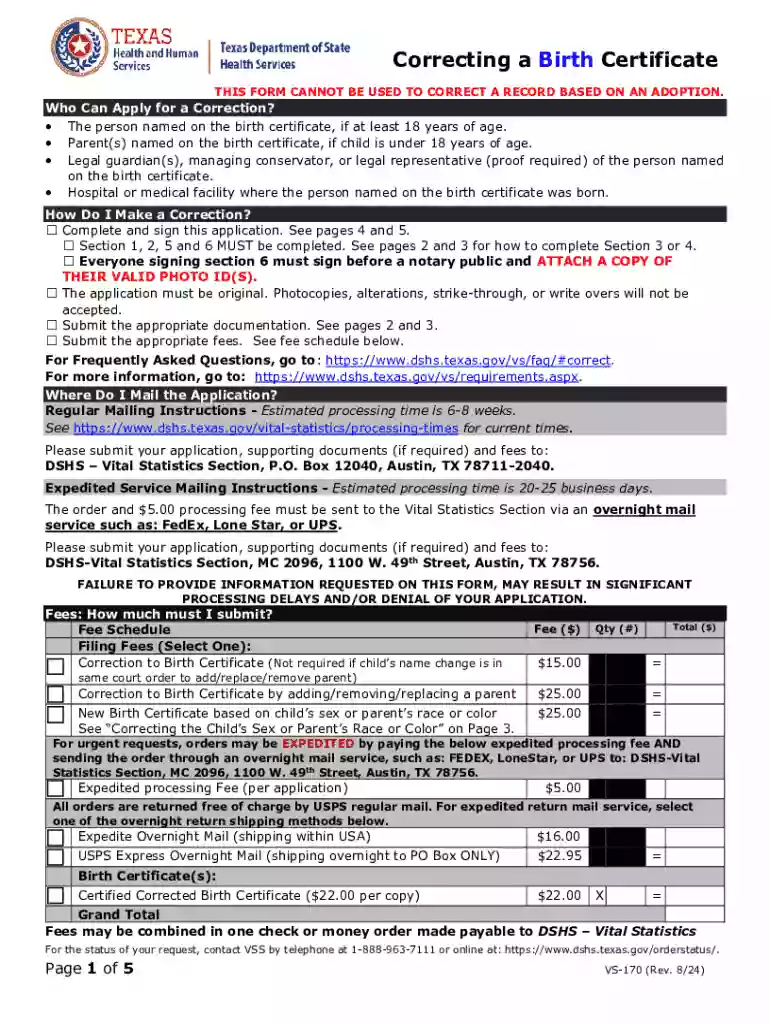
Type text, add images, blackout confidential details, add comments, highlights and more.

Draw your signature, type it, upload its image, or use your mobile device as a signature pad.

Send it via email, link, or fax. You can also download it, export it or print it out.
The Adoption Birth Certificate, often referred to as an amended birth certificate in the context of adoption, plays a critical role in the legal recognition of adoptive parents. This document replaces the original birth certificate issued at the time of an adoptee's birth. Importantly, it typically lists the adoptive parents as the official parents and reflects any change in the child's name post-adoption. While the original birth certificate is often sealed, this amended version ensures the adoptee's rights and identity within their new family structure are recognized by legal entities and for personal documentation purposes.
Obtaining an adoption birth certificate involves several key steps that must be followed meticulously to ensure legal compliance. Initially, adoptive parents or their legal representatives need to file an adoption decree with the court. This decree is legally necessary to proceed with amending the birth certificate.
Submit Required Documentation: This includes the original birth certificate, proof of adoption, and a formal request to amend the certificate. Some states may require additional documents such as consent forms from the biological parents or guardians.
State-specific Procedures: Each U.S. state has unique processes and forms for this task. Contact the state’s vital records office or department of health for specific forms and instructions.
Pay Applicable Fees: Fees vary by state, so it is necessary to confirm the exact amounts and acceptable payment methods, which often include checks or money orders.
Processing Time: Once submitted, the processing time for issuing an adoption birth certificate ranges from a few weeks to a couple of months, depending on the state's backlog and processing capabilities.
Understanding the terminology associated with adoption birth certificates is essential for navigating the legal and procedural aspects effectively.
Adoption birth certificates contain several critical pieces of information that are pertinent to the adoptee's identity and legal status:
The process and regulatory requirements concerning adoption birth certificates can vary considerably from state to state within the U.S. Some states provide open access to original birth certificates for adult adoptees, while others keep them sealed permanently or require a court order for access.
The adoption birth certificate serves several legal purposes and is a requisite document in various personal and legal matters:
Completing the process for amending and obtaining an adoption birth certificate involves careful adherence to detailed steps:
Begin with the Court Decree: Ensure the adoption decree is finalized and all legal procedures are complete.
Prepare Necessary Documents: Gather and accurately fill out necessary forms as stipulated by the state’s vital records office.
Submitting the Application: Submit the application along with required documents and fees to the relevant state office.
Verification and Approval: After submission, the application will be reviewed, and once verified, the new birth certificate will be issued.
Different scenarios illustrate the necessity and utility of the adoption birth certificate:
International Adoption: For international adoptions valid in the U.S., the amended birth certificate reflects both the child’s new legal status and enables easier integration into citizenship processes.
Adult Adoptees Accessing Original Certificates: In states where laws are lenient, adult adoptees can access their original birth certificates to trace biological lineage or for personal reasons.
Overall, the adoption birth certificate is an essential document ensuring the adoptee’s integration into their new family, while preserving legal rights across various domains.
We've got more versions of the The Adoption Birth Certificate: What You Need to Know form. Select the right The Adoption Birth Certificate: What You Need to Know version from the list and start editing it straight away!
At DocHub, your data security is our priority. We follow HIPAA, SOC2, GDPR, and other standards, so you can work on your documents with confidence.





3 days ago Step-by-step 2026 guide to adopting a child in India through CARA - register on CARINGS, Home Study Report, child match, court order.
Dec 10, 2021 Once adopted, the courts replace the names of our birth parents with the names of our adoptive parents and then seal the original record.Read more


