
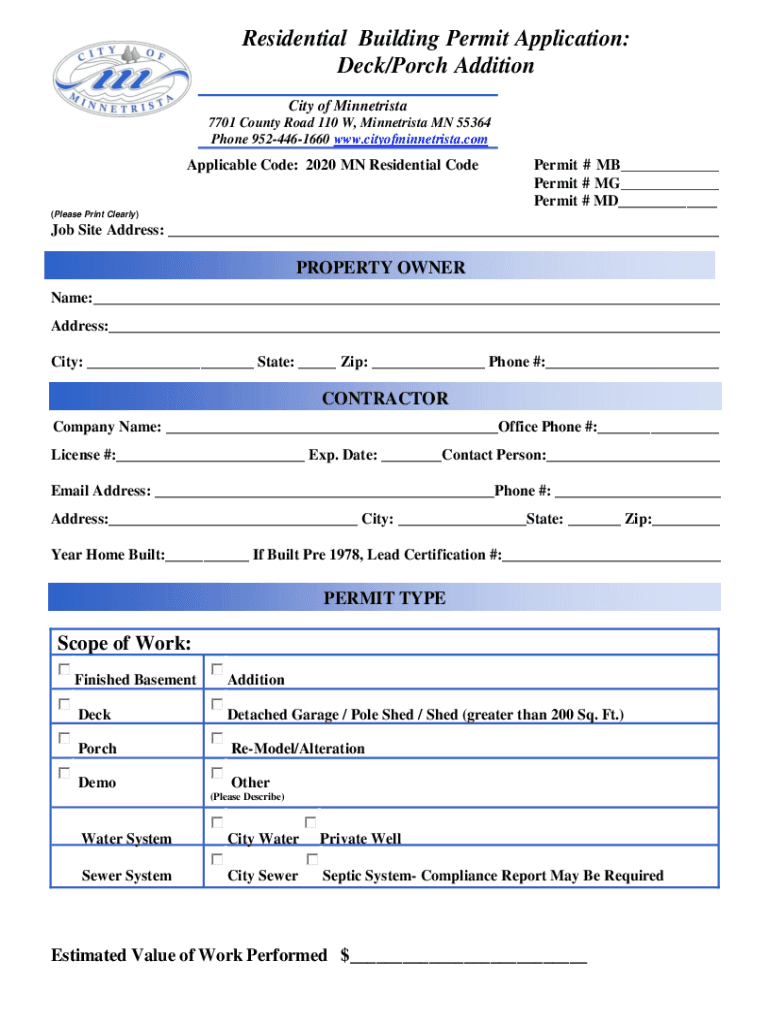







Definition and Purpose of a Residential Building Permit Application for Deck Porch Addition
A Residential Building Permit Application for a deck or porch addition is a formal document that property owners and contractors submit to the local building authority to obtain permission for construction. This application ensures that any new structures comply with local building codes and safety standards. It typically includes details such as the job site address, permit type, scope of work, and the anticipated value of construction. In the City of Minnetrista, Minnesota, for example, the application must adhere to the 2020 Minnesota Residential Code.
Steps to Complete the Application
Completing the application involves several detailed steps to ensure accuracy and compliance:
-
Gather Necessary Information:
- Collect the job site address, property owner details, and contractor information.
- Determine the scope of work, including dimensions and materials.
-
Prepare Construction Plans:
- Draft detailed building plans that align with local codes.
- Include structural, electrical, and plumbing specifications if applicable.
-
Estimate Construction Value:
- Calculate an accurate estimate of the total project cost, essential for determining permit fees.
-
Complete the Application Form:
- Fill in all sections of the form with precise information.
- Ensure the application is consistent with collected data and construction plans.
-
Submission and Review:
- Submit the completed form along with any required attachments, such as construction drawings, to the local building authority.
- Await review and prepare for potential revision requests or additional documentation.
Required Documents for Application Submission
The application process requires several essential documents:
- Completed Application Form: Fully filled out with accurate information.
- Building Plans: Include diagrams and specific dimensions.
- Contractor's License: Proof of a valid and current license if a contractor is employed.
- Site Plan: Show existing structures and the location of the proposed addition.
- Energy Efficiency Statement: Required in certain jurisdictions.
Additional Documents:
- Neighborhood Notification: Some areas require informing nearby residents.
- Zoning Approval: Required if the construction impacts zoning regulations.
Legal Use and Compliance
Compliance with local building codes and regulations is essential. Each jurisdiction has specific legal requirements, and failing to adhere to these can result in fines or construction delays. In Minnesota, for example, compliance with the 2020 Minnesota Residential Code is mandatory, which dictates structural integrity, materials usage, and safety measures.
Key Points of Legal Compliance:
- Building Codes: Adherence to local standards for safety and construction methods.
- Zoning Laws: Ensure that the addition conforms to zoning implications, such as height and setback restrictions.
- Inspection Requirements: Schedule necessary inspections at various stages of construction.
Key Elements to Include in the Application
The application must encompass several critical components to be deemed complete:
- Applicant Information: Name, address, and contact details of the applicant.
- Detailed Project Description: A clear, comprehensive explanation of the planned addition.
- Construction Schedule: Anticipated start and completion dates.
- Compliance Checklist: A list to ensure all local codes and standards are met.
Practical Example:
For a deck addition in Minnetrista, the applicant must ensure that deck railings meet specific safety standards, such as the height and spacing of balusters.
Obtaining the Residential Building Permit Application
To obtain the application form, applicants can typically access it through several channels:
- Online: Many jurisdictions offer downloadable PDF versions on their official websites.
- In-Person: Forms are available at the local building department.
- Email Request: Some municipalities provide forms upon request through email communication.
State-Specific Rules and Regulations
State regulations can vary significantly, impacting the permit application process. For instance, Minnesota's regulations might differ from those in neighboring states:
- Minnesota Specifics:
- Strict adherence to snow load requirements for structural integrity.
- Energy efficiency codes that affect construction materials.
Variations to Consider:
In states with different climates, such as California, building codes may emphasize earthquake resistance over snow load requirements.
Examples of Use Cases
Several scenarios illustrate the practical application of the Residential Building Permit:
- Adding a Front Porch: To increase curb appeal and living space.
- Expanding an Existing Deck: For additional outdoor entertainment space.
- Creating a Multi-Level Deck: To accommodate uneven terrain and enhance backyard functionality.
These examples highlight the permit’s role in facilitating safe and compliant structural additions.




