






Definition & Meaning
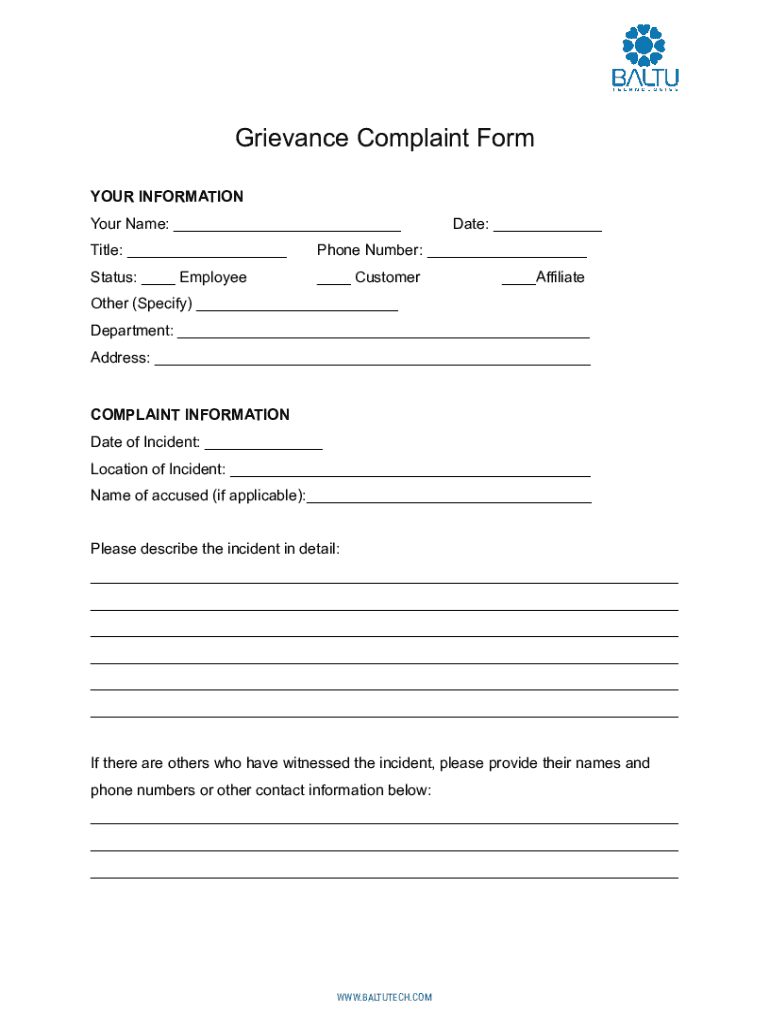
The Grievance Complaint Form is an essential document used by individuals to report issues related to service, behavior, or procedures within a company or institution. This form is specifically designed to document complaints involving employees, customers, or affiliates. By consolidating complaint details, this form facilitates communication between the complainant and the organization, ensuring that issues are addressed efficiently and systematically.
Typically, the form includes fields for personal information, incident description, and suggested resolutions. Its primary aim is to streamline the grievance process, providing a standardized method for both the reporting of the issue and the follow-up actions by the organization. Using this form ensures that complaints are recorded formally and helps prevent potential disputes from escalating by promoting transparency and accountability.
How to Use the Grievance Complaint Form
To effectively utilize the Grievance Complaint Form, individuals should follow specific guidelines. First, gather all necessary personal and incident information. This includes details such as the date, time, and location of the incident, as well as the names of any involved parties. Accurate and thorough information is key to the successful resolution of the complaint.
Next, clearly describe the incident in detail. Providing a concise yet comprehensive account of what transpired helps the organization understand the context and nature of the grievance. Suggestions for resolution can be documented, offering a starting point for dialogue between the complainant and the entity involved.
Once the form is completed, it should be submitted according to the organization's preferred method, whether online, by mail, or in person. It's crucial to adhere to any submission guidelines outlined by the entity to prevent delays in processing the complaint.
Steps to Complete the Grievance Complaint Form
-
Gather Information: Collect all personal and relevant details related to the incident, including date, time, and location.
-
Provide Personal Details: Fill in the sections requesting your personal information, such as name, contact details, and affiliation with the organization.
-
Describe the Incident: Clearly document what occurred. Include specific actions, quotes, or any corroborating evidence if available.
-
Suggest a Resolution: Offer potential outcomes or solutions that you believe would address the complaint effectively.
-
Review and Finalize: Double-check the form for accuracy and completeness.
-
Submit the Form: Follow the organization’s specified method for submission, ensuring you receive confirmation of receipt.
Key Elements of the Grievance Complaint Form
- Personal Information Section: Captures details of the complainant for identification and follow-up purposes.
- Incident Description: Provides a structured way to convey the specifics of the grievance, offering context and outlining the impact of the incident.
- Resolution Suggestions: Allows the complainant to propose ways to resolve the issue, aiding in a constructive resolution process.
- Submission Instructions: Specifies how and where to submit the form, whether through digital means or traditional paper-based methods.
The integration of these elements ensures that the complaint process is thorough, organized, and effective.
Form Submission Methods (Online / Mail / In-Person)
Organizations offer multiple submission methods for the Grievance Complaint Form to accommodate various preferences and technological access levels. Those preferring digital submission can use online portals where available, providing quick and efficient processing.
Mail submissions are another option for those who prefer or require physical documentation. Forms can be mailed directly to the organization, with attention to processing times that may vary according to postal services.
In-person submissions offer an immediate way to deliver forms, often providing direct contact with representatives who can acknowledge receipt and perhaps offer preliminary assistance.
Who Typically Uses the Grievance Complaint Form
This form is predominantly utilized by employees, customers, and affiliates of an organization. Employees might use it to report internal issues, such as harassment or policy violations. Customers may deploy the form when service falls short of expectations or when disputes arise over transactions. Affiliates, such as suppliers or partners, might use it to report procedural problems or breaches in agreements.
The form caters to a broad audience, ensuring that any stakeholder can communicate grievances effectively.


Legal Use of the Grievance Complaint Form
The Grievance Complaint Form is often part of a formal complaints procedure, which may have legal implications. By providing a documented account of grievances, it can be used as evidence in internal reviews or legal proceedings. It's important for organizations to handle these forms with care and confidentiality, respecting privacy laws and organizational policies.
State-Specific Rules for the Grievance Complaint Form
While a standardized form provides consistency, some organizations must cater to state-specific regulations or industry requirements. This can impact the fields included in the form or the processing time for complaints. Familiarity with local legal frameworks and organizational procedures is essential for both users and administrators of the form, ensuring that grievances are managed in compliance with regional standards.