Definition & Meaning
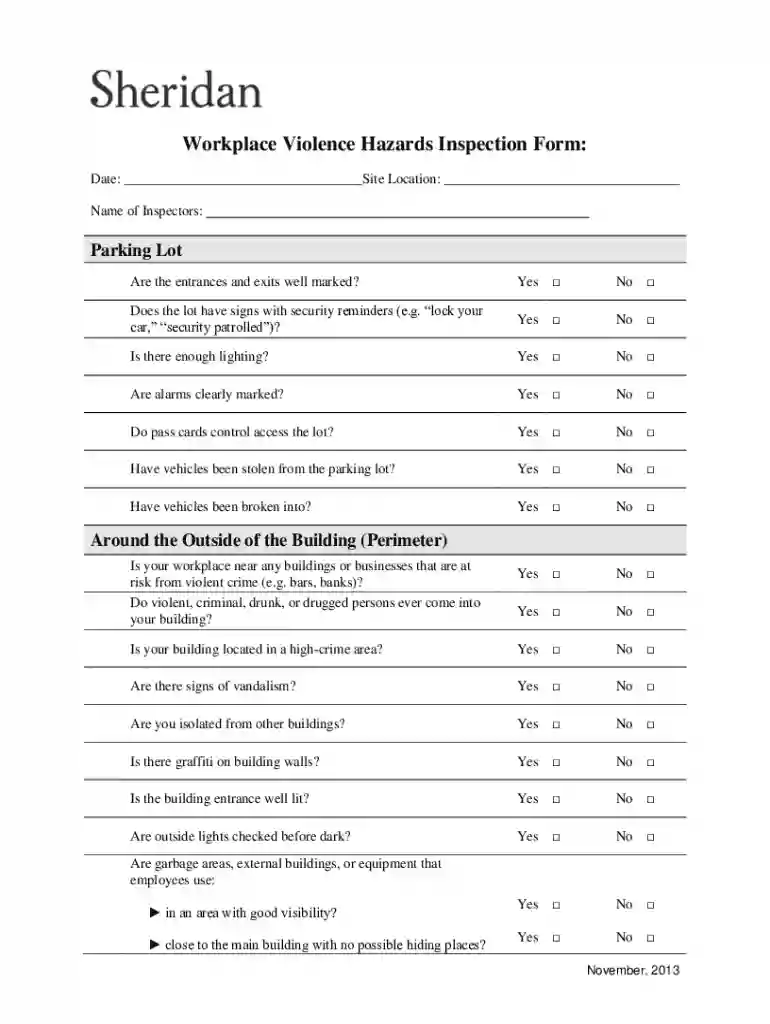
The "Workplace Violence Hazards Inspection Form" is a vital tool used to identify and assess potential risks related to violence in the workplace. This form is designed to aid in the systematic evaluation of safety measures, focusing on areas that could be vulnerable to violent incidents. By providing a structured assessment, it helps organizations pinpoint specific hazards and implement corrective actions to enhance workplace safety effectively.
Practical Scenarios
- Evaluation of Security Measures: Businesses can utilize the form to evaluate existing security systems, ensuring they align with industry standards for mitigating workplace violence.
- Assessment of Physical Environment: The form prompts a review of the physical layout, including parking lots, building entrances, and interior lighting, to identify areas where employees might be at risk.
- Review of Work Practices: By assessing typical work practices, companies can identify procedures that may inadvertently increase the risk of violence and make necessary adjustments.
How to Use the Workplace Violence Hazards Inspection Form
Utilizing the Workplace Violence Hazards Inspection Form involves a systematic approach to ensure comprehensive risk assessment. The form provides a checklist-style method that guides users through evaluating various workplace elements.
Steps to Utilize the Form
- Understand the Form Structure: Familiarize yourself with the categories and questions provided in the form to ensure efficient completion.
- Conduct Site Inspections: Walk through each relevant area of the workplace to assess conditions accurately.
- Consult Stakeholders: Engage with employees and management to gather insights on current safety practices and any concerns about workplace violence.
- Record Observations and Findings: Use the form to document any risks or potential improvements needed in the workplace environment.
Key Points
- Ensure all sections of the form are thoroughly completed to provide a comprehensive overview of potential hazards.
- Regularly update the form as changes occur in the work environment or safety measures are implemented.
Steps to Complete the Workplace Violence Hazards Inspection Form
Completing the form is a straightforward process, but requires attention to detail to capture all potential risks accurately.
- Begin with Basic Information: Enter general information about the organization, including the name, location, and date of inspection.
- Security Assessment: Evaluate the effectiveness of current security protocols, such as surveillance systems and access controls.
- Environmental Conditions: Inspect lighting, signage, and emergency exits to ensure they support a safe environment for employees.
- Gather Feedback: Collect input from employees regarding their perception of safety and any prior incidents of workplace violence.
- Compile Results: Summarize findings and propose recommendations for mitigating identified risks.
Additional Considerations
- Ensure periodic reviews and updates of inspection results are carried out, especially after any incident of workplace violence.
- Use insights gained from the form to inform broader organizational safety policies.
Example Applications
- Large Corporations: Often employ the form as part of a wider health and safety audit process.
- Healthcare Facilities: Use the form to assess unique risks posed by the public-access nature of healthcare environments.
Key Elements of the Workplace Violence Hazards Inspection Form
The form consists of several critical elements that must be thoroughly assessed to provide an accurate picture of workplace safety.
Essential Components
- Parking and Entry Security: Evaluates the safety measures in place at parking lots and building entrances.
- Lighting and Visibility: Assesses whether the lighting conditions within and around the workplace deter unauthorized or suspicious activities.
- Signage and Directions: Reviews the clarity and utility of safety and directional signage throughout the workplace.
- Emergency Contact Procedures: Ensures protocols for accessing emergency assistance are clear and effective.
Detailed Breakdown
- Work Practice Reviews: Involves assessment of daily operational activities to identify processes that may expose workers to violence.
- Incident Reporting Systems: Examines the robustness of systems in place for reporting and tracking incidents of violence.
Legal Use of the Workplace Violence Hazards Inspection Form
The form plays a critical role in maintaining compliance with occupational safety regulations, ensuring that businesses operate within legal frameworks designed to protect employees.
Regulatory Implications
- OSHA Compliance: Regular use of the form aids organizations in meeting Occupational Safety and Health Administration (OSHA) standards for workplace violence prevention.
- Liability Mitigation: Documented inspections can protect businesses from liability by demonstrating proactive measures taken to ensure employee safety.
Practical Impact
- Risk Management: Legal compliance with inspection forms can significantly reduce the risk of costly lawsuits and enhance workplace morale.
- Policy Development: Findings from the form can inform the creation of workplace violence policies and procedures tailored to specific legal requirements.
Examples of Using the Workplace Violence Hazards Inspection Form
The practical application of the form can vary widely depending on the specific circumstances of the workplace and the nature of operations conducted.
Real-World Examples
- Retail Environments: Often use the form to address risks in customer-facing areas, such as checkout counters and stockrooms.
- Educational Institutions: Utilize the form to ensure student and staff safety across campus facilities.
Case Studies
Hospital Scenario: A healthcare facility used the form to assess risks in emergency departments, leading to the implementation of new security measures that minimized violent incidents.
Corporate Office: An office setting streamlined their entry protocols through insights gained from the form, resulting in improved access control and employee peace of mind.
State-Specific Rules for the Workplace Violence Hazards Inspection Form
Workplace violence regulations may differ from state to state, affecting how the form should be used and interpreted.
Considerations for State Differences
- California: Employers are required to implement workplace violence prevention plans, making the use of forms an essential part of compliance.
- New York: Similar regulations demand detailed record-keeping and regular risk assessments.
Impact on Form Usage
- Adjusting questions to align with specific state requirements ensures legal compliance and maximizes the form's effectiveness.
- Understanding state-specific legal contexts can help tailor recommendations derived from form findings.
Software Compatibility: Digital vs. Paper Version
The Workplace Violence Hazards Inspection Form can be utilized in both digital and paper formats, providing flexibility depending on organizational needs.
Digital Version Benefits
- Efficiency: Digital forms allow for quicker completion and easier data analysis.
- Accessibility: Enables easy sharing among stakeholders and storage of historical data for trend analysis.
- Integration: Compatible with various software platforms, allowing seamless integration into broader safety management systems.
Paper Version Use Cases
Remote Areas: In regions with limited digital access, paper forms may be more convenient.
Traditional Offices: Some organizations prefer hard copies for tangible record-keeping practices.