






Definition and Meaning
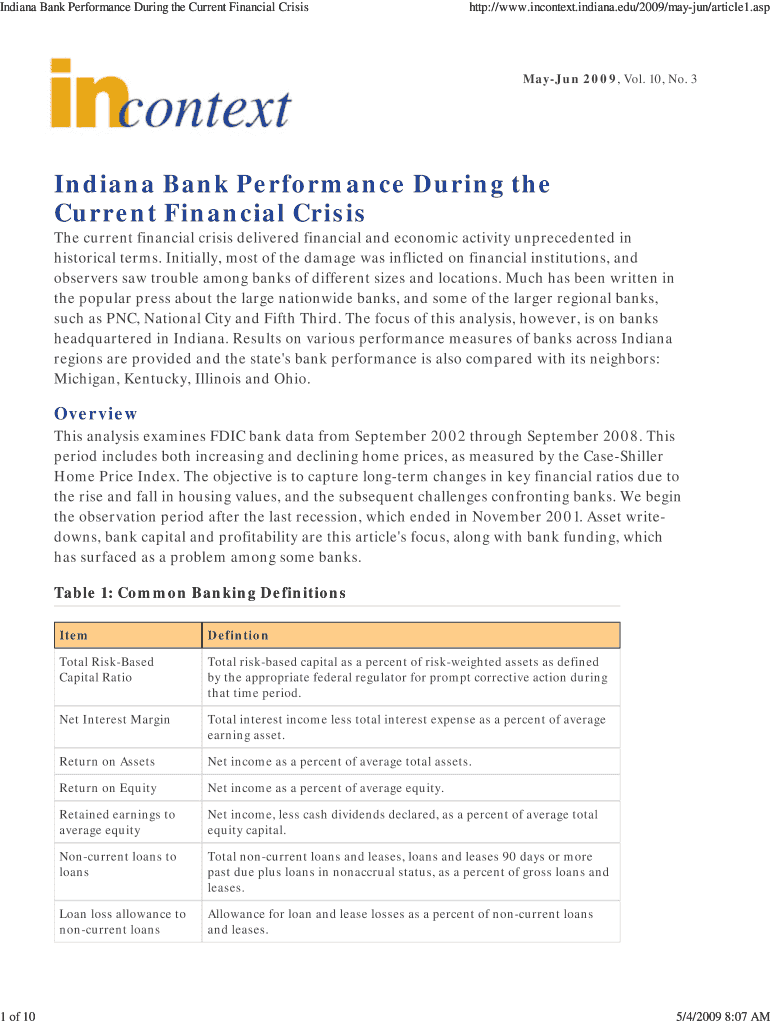
The "Indiana Bank Performance Du - InContext - Indiana University - incontext indiana" form is a comprehensive report developed by Indiana University. This document evaluates the performance of banks located in Indiana, particularly during the financial crisis from 2002 to 2008. It delves into the financial metrics that gauge the health of these institutions, including total risk-based capital ratios, profitability measures, and loan delinquencies. This analysis highlights the state's banking sector's resilience compared to neighboring states like Michigan and Ohio.
Key Elements of the Indiana Bank Performance Analysis
- Total Risk-Based Capital Ratio: This key financial metric indicates a bank's capacity to withstand financial stress by comparing its capital to risk-weighted assets.
- Profitability Measures: Evaluations focus on net income as a percentage of equity, assessing how effective banks are at generating profits from their assets.
- Loan Delinquencies: This gives insight into the proportion of loans that are overdue and potential defaults, impacting the bank's financial stability.
- Non-Current Loans: These loans represent assets that are not receiving interest or principal payments, signaling possible future risks for the bank's capital quality.
- Loan Loss Allowances: Reflects the bank's preparedness for potential loan defaults, comparing current allowances against the rate of non-current loans.
How to Use the Report
This report serves multiple purposes:
- For Bank Analysts: To assess the financial stability and risk levels of Indiana banks.
- For Investors: To make informed decisions regarding bank investments based on historical performance.
- For Policymakers: To understand the sector's challenges and implement regulations that promote financial stability.
- For Educators and Researchers: As an academic resource to analyze financial trends and regional banking performances.
Important Terms Related to the Report
- Capital Ratio: A measure of a bank’s financial strength, which compares its equity capital with its risk-weighted assets.
- Profitability Ratio: Key metrics such as Return on Assets (ROA) and Return on Equity (ROE) that evaluate the efficiency of banks in generating profit.
- Delinquency Rate: The percentage of loans that are past due in payments, a critical indicator of credit risk.
Who Typically Uses the Report
Professionals within the financial sector, such as bank executives, compliance officers, and financial analysts, are the primary users. Additionally, academic researchers focusing on financial economics and market trends benefit from the detailed analysis provided in this report. State legislators and regulatory bodies may also find this report valuable for policy-making and regulatory assessments.


Steps to Complete the Report
Although not a form requiring user input, accessing and interpreting the report involves systematic analysis:
- Obtain the Report: Find the latest edition from the Indiana University database or financial archives.
- Review Financial Ratios: Begin by examining capital adequacy and profitability indicators.
- Analyze Loan Quality: Focus on the trends in loan delinquencies and non-current loans.
- Comparison with Neighboring States: Evaluate the relative performance against states like Michigan and Ohio.
- Identify Trends and Patterns: Note historical patterns in financial performance across the period covered.
Examples of Using the Report
- Case Study on Resilience: A case study might utilize the report to showcase Indiana banks' resilience with smaller declines in capital ratios compared to nearby states.
- Risk Management Analysis: Investigate the correlation between rising non-current loans and insufficient loan loss allowances to predict future risks.
- Policy Impact Evaluation: Assess how specific state policies may have supported banking stability during the crisis.
Legal Use of the Report
Understanding the performance metrics and financial stability of banks is crucial for legal and regulatory purposes. This report can aid in ensuring compliance with banking regulations and providing evidence in legal contexts where bank performance and risk management are under review.
Business Types That Benefit Most
- Financial Institutions: Banks, credit unions, and investment firms can benchmark their performance and risk management strategies.
- Consultancies: Firms providing financial advisory services can use the insights to advise clients on investments in the Indiana banking sector.
- Educational and Research Institutions: This report can enhance academic courses and research papers focusing on financial health and public policy.
By providing an in-depth view of Indiana's banking performance, this document serves as a pivotal resource for various stakeholders in the financial services industry.