







Definition & Meaning
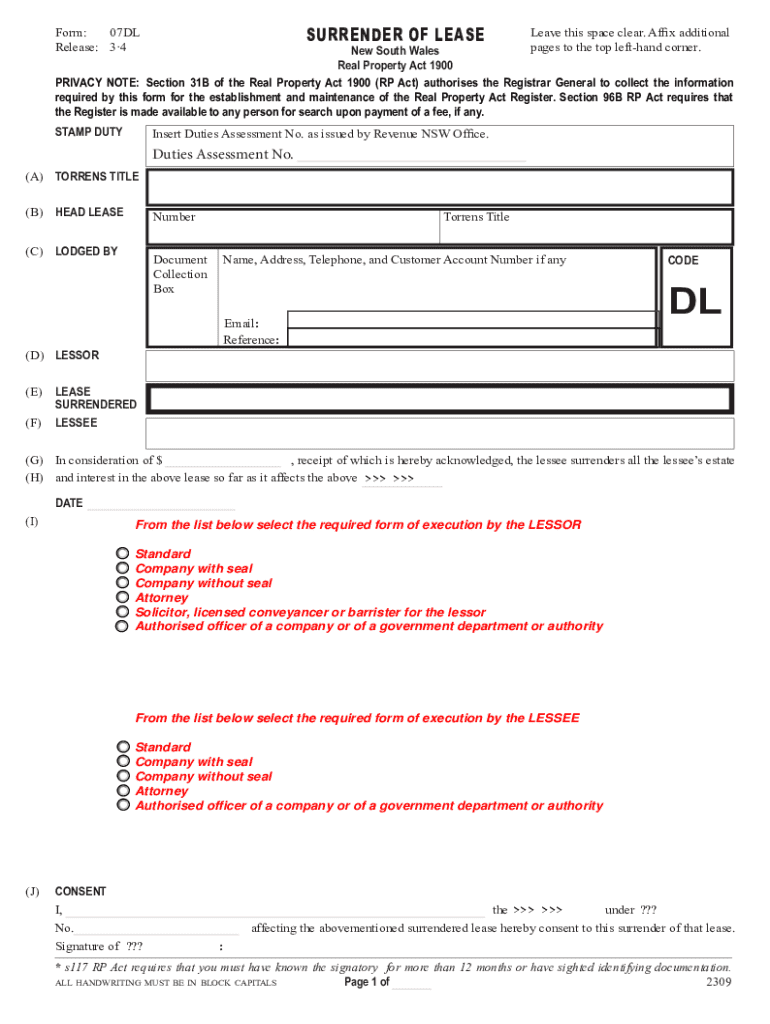
The "NSW Land Registry Services: Home" form is an official document used for managing property-related transactions and records under New South Wales' Real Property Act 1900. This form is pivotal in the documentation process involving property leases, transfers, and related updates. Its purpose is to provide a standardized method for individuals and entities to convey, update, or manage property records within the state's land registry system, ensuring legal compliance and accuracy in real estate dealings.
Important Terms Related to NSW Land Registry Services: Home
Understanding the terminology associated with the NSW Land Registry Services: Home form is essential for accurate completion. Some of the key terms include:
- Lessor and Lessee: Referring to the landlord and tenant involved in the lease agreement, respectively.
- Duties Assessment Number (DAN): A unique identifier related to the stamp duty paid on property transactions.
- Execution: The act of signing and formalizing the document by all involved parties.
- Consent: Approval or agreement required from relevant parties before finalizing the document.
Familiarity with these terms ensures precise communication and reduces the risk of errors or legal complications.
Steps to Complete the NSW Land Registry Services: Home
Completing the NSW Land Registry Services: Home form involves a series of methodical steps to ensure all required details are accurately entered:
- Gather Required Information: Collect information on the lease agreement, including names, addresses, and the Duties Assessment Number.
- Fill Out Lessee and Lessor Details: Clearly provide the names and contact details of both parties.
- Include Consent Forms: Attach any necessary consents from relevant parties, complying with legal requirements for document finalization.
- Review and Execute: Double-check the form for accuracy before signing. Ensure all parties have signed the document as needed.
- Submit for Registration: Lodge the completed form with the NSW Land Registry for official processing.
Each step must be followed attentively to avoid delays or rejections in processing.
Legal Use of the NSW Land Registry Services: Home
The legal applicability of the NSW Land Registry Services: Home form is governed by the Real Property Act 1900. It serves to document and verify legal property arrangements in New South Wales. When executed properly, the form serves as valid evidence of transactions, amendments, or terminations of property agreements.
- Privacy Compliance: All personal details provided are protected under privacy regulations, ensuring the confidentiality of each party’s details.
- Legal Binding: Once executed, the document holds legally binding status, confirming the terms agreed upon by involved parties.
Compliance with these legal standards is paramount for all transactions processed through the form.
Who Typically Uses the NSW Land Registry Services: Home
The NSW Land Registry Services: Home form is utilized by a diverse group of individuals and entities:
- Property Owners and Tenants: Used during the transfer or termination of leases.
- Real Estate Agents and Lawyers: Employed to manage and finalize legal paperwork on behalf of clients.
- Corporates and Investors: Often engaged in property transactions that require formal documentation.
Understanding the typical users helps tailor the form completion process to meet specific needs and expectations.


Key Elements of the NSW Land Registry Services: Home
Several crucial elements are integral to the NSW Land Registry Services: Home form:
- Agreement Details: Includes comprehensive information about the lease or property transaction.
- Identifying Information: Accurate data regarding the lessor, lessee, and involved parties.
- Signatures and Consents: Mandatory endorsements and consents required for validation.
Ensuring these elements are correctly presented ensures the form is legally operable and complete.
State-Specific Rules for the NSW Land Registry Services: Home
Navigating the NSW Land Registry Services: Home form involves adhering to specific state regulations:
- Real Property Act Compliance: The form must meet the requirements as outlined by New South Wales' property legislation.
- Duty Payment Verification: Before submitting, confirm that duties are assessed and settled as per state guidelines.
These state-specific requirements ensure the form aligns with local legal frameworks and enforcement.
Examples of Using the NSW Land Registry Services: Home
Real-world scenarios highlight the application of the NSW Land Registry Services: Home form:
- Lease Termination by Mutual Agreement: Acts as an official record when both parties agree to end a lease early.
- Property Sale Closure: Used to document the transfer of a property title following a sale.
- Adjustment of Lease Terms: Necessary when making formal amendments to the original lease agreement.
Examining these examples reinforces the form’s role in facilitating legal and property transactions.
By addressing various sections, this guide ensures users have comprehensive access to detailed information regarding the "NSW Land Registry Services: Home" form and its application.




