







Definition & Meaning
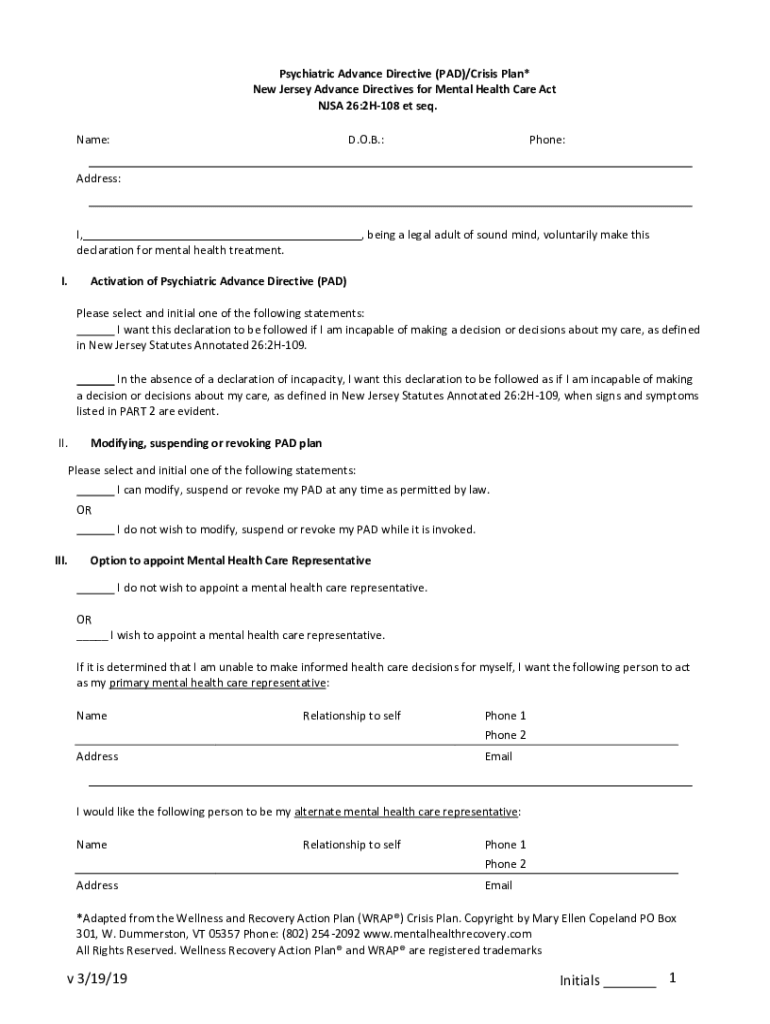
The Psychiatric Advance Directive (PAD) Crisis Plan is a legal document created by individuals to outline their preferences for mental health treatment in advance of a crisis where they might become unable to make decisions. This plan serves as a critical tool for individuals to communicate their wishes concerning treatment options, medications, and support systems should they experience a mental health emergency. Unlike general advance directives, PADs are specifically tailored to address mental health issues, providing a layer of protection and autonomy for individuals during vulnerable times.
Purpose and Functionality
- Preference Articulation: A PAD allows individuals to clearly outline their desires concerning psychiatric treatments they approve or disapprove of, thereby reducing the likelihood of unwanted interventions.
- Representative Appointment: Individuals can appoint a trusted person to make decisions on their behalf, ensuring that their treatment preferences are respected and adhered to during crises.
- Legal Assurance: By documenting preferences in a legally binding format, PADs assure patients that their rights and dignity will be prioritized when they cannot advocate for themselves.
How to Use the Psychiatric Advance Directive (PAD) Crisis Plan
Utilizing a PAD involves a few critical steps to ensure it is effective and honored during a mental health crisis. Users should:
- Create the PAD: Clearly document preferences, appoint a representative, and specify any critical information pertinent to treatment.
- Share with Key Parties: Distribute copies to healthcare providers, appointed representatives, and family members to ensure that everyone involved is aware of the individual's wishes.
- Review Regularly: Regularly update the PAD as conditions, preferences, or personal circumstances change to ensure all instructions remain relevant.
- Legal Compliance: Ensure the PAD complies with state laws where the individual resides to guarantee its enforceability.
Real-World Usage Scenarios
- Emergency Situations: During a psychiatric emergency, a PAD guides healthcare providers in implementing treatment aligned with the patient's prior instructions.
- Avoiding Undesired Treatments: PADs explicitly detailing treatments a patient wishes to avoid can help prevent the administration of such interventions when the patient cannot communicate.
Steps to Complete the Psychiatric Advance Directive (PAD) Crisis Plan
Completing a PAD requires careful thought and precise documentation to make certain that personal healthcare preferences are accurately represented. Follow these steps:
- Gather Information: Collect details regarding preferred treatments, medications, and facilities.
- Appoint a Mental Health Representative: Choose a person to act on your behalf during crises, ensuring they clearly understand your preferences.
- Document Treatment Preferences: Use clear language to specify the types of treatments and medications you consent to or reject.
- Specify Crisis Symptoms: Document signs and symptoms that might indicate a crisis, helping healthcare providers respond appropriately.
- Legalize the PAD: Depending on the state's requirements, this may involve notarization or the presence of witnesses.
Examples and Detailed Breakdown
- Appointing Representatives: Select someone who thoroughly understands your mental health history and is capable of advocating for the decisions documented in the PAD.
- Specifying Treatments: Individuals may include preferences for therapies like counseling over medication or specify conditions under which they’d prefer hospitalization.
State-Specific Rules for the Psychiatric Advance Directive (PAD) Crisis Plan
State laws vary significantly concerning PADs, impacting their creation, implementation, and enforceability. Understanding these differences is crucial for anyone drafting a PAD:
- Legal Requirements: Some states mandate witness signatures or notarization; others may provide templates to guide residents.
- Enforcement: State-specific protocols outline how medical professionals should honor PADs, emphasizing the need for these plans to meet local legal standards.
Examples of State Variations
- New Jersey: Under the New Jersey Advance Directives for Mental Health Care Act, individuals have specific provisions allowing them to detail crisis symptoms, treatment preferences, and choose representatives comprehensively.
Key Elements of the Psychiatric Advance Directive (PAD) Crisis Plan
Several core components are critical to the formulation of a comprehensive PAD:
- Comprehensive Treatment Preferences: Detailed declarations of preferred and non-preferred treatments, medications, and therapies.
- Health Care Representative: The designation of an individual empowered to make decisions on behalf of the PAD creator.
- Crisis Indicators: Recognizable symptoms or behaviors indicating an individual's need for intervention.
- Document Validity and Flexibility: Clauses addressing how and when a PAD can be amended or revoked.
Practical Considerations
- Duration: Some plans include terms that specify how long the directives remain in effect and any conditions under which they should be reevaluated.
Legal Use of the Psychiatric Advance Directive (PAD) Crisis Plan
The legal framework of PADs offers a robust mechanism for ensuring mental health preferences are enforced, subject to verification of the document’s validity:
- Legal Binding Nature: When properly executed, PADs are legally binding within the jurisdictions that recognize and regulate them.
- Authorization Parameters: Legal statutes outline the role and authority of the appointed health care representative, providing a clear mandate for their actions based on the PAD.
- Amendments and Revocation: Most states allow PAD creators to modify or nullify their directives, enhancing flexibility and responsiveness to changing health dynamics.
Compliance and Enforcement
- Medical Providers: Practitioners are often legally obligated to consult PADs before administering treatments, provided the documents meet all state-stipulated criteria.
Who Typically Uses the Psychiatric Advance Directive (PAD) Crisis Plan
PADs are valuable tools for a diverse group of individuals, each with unique motivations for use:
- Individuals with Chronic Mental Illnesses: Those managing ongoing mental health conditions may use PADs to prevent crisis exacerbation through controlled treatment plans.
- Adolescents Transitioning to Adult Care: Young adults moving from pediatric to adult mental health services use PADs to ensure continuity and integrity in care preferences.


Usage Patterns in Different Demographics
- Elderly Individuals: Older adults with diminishing capacity may implement PADs to safeguard their autonomy in health-related decision-making processes.
- Veterans: Ex-service members might use PADs to manage post-traumatic stress disorder symptoms with precise interventions during crises.
Examples of Using the Psychiatric Advance Directive (PAD) Crisis Plan
Practical applications of PADs illustrate their effectiveness and flexibility in real-world contexts:
- Case Studies: Demonstrations of PAD use in preventing unnecessary hospitalizations by empowering individuals to opt for community-based interventions.
- Scenario Analyses: Instances where PADs have averted forced medication through clear stipulation of alternative therapies preferred by patients during crises.
In-Depth Situational Analyses
- Healthcare Settings: Exploring how hospitals integrate PADs into patient care protocols to enhance service delivery and respect patient autonomy.
- Crisis Management: How PADs serve as tools for family members and healthcare providers to coordinate and execute pre-planned responses smoothly and efficiently.




