




01. Edit your form online
Type text, add images, blackout confidential details, add comments, highlights and more.

Type text, add images, blackout confidential details, add comments, highlights and more.

Draw your signature, type it, upload its image, or use your mobile device as a signature pad.

Send it via email, link, or fax. You can also download it, export it or print it out.
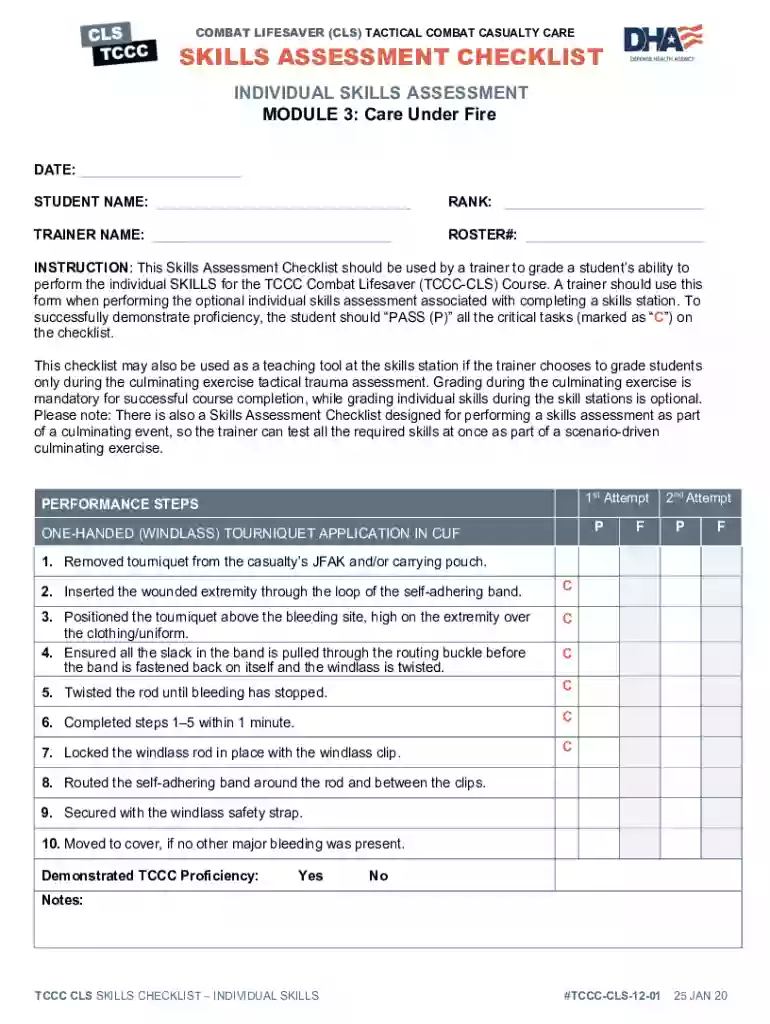
The Combat Lifesaver (CLS) Tactical Combat Casualty Care (TCCC) Skills Assessment is a structured checklist used to evaluate proficiency in the CLS course. This assessment is integral to military training as it ensures each participant is competent in lifesaving techniques crucial on the battlefield. Skills assessed include Care Under Fire, Tactical Field Care, and tactical evacuations. This form serves as a crucial tool in both educational settings and practical evaluations in field conditions where quick and effective medical intervention is necessary.
To use the CLS TCCC Skills Assessment effectively, trainers should follow a systematic approach:
Completing the assessment involves several key steps:
The assessment comprises several key elements:
Primarily used by military personnel, this assessment is vital for:


Understanding these terms is essential:
While the primary form remains standard across military branches, several variations exist:
The digital version of the CLS TCCC Skills Assessment can integrate with document editing and management platforms like DocHub. It supports a variety of formats such as PDF, DOC, and XLS, ensuring:
We've got more versions of the COMBAT LIFESAVER (CLS) TACTICAL COMBAT CASUALTY CARE SKILLS ASSESSMENT form. Select the right COMBAT LIFESAVER (CLS) TACTICAL COMBAT CASUALTY CARE SKILLS ASSESSMENT version from the list and start editing it straight away!
At DocHub, your data security is our priority. We follow HIPAA, SOC2, GDPR, and other standards, so you can work on your documents with confidence.




by I Krenzel 2026 In a six-question quiz testing knowledge of the current guidelines of the Committee on Tactical Combat Casualty Care (CoTCCC), medics gave an average of onlyRead more
Combat Lifesaver (CLS): 5 days, 6-24 students- Covers the basics of the 3 phases of combat casualty care immediate lifesaving care.


