







Definition & Meaning
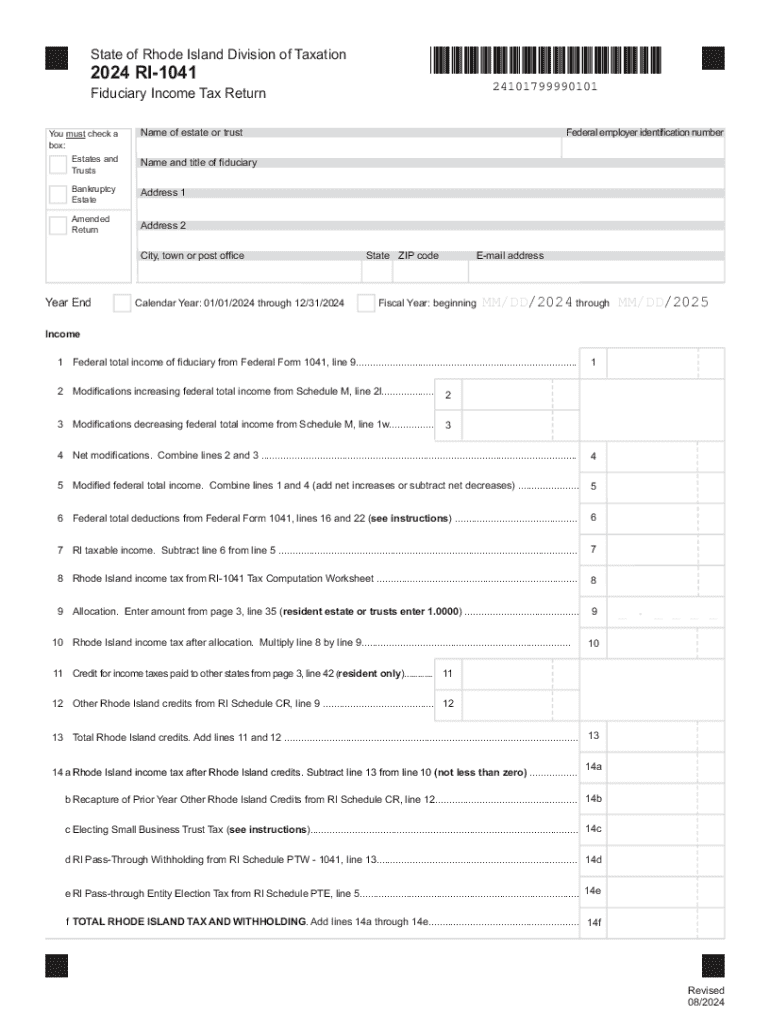
The Rhode Island Announces New Estate Tax Forms and Filing includes documents introduced by the state to manage estate tax-related submissions. This form is crucial for estates and trusts to accurately report income, deductions, and tax liabilities, ensuring compliance with state tax regulations. The information collected aids in calculating taxes due and identifying any potential overpayments, making it a vital component for both estate managers and beneficiaries.
How to Use the Rhode Island Estate Tax Forms
Using the new estate tax forms in Rhode Island requires a strategic approach to document each element pertinent to the estate's financial activities. Begin by gathering all the necessary financial records, including income sources and deductible expenses.
- Identify Applicable Sections: Go through the form and highlight sections applicable to your estate situation.
- Accurate Reporting: Input figures into specific sections such as federal total income, Rhode Island taxable income, and any applicable credits.
- Calculation of Tax Liability: Use the outlined instructions to determine any taxes owed or refunds due.
Always double-check entries to prevent any errors that could lead to penalties or delays.
Steps to Complete the Rhode Island Estate Tax Forms
Filing the estate tax forms can be performed effectively through a structured step-by-step approach:
- Collect Required Information: Gather data related to income, deductions, and federal tax returns from the previous year.
- Fill Out Federal Income Section: Enter details about total federal income and any modifications.
- Determine State Taxable Income: Utilize guidance in the form to calculate Rhode Island taxable income.
- Compute Tax and Credits: Apply any state-specific credits and tax calculations as per the form’s instructions.
- Final Checks and Submission: Review the complete form for accuracy and submit it via the appropriate platform or postal address.
Who Typically Uses the Rhode Island Estate Tax Forms
The primary users of these forms include:
- Estate Executors or Administrators: Responsible for a deceased person's estate, these individuals report financial activities and settle taxes on behalf of the estate.
- Beneficiaries: Who receive income distributions from trusts and need to ensure their tax impacts are properly reported.
- Trustees: Overseeing trusts as they must report trust income and distributions accurately.
- Tax Professionals: Assisting individuals or entities in managing the complexities of estate taxation.


Important Terms Related to Rhode Island Estate Tax Forms
Understanding the terminology is crucial for accurate filing:
- Fiduciary: An individual or organization managing assets for someone else.
- Taxable Income: The portion of income subject to state taxes after deductions.
- Deduction: An allowance subtracted from gross income to reduce taxable income.
- Credit: A reduction of tax liability directly applied to minimize taxes owed.
State-Specific Rules for Rhode Island Estate Tax Forms
Rhode Island imposes unique rules and thresholds for estate taxation, which may deviate from federal regulations:
- Tax Thresholds: Specific monetary thresholds exist determining whether an estate is liable for tax.
- State-Specific Deductions: Variations in allowable deductions specific to Rhode Island may affect taxable amounts.
- Filing Requirements: Identifying estates subject to mandatory filing based on the state's established criteria.
Filing Deadlines / Important Dates
Understanding key dates for filing ensures compliance and avoids penalties:
- Annual Due Date: Generally aligns with federal deadlines, usually April 15, but specific nuances may apply.
- Extensions: Available upon request but must be filed before the original deadline.
- Special Circumstances: Considerations for estates facing unique financial situations that could influence deadlines.
Required Documents
Before filing, certain documents should be ready to accompany the form:
- Federal Tax Returns: Prior year returns that form the basis for state filing.
- Income Statements: Detailing all sources of estate or trust income.
- Additional Documentation: Including receipts for primary expenses or notable financial transactions.
- Credits and Deductions Proof: Supporting documentation for any credits or deductions claimed.
Penalties for Non-Compliance
Failure to properly file estate forms can result in severe consequences, including:
- Monetary Penalties: Incremental fines linked to outstanding taxes or inaccuracies.
- Interest Charges: Accumulation of interest on overdue amounts.
- Legal Repercussions: Potential for legal investigation or court involvement in cases of significant non-compliance.
Proactively addressing these factors helps ensure adherence to Rhode Island's requirements and maintains fiscal responsibility for estates and trusts.




